


Most important facts
- Group
- Utility
- Size
- Large
- Weight
- 20–32 kg
- Lifespan
- 10–13 years
- Coat
- Short, dense
- Energy
- High
- Height
- 54–61 cm
- Colours
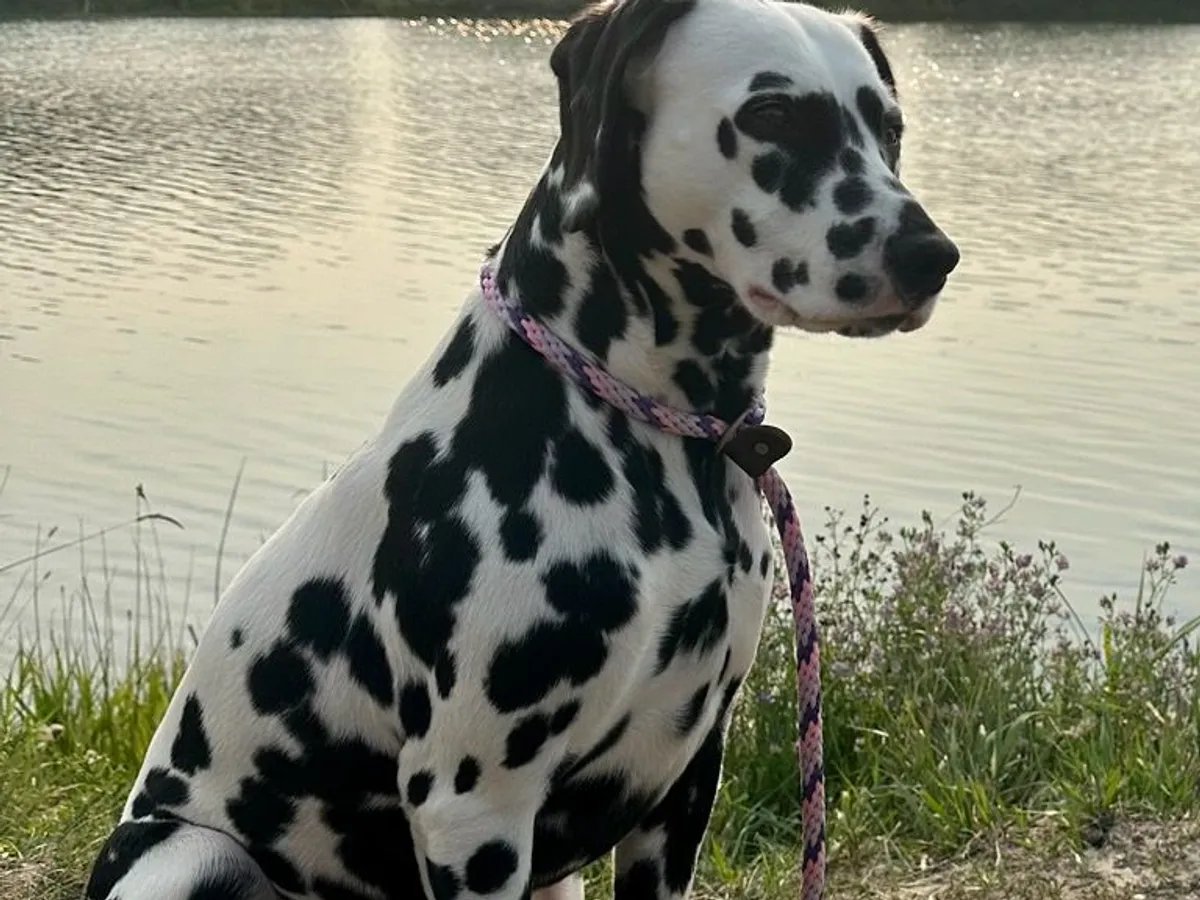
- White with black or liver spots
- Shedding
- Heavy
- Est. feeding cost
- ~£1.31 a day
- Gear to consider
- No-pull harness and long training lead, durable chew-resistant toys, large-capacity water bowl
Typical dry food, adult
About the Dalmatian
The Dalmatian's spotted ancestors appear in paintings across Europe from the seventeenth century, and the breed takes its name from Dalmatia on the Croatian coast, though its exact origins remain debated. It found its defining role in England as a carriage dog, trotting for miles beside coaches and guarding the horses at rest, and later became the firehouse mascot of American fire brigades.
Dalmatians are outgoing, loyal and people-oriented dogs that thrive on being part of family life. They're generally friendly with people and, when socialised from puppyhood, get on well with other dogs and household pets, though a strong prey drive means chasing smaller animals is a habit worth managing early.
This is a breed that needs a job to do, so mental and physical under-stimulation quickly shows up as excitability or stubbornness. Positive, consistent training pays off, and because Dalmatians are often food-motivated, treats are a useful tool provided they're counted within the day's feeding allowance.
Common health conditions
Things Dalmatian owners commonly watch for. Guidance, not veterinary advice.
Deafness
Congenital deafness, in one or both ears, affects a notable proportion of the breed through the genes linked to the white coat. Choose a breeder who BAER-tests puppies before you buy.
Urate urolithiasis (bladder stones)
Dalmatians excrete more uric acid than other breeds, predisposing them to urate stones. Follow your vet's advice on a lower-purine diet and keep fresh water always available.
Hip dysplasia
A badly formed hip joint, which can end in arthritis. Keep a lean body condition and feed joint-supportive nutrients through growth and adulthood.
Atopic dermatitis (skin allergies)
Sensitivity to environmental allergens causing itching and irritation. Skin and coat health can be supported through the diet, alongside veterinary management.
Feeding a Dalmatian
Dalmatians are high-energy dogs bred to cover long distances, so they need a calorie-appropriate diet that matches an active lifestyle without encouraging weight gain in quieter periods. Because the breed processes purines differently from most dogs, many owners work with their vet towards a lower-purine diet to help reduce the risk of urate bladder stones forming.
Fresh water should always be freely available, as good hydration helps dilute urine and lower stone risk. Portion food to keep this athletic breed lean rather than lightly padded, and adjust amounts through the seasons as exercise changes. The Food Finder can help narrow down foods with lower-purine or joint-supportive profiles.
Every dog is different — weight, age and activity all shift what a Dalmatian needs. The turns these breed tendencies into a shortlist matched to your dog’s age, size, budget and needs.
Typical adult weight
20–32 kg
Est. daily calories
790–1,700 kcal
A broad guide for an average-activity adult in good body condition — not veterinary advice. Real needs vary with age, neutering, activity, health and body condition, so no two Dalmatians eat exactly the same. Get a personalised estimate or estimate feeding costs.


- Per day
- ~£1.31
- Per month
- ~£40
- Per year
- ~£477
A broad typical monthly budget guide, not a live price quote. Food format, calorie density, pack size and retailer pricing all change the real cost.
Find the right food for your Dalmatian
Foods ranked to your dog
Answer a few quick questions and the Food Finder ranks foods to your Dalmatian by score, price, life stage and fit.
Breed at a glance
- Exercise needs9/10
- Appetite6/10
- Trainability6/10
- Good with children6/10
- Shedding9/10
- Tolerates being alone4/10
The good & the worth-knowing
The good
- Highly athletic, loyal companion for genuinely active households
- Short, distinctive coat that needs no clipping or trimming
- Sociable and affectionate, generally good with other dogs when well socialised

Worth knowing
- Very high daily exercise requirement unsuited to sedentary households
- Sheds noticeably year-round despite the short coat
- Particular urinary chemistry means diet and water intake need ongoing attention
Best matched accessories
All accessoriesThe collections that suit the breed, judged by the same independent standard.


Common owner questions
How much exercise does a Dalmatian need?
Plan for at least two hours a day, including proper off-lead running where it's safe, alongside mental stimulation. This breed was built for stamina, and under-exercised Dalmatians tend to become restless or destructive.
Why do Dalmatians need a particular kind of diet?
Their purine metabolism makes them more prone to urate bladder stones than most breeds. Many owners feed a lower-purine complete diet and keep fresh water constantly available, and a vet or the Food Finder can help identify suitable options.
Are Dalmatians easy to train?
They're intelligent and eager to please but can be strong-willed, so consistent, positive training from puppyhood works best. Food-motivated training is common, so factor treats into the daily calorie allowance to avoid overfeeding.
Do Dalmatians shed a lot?
Yes. Despite the short coat, they shed significantly year-round, with heavier seasonal moults in spring and autumn. Regular brushing with a grooming mitt and a diet that supports coat condition both help keep it manageable.