


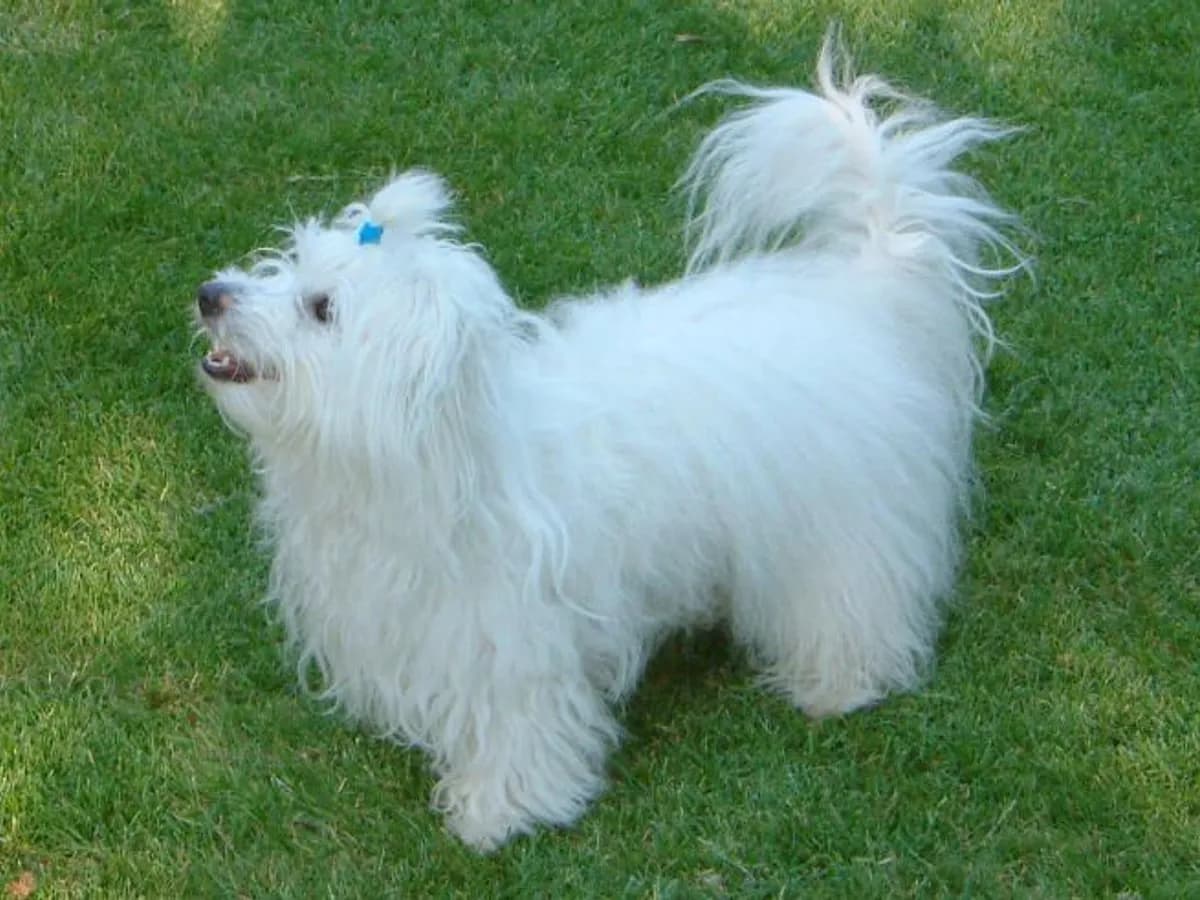

Most important facts
- Group
- Toy
- Size
- Toy
- Weight
- 3–6 kg
- Lifespan
- 14–17 years
- Coat
- Long, fine
- Energy
- Moderate
- Height
- 22–30 cm
- Colours
- White, sometimes with light shading
- Shedding
- Light
- Est. feeding cost
- ~£0.36 a day
- Gear to consider
- Slicker brush and steel comb, small-breed dental chews, lightweight no-pull harness
Typical dry food, adult
About the Coton de Tulear
The Coton de Tulear takes its name from the French word for cotton and the Madagascan port of Tulear, where its small, white ancestors are thought to have arrived on trading ships centuries ago. The breed became a favourite of the island's nobility and is still celebrated as the royal dog of Madagascar. It reached Europe and North America in the 1970s and has a small but devoted following in the UK.
Cotons are sociable, people-oriented dogs with a playful, almost clownish streak. They're typically affectionate with the whole family, and with proper socialisation they take children and other pets in their stride. Strangers usually get curiosity from them, not suspicion. This is a breed built for companionship, and it shows in how closely they stay by their owner's side.
They're intelligent and keen to please, which makes them responsive to positive, reward-based training, though that same food motivation means treats need watching. Because they're so attached to their people, Cotons can be prone to separation distress if regularly left alone, so build up alone time gradually. Their small size suits gentle handling and calmer households.
Common health conditions
Things Coton de Tulear owners commonly watch for. Guidance, not veterinary advice.
Hip dysplasia
Joint laxity that can lead to arthritis. Keep your Coton lean through measured portions to reduce strain on the hips.
Luxating patella
A common small-breed knee issue where the kneecap slips out of place. Excess weight makes symptoms worse, so keep your dog lean with joint support in the diet.
Progressive retinal atrophy (PRA)
Sight fades gradually with this inherited condition. Buy from breeders who health-screen parent dogs through recognised schemes.
Von Willebrand's disease
An inherited blood-clotting disorder. Choose screened breeding lines, and ask your vet about testing before any surgery.
Feeding a Coton de Tulear
Cotons are small dogs with small stomachs and modest energy needs, even though their metabolism runs quickly for their size. A complete small-breed food with an appropriately sized kibble suits their neat jaws. Because portions are small in the first place, even a few extra grams a day add up, so weigh meals rather than eyeballing them.
This is a food-motivated, trainable breed, which makes treats useful but also an easy way to overfeed. Count treats within the daily allowance rather than adding them on top, protecting knees already prone to patella trouble from extra weight. Feed to body condition, keep a consistent routine, and choose a diet that supports dental health.
Every dog is different — weight, age and activity all shift what a Coton de Tulear needs. The turns these breed tendencies into a shortlist matched to your dog’s age, size, budget and needs.
Typical adult weight
3–6 kg
Est. daily calories
190–430 kcal
A broad guide for an average-activity adult in good body condition — not veterinary advice. Real needs vary with age, neutering, activity, health and body condition, so no two Coton de Tulears eat exactly the same. Get a personalised estimate or estimate feeding costs.


- Per day
- ~£0.36
- Per month
- ~£11
- Per year
- ~£131
A broad typical monthly budget guide, not a live price quote. Food format, calorie density, pack size and retailer pricing all change the real cost.
Find the right food for your Coton de Tulear
Foods ranked to your dog
Answer a few quick questions and the Food Finder ranks foods to your Coton de Tulear by score, price, life stage and fit.
Breed at a glance
- Exercise needs3/10
- Appetite4/10
- Trainability7/10
- Good with children6/10
- Shedding1/10
- Tolerates being alone3/10
The good & the worth-knowing
The good
- Low-shedding cotton coat produces less loose hair than many breeds
- Affectionate, adaptable companion that settles into flats and family homes alike
- Intelligent and food-motivated, responding well to reward-based training

Worth knowing
- Long coat needs daily brushing to prevent painful matting
- Can develop separation distress if regularly left alone for long stretches
- Small, fine-boned frame means young children need supervision around them
Best matched accessories
All accessoriesThe collections that suit the breed, judged by the same independent standard.



Common owner questions
How much should I feed a Coton de Tulear?
There's no single right amount, as it depends on age, activity and metabolism, so let body condition decide the size of the portion. The ribs should be easy to find under light pressure. Our Food Finder can suggest a suitable small-breed food and a sensible starting portion.
Is the Coton de Tulear hypoallergenic?
No dog is truly hypoallergenic, but the Coton's low-shedding cotton coat leaves less loose hair around the home than many breeds, which some allergy sufferers find easier to live with. Regular grooming and bathing reduce loose hair and dander further.
How much exercise does a Coton de Tulear need?
Around 30 to 40 minutes a day of walks and play is usually enough, split across the day. They're equally happy with a good indoor play session and enjoy mental stimulation as much as physical exercise.
Are Cotons prone to putting on weight?
Yes. Their small size means treats and table scraps add up quickly as a share of daily intake. Weigh the food, limit extras, and choose a diet suited to weight control. Our Food Finder can help match one.
Similar breeds
Photo: Uschi Goess (eingestellt von Caronna), CC BY-SA 3.0, via Wikimedia Commons