


Most important facts
- Group
- Crossbreed
- Size
- Toy
- Weight
- 3–6.5 kg
- Lifespan
- 12–15 years
- Coat
- Varies by parent influence — from long
- Energy
- Moderate
- Height
- 15–23 cm
- Colours
- Black and tan, brown or mixed shades
- Shedding
- Light
- Est. feeding cost
- ~£0.36 a day
- Gear to consider
- Well-fitted harness (not a collar), small-breed dental chews or slow feeder, cosy coat for cold weather
Typical dry food, adult
About the Chorkie
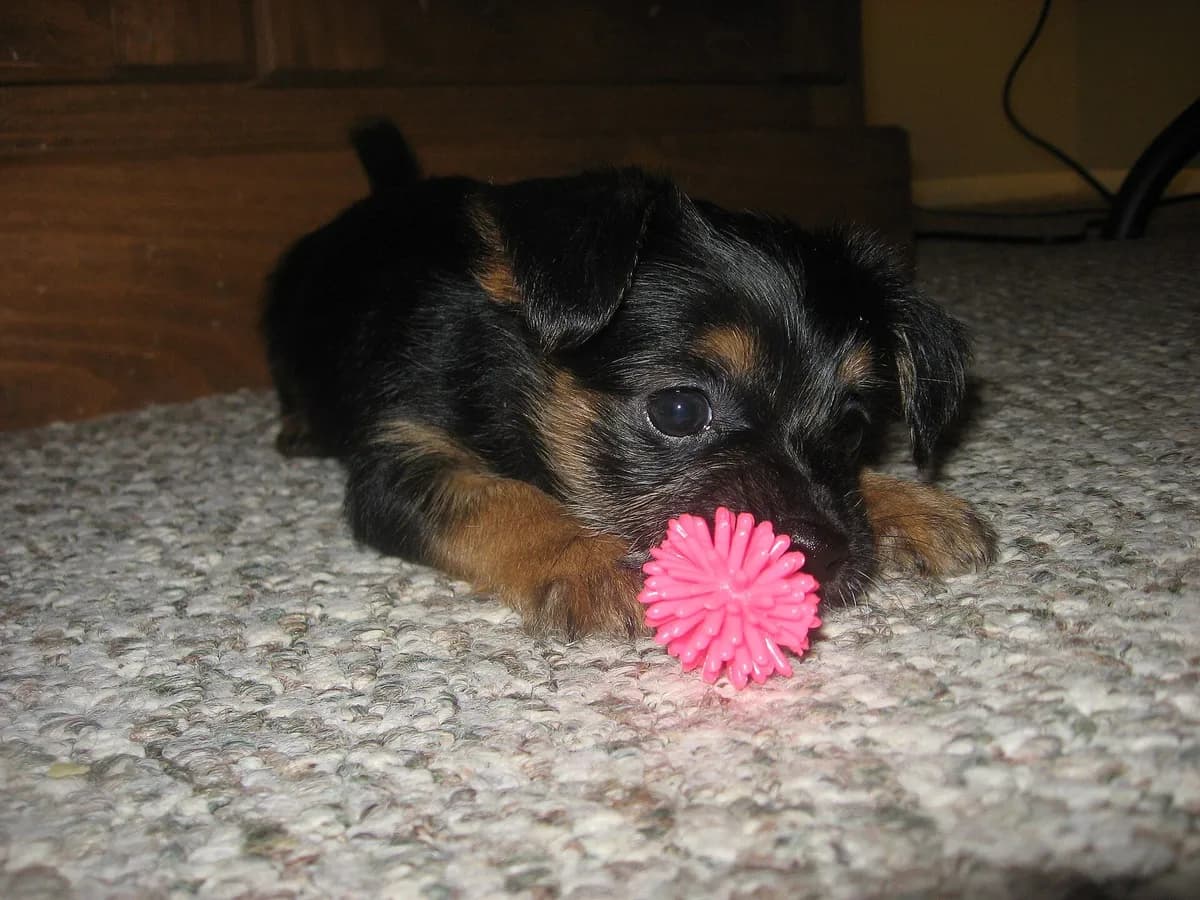
The Chorkie is a cross between the Yorkshire Terrier and the Chihuahua, first bred deliberately in the United States in the early 1990s as part of the wider wave of designer toy crosses. It pairs two of the world's smallest and most popular companion breeds, and it has built a steady following in the UK without Kennel Club recognition.
Chorkies typically inherit the Yorkshire Terrier's confident, feisty streak alongside the Chihuahua's intense devotion to a favourite person. The result is a dog that's affectionate and eager to be close, often following its owner from room to room, but also surprisingly bold and vocal for its size.
This breed does well with calm handling, and it can thrive in a flat as long as its exercise and mental stimulation needs are met. Chorkies bond tightly and can struggle with long periods alone, and their delicate frame means they suit households without very young or boisterous children.
Common health conditions
Things Chorkie owners commonly watch for. Guidance, not veterinary advice.
Patellar luxation
A slipping kneecap is common in toy breeds. Keep this dog lean, as excess weight puts extra strain on the joints.
Dental and periodontal disease
Toy breeds are especially prone to crowded teeth and gum disease. Use dental-care kibble and daily brushing, backed up by vet check-ups.
Tracheal collapse
Both parent breeds carry a risk of a weak windpipe. Walk your Chorkie on a well-fitted harness rather than a collar, and keep weight down.
Hypoglycemia (in puppies and very small adults)
Tiny toy dogs can run low on blood sugar between meals. Feed frequent, small portions of an energy-dense puppy or small-breed food to keep levels stable.
Feeding a Chorkie
Chorkies are tiny dogs with a proportionally fast metabolism, so they do best on a calorie-dense, small-breed complete food fed in two to three modest meals a day. That routine also guards against the dips in blood sugar very small toy dogs are prone to, especially as puppies, and a small, crunchy kibble suits their little jaws while helping slow tartar.
Because a Chorkie's daily calorie needs are genuinely small, even modest overfeeding shows up quickly as excess weight, which strains delicate joints and a windpipe prone to collapse. Weighing food rather than eyeballing portions, and keeping treats to a small share of the day's intake, is one of the most useful habits an owner can build.
Every dog is different — weight, age and activity all shift what a Chorkie needs. The turns these breed tendencies into a shortlist matched to your dog’s age, size, budget and needs.
Typical adult weight
3–6.5 kg
Est. daily calories
190–460 kcal
A broad guide for an average-activity adult in good body condition — not veterinary advice. Real needs vary with age, neutering, activity, health and body condition, so no two Chorkies eat exactly the same. Get a personalised estimate or estimate feeding costs.


- Per day
- ~£0.36
- Per month
- ~£11
- Per year
- ~£132
A broad typical monthly budget guide, not a live price quote. Food format, calorie density, pack size and retailer pricing all change the real cost.
Find the right food for your Chorkie
Foods ranked to your dog
Answer a few quick questions and the Food Finder ranks foods to your Chorkie by score, price, life stage and fit.
Breed at a glance
- Exercise needs4/10
- Appetite6/10
- Trainability6/10
- Good with children4/10
- Shedding3/10
- Tolerates being alone3/10
The good & the worth-knowing
The good
- Affectionate, loyal companion that bonds closely with its owner
- Compact size suits flats and smaller households
- Low-shedding coat with modest grooming needs for most individuals

Worth knowing
- Can be highly vocal, barking at noises and visitors more than owners expect
- Fragile build means rough play and jumping off furniture carry injury risk
- Struggles with long stretches alone and can fret without company
Best matched accessories
All accessoriesThe collections that suit the breed, judged by the same independent standard.

Common owner questions
How much should I feed my Chorkie?
There's no single figure, since Chorkies range from around 3 to 6.5 kg fully grown. Feed the amount stated for your dog's actual weight on a small-breed food, then adjust to body condition. Our Food Finder can suggest a suitable daily amount for your dog's size and activity.
Are Chorkies fussy eaters?
Some can be, particularly if given lots of variety or table scraps early on. Stick to a consistent, palatable small-breed food and avoid constant menu changes to stop fussiness becoming established.
How much exercise does a Chorkie need?
Walks totalling 20 to 30 minutes a day, in shorter outings, plus some indoor play and training games. Their exercise needs are modest, but mental stimulation still matters.
Do Chorkies shed a lot?
Generally not much. Most Chorkies have a low-shedding coat, though the brushing needed depends on whether they take after the longer-coated Yorkie or the shorter-coated Chihuahua parent.