

Most important facts
- Group
- Terrier
- Size
- Small
- Weight
- 6–10 kg
- Lifespan
- 12–15 years
- Coat
- Soft, wavy
- Energy
- Moderate
- Height
- 25–32 cm
- Colours
- Grey-blue or light coffee brown
- Shedding
- Light
- Est. feeding cost
- ~£0.59 a day
- Gear to consider
- Slicker brush and grooming clippers, secure long-line lead, tough chew toys
Typical dry food, adult
About the Cesky Terrier
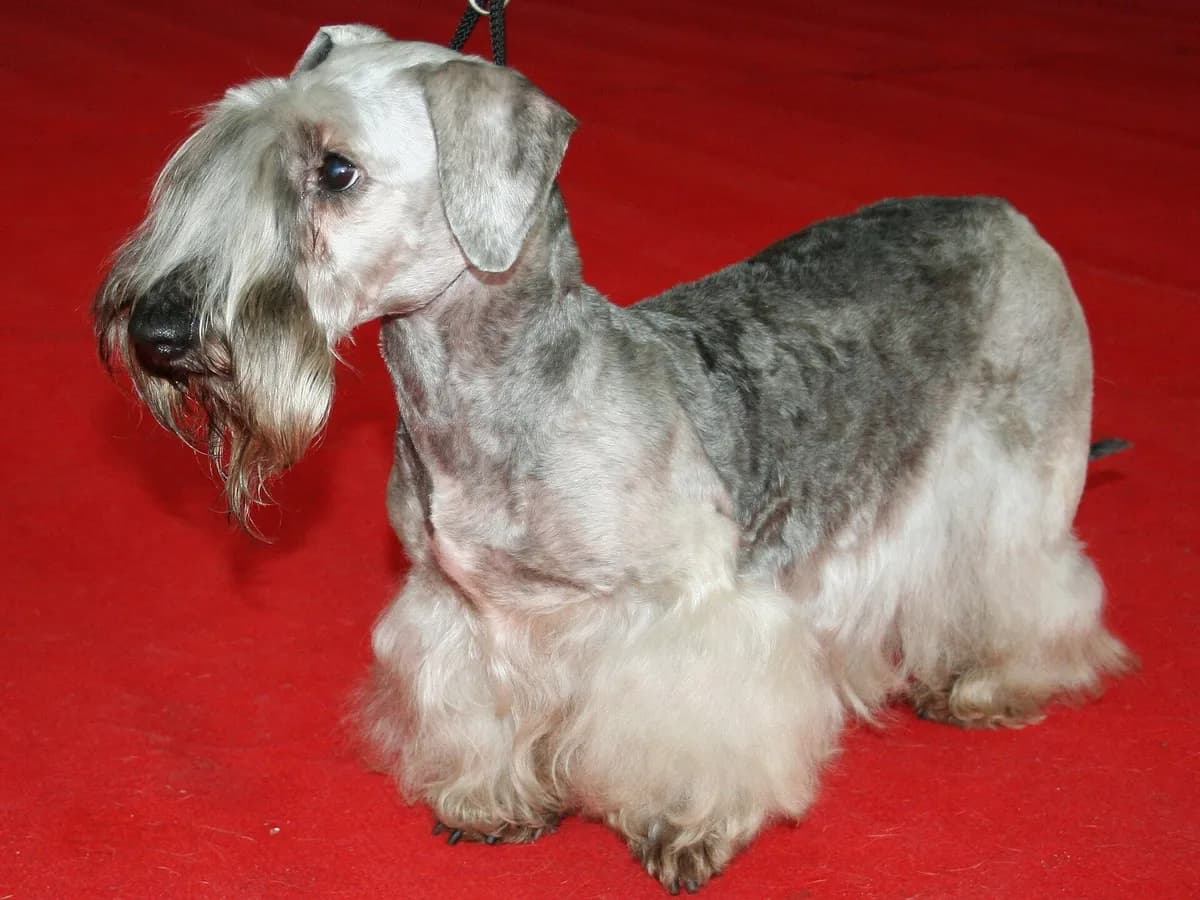
The Cesky Terrier is one of the few breeds with a precisely documented origin. Czech geneticist František Horák crossed the Scottish Terrier with the Sealyham Terrier in 1949, aiming for a narrower terrier that could work rock crevices and burrows in a pack. The breed was recognised internationally in 1963 and reached Britain soon after, though it remains one of the rarest Kennel Club breeds.
The Cesky Terrier was bred to hunt quietly underground, not to bark or dig its way to quarry. It is generally calmer and more biddable than its terrier cousins, though it keeps a genuine prey drive and can be reserved with strangers. It bonds closely with its family and enjoys a scent-driven walk as much as company on the sofa.
Like most terriers it is intelligent, sometimes stubborn, and food-motivated, which makes it responsive to reward-based training and a well-chosen training treat. Its steadier temperament suits calmer households, though early socialisation with small animals still matters given its hunting background.
Common health conditions
Things Cesky Terrier owners commonly watch for. Guidance, not veterinary advice.
Scottie cramp
An inherited but non-painful movement disorder causing brief muscle spasms during excitement. It is unrelated to diet, so simply keep your dog lean and calm around flare-ups.
Primary lens luxation (PLL)
The lens slips out of position, usually in adulthood, and the fault is inherited. Choose a breeder who DNA-tests, and keep up regular vet checks.
Patellar luxation
A slipping kneecap seen in small terriers. Keep your dog lean through accurate portioning, and consider a joint-support food as they age.
Mitral valve disease
An age-related heart valve condition seen in some small breeds. Keep up regular check-ups, and follow your vet's advice on diet if it develops.
Feeding a Cesky Terrier
The Cesky Terrier's small, low-slung frame means even a modest excess of food shows up quickly as strain on the back and joints. Weighing portions to an adult maintenance level matters more than the brand you choose. A moderate-protein small-breed food, split across two meals, supports steady energy without encouraging weight this compact body carries poorly.
Because coat condition is central to how this breed is kept, a diet with good-quality protein and added omega oils helps support the silky coat between clips. Small mouths are prone to dental tartar, so a kibble with a dental benefit or regular tooth-brushing is worth building into the routine from puppyhood.
Every dog is different — weight, age and activity all shift what a Cesky Terrier needs. The turns these breed tendencies into a shortlist matched to your dog’s age, size, budget and needs.
Typical adult weight
6–10 kg
Est. daily calories
320–630 kcal
A broad guide for an average-activity adult in good body condition — not veterinary advice. Real needs vary with age, neutering, activity, health and body condition, so no two Cesky Terriers eat exactly the same. Get a personalised estimate or estimate feeding costs.


- Per day
- ~£0.59
- Per month
- ~£18
- Per year
- ~£217
A broad typical monthly budget guide, not a live price quote. Food format, calorie density, pack size and retailer pricing all change the real cost.
Find the right food for your Cesky Terrier
Foods ranked to your dog
Answer a few quick questions and the Food Finder ranks foods to your Cesky Terrier by score, price, life stage and fit.
Breed at a glance
- Exercise needs5/10
- Appetite6/10
- Trainability6/10
- Good with children6/10
- Shedding2/10
- Tolerates being alone5/10
The good & the worth-knowing
The good
- Calmer and quieter than most terriers, suiting family life
- Low-shedding coat that is kind to allergy-prone households
- Affectionate and loyal once bonded to its family
Worth knowing
- Coat needs regular clipping to stay healthy and tangle-free
- Retains a genuine prey drive, so recall and small-pet households need care
- A rare breed in the UK, making puppies harder to find
Best matched accessories
All accessoriesThe collections that suit the breed, judged by the same independent standard.
Common owner questions
How much should I feed a Cesky Terrier?
Most adults do well on a complete small-breed food split into two meals, with the pack's feeding guide for their weight as the starting point, adjusted for age, activity and the food's calorie density. Feed to body condition, checking ribs are easy to feel but not see.
Is the Cesky Terrier prone to weight gain?
Yes, its small, low-slung frame means extra weight shows quickly and strains the back and joints. Weigh meals rather than estimating, and keep treats to a small share of daily calories.
How much exercise does a Cesky Terrier need?
Around 45 to 60 minutes a day split across walks, with time to sniff and explore, suits this breed well. It is less driven than many terriers but still benefits from mental enrichment.
Does the Cesky Terrier suit a first-time owner?
It can, given its calmer terrier temperament, though its rarity means finding a breeder, groomer and vet familiar with the breed takes more effort. Our Food Finder can help match feeding to whichever complete food you choose.