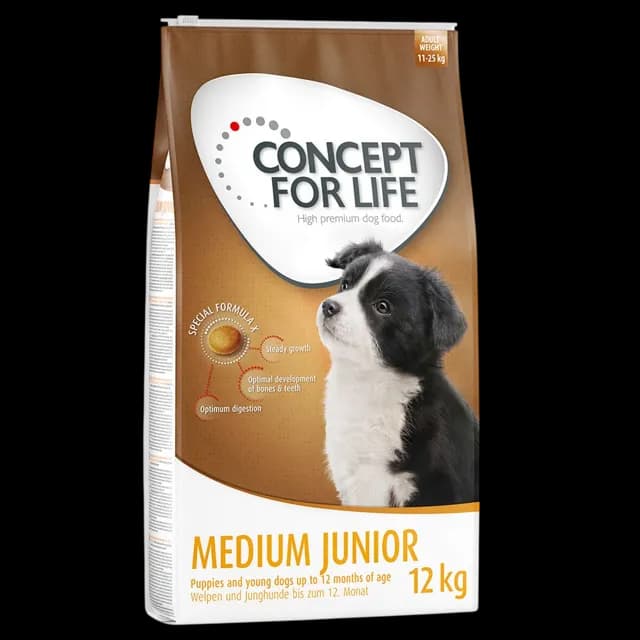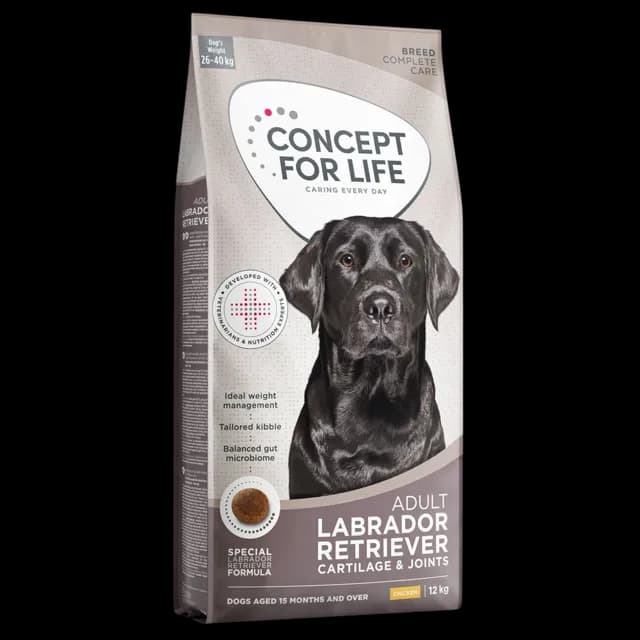


Concept For Life
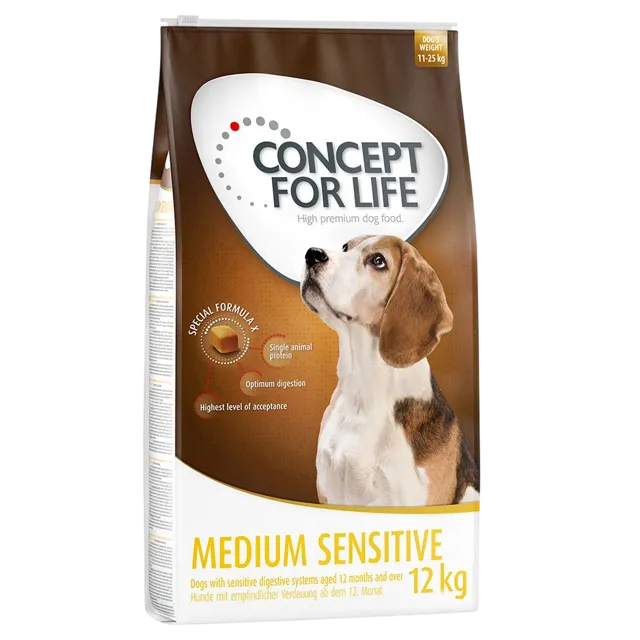
Concept For Life Medium Breed Sensitive review
Concept For Life Medium Breed Sensitive takes the usual route for a gentler recipe: one named meat, one cereal and a short list. Rice opens the label and 19.5% dried lamb protein sits behind it. Liver hydrolysate gives the kibble its flavour, while beet pulp, chicory inulin and a yeast extract look after the gut. No fish oil appears anywhere, which makes it a genuinely fish free bowl. Our reading places it in the Average band, mostly a comment on how much of the recipe is rice. For a medium dog who has fallen out with chicken it remains an easy and sensible switch.
Our view
Likely to suit
When your dog's stomach has become the loudest member of the household, a short list and one named meat is usually where you start.
- Dogs with a chicken history whose owners want the named meat to be lamb, declared at 19.5% in its concentrated dried form
- Owners keeping their dog clear of fish, since no fish oil appears anywhere on this list
- Medium breed adults with an unsettled gut, with desugared beet pulp and chicory inulin working on the gut flora
- Picky eaters, because liver hydrolysate is on the list specifically to keep the bowl interesting
- Homes sharing one bag between the grown dog and the older one, as the label covers both stages
Worth watching
Read the small entries as well as the big ones, because two of them shape what this recipe can and cannot do for you.
- Poultry fat and liver hydrolysate both appear without naming a species, so lamb is not the only animal here and a strict elimination trial would need to allow for that
- Rice heads the ingredients list ahead of the meat, and the carbohydrate estimate comes to 51.0% of dry matter against the 46.2% typical for adult dry food
- Rice protein sits fourth, so part of what the protein figure counts is plant, not lamb
- A dog who reacts to egg should know there is dried egg here
Written by our editorial team. Independent guidance, not veterinary advice.
How this scores
How we scoreThe Details
Dog fit
When your dog's stomach has become the loudest member of the household, a short list and one named meat is usually where you start. Read the small entries as well as the big ones, because two of them shape what this recipe can and cannot do for you.
Dry
Adult, Senior
Medium
Lamb
The score, in context
Our reading gives this recipe an Average band result, one rung under the Good band that most adult dry food occupies. The arithmetic is straightforward. Rice leads the list, rice protein appears again a few places later, and carbohydrate finishes at 51.0% of dry matter, which leaves protein at 24.5% of dry matter, gentle for a kibble. Two of the animal entries also name no species. That is a fair description of a sensitive recipe, not a criticism of one. Keeping the ingredient list short and the meat down to a single named species is exactly the trade these foods make. The dog it is aimed at is usually better off for it.
What's in it
Ingredients, as declared: Rice, 19.5% Lamb Protein (Dried), Poultry Fat, Rice Protein, Dried Beet Pulp (Desugared), Liver Hydrolysate, Brewer's Yeast (Dried), Linseed, Egg (Dried), 0.6% Sunflower Oil, Lignocellulose, Sodium Chloride, 0.2% Yeast Extract (Rich in Beta-Glucans and Mannan-Oligosaccharides), 0.1% Chicory Inulin, 0.01% Green Tea Extract (Dried, Rich in Flavonoids), Antioxidants.
Named ingredients
Nutritional additives
Vitamin a (12000 IU), Vitamin D [as Vitamin D3] (1400 IU), Vitamin E [as All-Rac-Alpha-Tocopheryl Acetate] (300mg/kg), Vitamin C [as Ascorbyl Monophosphate, Calcium Sodium Salt] (200mg/kg), Vitamin B1 [as Thiamine Mononitrate] (12mg/kg), Vitamin B2 [as Riboflavin] (12mg/kg), Vitamin B6 [as Pyridoxine Hydrochloride] (8mg/kg), Vitamin B12 [as Cyanocobalamin] (200mcg), Niacin (35mg/kg), Calcium-D-Pantothenate (35mg/kg), Folic Acid (1.2mg/kg), Biotin [as D(+)-Biotin] (300mcg), Choline Chloride (2000mg/kg), Copper [as Cupric Sulphate, Pentahydrate] (12.5mg/kg), Zinc [as Zinc Sulphate, Monohydrate] (100mg/kg), Zinc [as Zinc Chelate of Glycine Hydrate] (60mg/kg), Iron [as Ferrous Sulphate, Monohydrate] (250mg/kg), Manganese [as Manganous Sulphate, Monohydrate] (30mg/kg), Iodine [as Calcium Iodate, Anhydrous] (2.2mg/kg), Selenium [as Sodium Selenite] (0.4mg/kg).
Ingredient notes
Lamb protein at 19.5% is the named meat, declared in the dried form. Dried meat carries no water into the mix, so the same figure counts for more than it would fresh. Lamb is a red meat that dogs digest well and rarely have a history with, which is the whole point of putting it in a recipe like this one. Protein converts to 24.5% of dry matter, at the gentler end for a dry food.
Rice does the starch work and does a lot of it, opening the list in whole form and returning as rice protein in fourth place. Whole rice is one of the easier cereals on a dog's digestion, and sensitive recipes use it often for that reason. Rice protein is a different thing, a refined plant protein that raises the analysis figure without contributing animal protein, so it is worth reading the protein number with that in mind.
This is not a single animal food, and two entries are the reason. The added fat is poultry fat, a decent enough ingredient that still leaves the bird unnamed, and liver hydrolysate names no species either. The hydrolysate is doing an honest job: liver is nutrient dense and highly palatable, and breaking it down chemically turns it into a flavour carrier that keeps a hesitant eater coming back to the bowl. If you are running a true elimination trial, though, those two entries are the ones that need accounting for.
The digestive support is modest and well chosen. Desugared beet pulp brings the fermentable fibre that gut bacteria feed on, and chicory inulin at 0.1% adds a prebiotic in soluble form. The yeast extract at 0.2% supplies the beta-glucans and mannan-oligosaccharides named on the label. Crude fibre itself is low at 2.2% of dry matter, so this is a recipe built around gentleness rather than bulk.
The remaining entries fill in the detail. Linseed is the plant omega 3 source, sunflower oil at 0.6% adds omega 6 along with natural vitamin E, and green tea extract at 0.01% brings flavonoids. Brewer's yeast is a natural source of B vitamins and dried egg adds a small amount of very digestible protein. The added mineral panel is dosed in full, with zinc at 100 mg per kilo as the sulphate and another 60 mg as a glycine chelate. Choline chloride comes in at 2000 mg per kilo and vitamin C at 200 mg per kilo.
Price and value
Offered in 1.5kg, 6kg and 12kg bags.
Taken as a guide, a 15kg adult dog in moderate condition would eat somewhere near 231 grams a day, assuming a requirement of about 840 kcal a day (110 × bodyweight^0.75, the standard maintenance estimate). A dog moving onto a sensitive recipe is best changed over slowly, so build to that figure across a week or so.
Nutritional analysis
Declared analysis
22.5%
13%
2%
7.5%
Dry weight
24.5%
14.1%
2.2%
8.2%
51%
As-fed composition
Estimated breakdown of the finished product by ingredient category, from the declared ingredient list and ingoing weights. These are estimates, not measurements.
27.1%
56.8%
0.1%
11.5%
4.5%
Pricing & size
- Pack size
- 1.5kg, 6kg & 12kg bags
- Retailer pricing
- Coming soon
Live retailer pricing is not yet available for this food. Prices, cost per day and where to buy will appear here once retailer data is live.
Ingredients and nutrition are taken from manufacturer data. Retailer pricing is not yet live for this food.
Related dog food guides
Ranked shortlists that include foods like this one.