


Most important facts
- Group
- Gundog
- Size
- Medium
- Weight
- 17–23 kg
- Lifespan
- 12–14 years
- Coat
- Water-resistant double coat
- Energy
- High
- Height
- 45–51 cm
- Colours
- Shades of red or orange with white markings
- Shedding
- Moderate
- Est. feeding cost
- ~£1.07 a day
- Gear to consider
- Retrieving dummies and floating toys, canine life jacket for water work, slow-feeder bowl for portion control
Typical dry food, adult
About the Nova Scotia Duck Tolling Retriever
The Nova Scotia Duck Tolling Retriever was developed in the Little River district of Nova Scotia in the nineteenth century. It was bred to imitate the fox's trick of playing along the shoreline to lure curious ducks within gunshot, then retrieve the fallen birds from cold water. Canada recognised the breed in 1945, and it remains the smallest of the retrievers, with a devoted following among active owners in Britain.
Tollers are outgoing and playful, best known for the tolling behaviour they were bred for, luring curious waterfowl within range by playing at the water's edge before retrieving on command. That same playfulness and drive to work with their handler makes them highly engaged, biddable companions, though they can be watchful with strangers until introduced.
This is not a breed that settles for a quiet life. Tollers need consistent physical and mental stimulation, and they can become vocal or destructive if under-exercised or left alone too often. Given enough outlet for their energy and an owner willing to keep training and feeding consistent with their activity, they make affectionate, adaptable family dogs.
Common health conditions
Things Nova Scotia Duck Tolling Retriever owners commonly watch for. Guidance, not veterinary advice.
Hip dysplasia
A structural joint condition common in medium and larger gundog breeds. Keep the Toller lean through accurately measured meals to reduce strain on the joints.
Progressive Retinal Atrophy (PRA)
Sight fades gradually in this inherited eye condition. Buy from breeders who can show health-test results for both parents.
Immune-mediated rheumatic disease (IMRD) and steroid-responsive meningitis-arteritis (SRMA)
Autoimmune conditions seen more often in Tollers than most breeds. Treat any sudden lameness, stiffness or fever as worth a prompt vet review.
Autoimmune thyroiditis
Weight gain and low energy despite normal feeding can point to an underactive thyroid. Discuss unexplained changes in condition with a vet.
Feeding a Nova Scotia Duck Tolling Retriever
Tollers are muscular, high-drive working gundogs, and their diet should reflect a genuinely active lifestyle. Look for a quality complete food built on good animal protein, with enough fat to sustain swimming and long walks. Dogs in regular field or water work may need higher energy density than a Toller kept as a quieter companion, so set portions against the individual dog's activity.
This is a breed prone to piling on weight if food isn't measured carefully, which adds pressure to joints already at some risk of hip dysplasia. Weigh meals and keep treats limited. Choose a food with added joint-support nutrients and omega fatty acids for skin and coat. Our Food Finder can help match a food to a Toller's size and activity level.
Every dog is different — weight, age and activity all shift what a Nova Scotia Duck Tolling Retriever needs. The turns these breed tendencies into a shortlist matched to your dog’s age, size, budget and needs.
Typical adult weight
17–23 kg
Est. daily calories
700–1,320 kcal
A broad guide for an average-activity adult in good body condition — not veterinary advice. Real needs vary with age, neutering, activity, health and body condition, so no two Nova Scotia Duck Tolling Retrievers eat exactly the same. Get a personalised estimate or estimate feeding costs.


- Per day
- ~£1.07
- Per month
- ~£33
- Per year
- ~£392
A broad typical monthly budget guide, not a live price quote. Food format, calorie density, pack size and retailer pricing all change the real cost.
Find the right food for your Nova Scotia Duck Tolling Retriever
Foods ranked to your dog
Answer a few quick questions and the Food Finder ranks foods to your Nova Scotia Duck Tolling Retriever by score, price, life stage and fit.
Breed at a glance
- Exercise needs8/10
- Appetite6/10
- Trainability8/10
- Good with children7/10
- Shedding5/10
- Tolerates being alone3/10
The good & the worth-knowing
The good
- Intelligent and highly trainable, responding well to positive reinforcement
- Enthusiastic swimmer and retriever, ideal for active, outdoorsy owners
- Playful and deeply loyal, forming strong bonds with their family

Worth knowing
- Needs a genuine daily outlet for physical and mental energy, including water where possible
- Forms strong attachments and does not do well left alone for long stretches
- Predisposed to some autoimmune conditions that call for attentive ownership
Best matched accessories
All accessoriesThe collections that suit the breed, judged by the same independent standard.




Common owner questions
How much exercise does a Nova Scotia Duck Tolling Retriever need?
Plenty. Tollers are working gundogs bred for sustained retrieving and swimming, and typically need well over an hour of varied, engaging exercise a day, ideally including some water access and retrieving games alongside general walks.
What should I feed a Toller?
A complete food suited to an active medium-sized gundog, fed in portions matched to their actual exercise level and checked regularly against body condition rather than the bag's headline guideline. Our Food Finder can suggest suitable options based on age, size and any sensitivities.
Are Tollers prone to putting on weight?
Yes, excess weight is a recognised risk in the breed, particularly once a dog's exercise drops below what they're used to. Weigh meals, cut back treats accordingly, and reassess portions whenever activity changes.
Are Tollers good with children and other pets?
Generally yes, especially with early socialisation, but their high energy and enthusiasm mean play with young children is best supervised. They can also be vocal, including a distinctive high-pitched Toller scream when excited, which is worth knowing about in advance.
Similar breeds
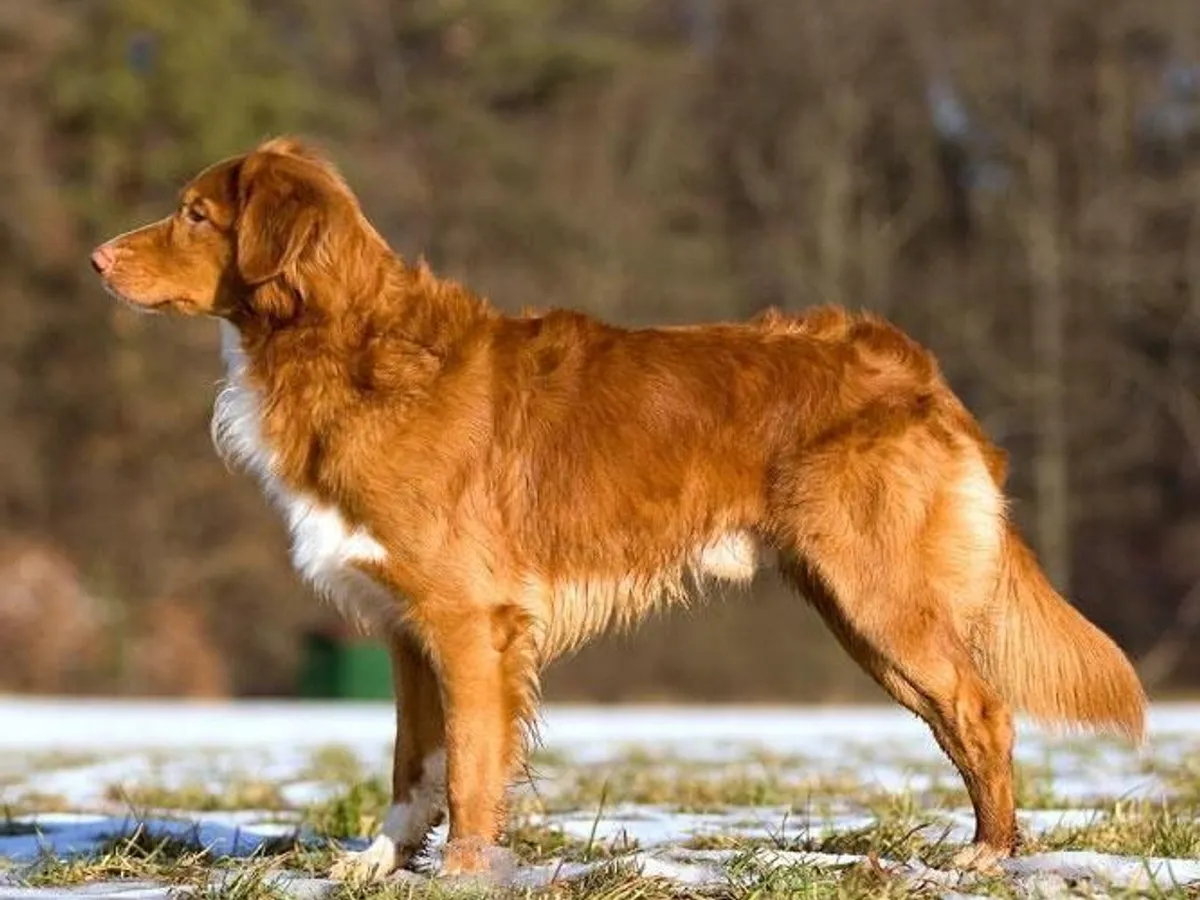
Photo: Cal119 at English Wikipedia, Public domain, via Wikimedia Commons