

Most important facts
- Group
- Utility
- Size
- Small
- Weight
- 9–11 kg
- Lifespan
- 12–15 years
- Coat
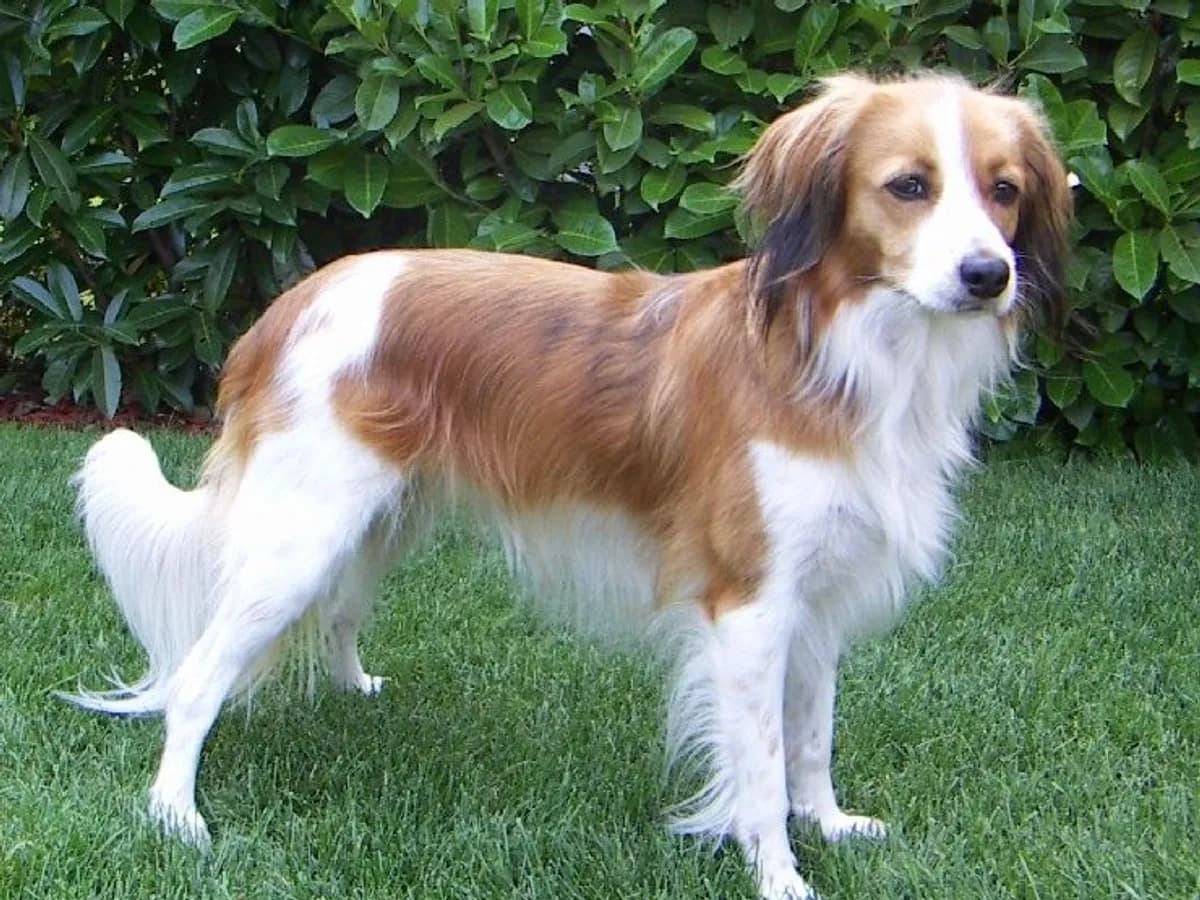
- Silky, feathered
- Energy
- Moderate
- Height
- 35–40 cm
- Colours
- Orange-red patches on white
- Shedding
- Moderate
- Est. feeding cost
- ~£0.67 a day
- Gear to consider
- Slow-feeder bowl, soft-bristle grooming brush, secure long-line lead
Typical dry food, adult
About the Kooikerhondje
The Kooikerhondje worked the duck decoys of the Netherlands from at least the sixteenth century. Its waving, white-plumed tail lured curious ducks along netted channels for the decoy keeper, and the breed appears in paintings by Rembrandt and Vermeer's contemporaries. The breed had almost vanished by the Second World War, when Baroness van Hardenbroek van Ammerstol rebuilt it from a handful of surviving dogs.
The Kooikerhondje is an alert, affectionate breed that forms strong bonds with its family and can be reserved with strangers. Historically it lured ducks into netted traps by wagging its feathered tail, and it keeps a watchful, busy nature, enjoying a job to do, whether training, scentwork or simply being involved in household life.
That closeness to its people cuts both ways. Kooikerhondjes are known to struggle with being left alone and can develop separation anxiety without gradual, patient conditioning. Consistent routines, including regular mealtimes, provide the structure and predictability this sensitive breed thrives on.
Common health conditions
Things Kooikerhondje owners commonly watch for. Guidance, not veterinary advice.
Von Willebrand disease
An inherited clotting disorder that can cause excessive bleeding during injury or surgery. Always ask a breeder for DNA health-test results.
Hereditary necrotising myelopathy (ENM)
Also known as Kooiker paralysis, a serious inherited condition affecting the spinal cord, usually appearing in the first year or so. Choose breeders who DNA-test both parents.
Patellar luxation
Small breeds are prone to this: the kneecap slips out of position. Keep a Kooikerhondje lean through measured feeding and portion control.
Hereditary polymyositis
An inflammatory muscle condition seen in the breed that can cause weakness and difficulty swallowing. Flag any changes in appetite or eating behaviour to a vet promptly.
Feeding a Kooikerhondje
Kooikerhondjes are a modestly built small breed, so size the complete diet to their true adult weight and not to their appetite. They gain condition quickly if portions creep upward. Two measured meals a day, weighed on scales rather than guessed, keeps weight steady and takes pressure off the knees.
The breed carries a higher-than-average rate of inherited conditions such as von Willebrand disease and hereditary polymyositis. Watch for any change in appetite, chewing or swallowing, and mention it to a vet without putting it down to fussiness. A good-quality, age-appropriate complete food with moderate protein and fat suits most adults.
Every dog is different — weight, age and activity all shift what a Kooikerhondje needs. The turns these breed tendencies into a shortlist matched to your dog’s age, size, budget and needs.
Typical adult weight
9–11 kg
Est. daily calories
440–680 kcal
A broad guide for an average-activity adult in good body condition — not veterinary advice. Real needs vary with age, neutering, activity, health and body condition, so no two Kooikerhondjes eat exactly the same. Get a personalised estimate or estimate feeding costs.

- Per day
- ~£0.67
- Per month
- ~£20
- Per year
- ~£245
A broad typical monthly budget guide, not a live price quote. Food format, calorie density, pack size and retailer pricing all change the real cost.
Find the right food for your Kooikerhondje
Foods ranked to your dog
Answer a few quick questions and the Food Finder ranks foods to your Kooikerhondje by score, price, life stage and fit.
Breed at a glance
- Exercise needs6/10
- Appetite6/10
- Trainability7/10
- Good with children7/10
- Shedding5/10
- Tolerates being alone3/10
The good & the worth-knowing
The good
- Loyal and affectionate, with strong bonds to the people it lives with
- Alert and intelligent, generally responsive to consistent, gentle training
- Compact size suits a range of homes while still enjoying an active lifestyle

Worth knowing
- Prone to separation anxiety and does not thrive left alone for long periods
- A number of breed-specific hereditary conditions mean health testing matters enormously
- Feathered coat needs regular brushing to prevent matting behind the ears and tail
Best matched accessories
All accessoriesThe collections that suit the breed, judged by the same independent standard.


Common owner questions
How much should I feed a Kooikerhondje?
Follow the feeding guide on a complete food for the dog's actual adult weight, then adjust to body condition and not to the bag alone. Weighing food out and checking ribs and waist every few weeks catches weight creep early in a breed prone to joint strain.
Is the Kooikerhondje prone to any particular health issues?
Yes. Reputable breeders screen for von Willebrand disease and hereditary necrotising myelopathy via DNA testing, and the breed can also be affected by patellar luxation and polymyositis. Ask to see certificates before buying, and keep up routine vet checks.
Can a Kooikerhondje be left home alone?
Not for long stretches. The breed bonds closely with its family and can develop separation anxiety if left regularly for extended periods. From puppyhood, lengthen time alone in small steps, with a food-based enrichment toy.
Does the Kooikerhondje need a lot of grooming?
Brush the silky, feathered coat two or three times a week to prevent tangles, with particular care around the ears and tail, and more attention during seasonal moults. The upkeep is steady, never heavy work.