


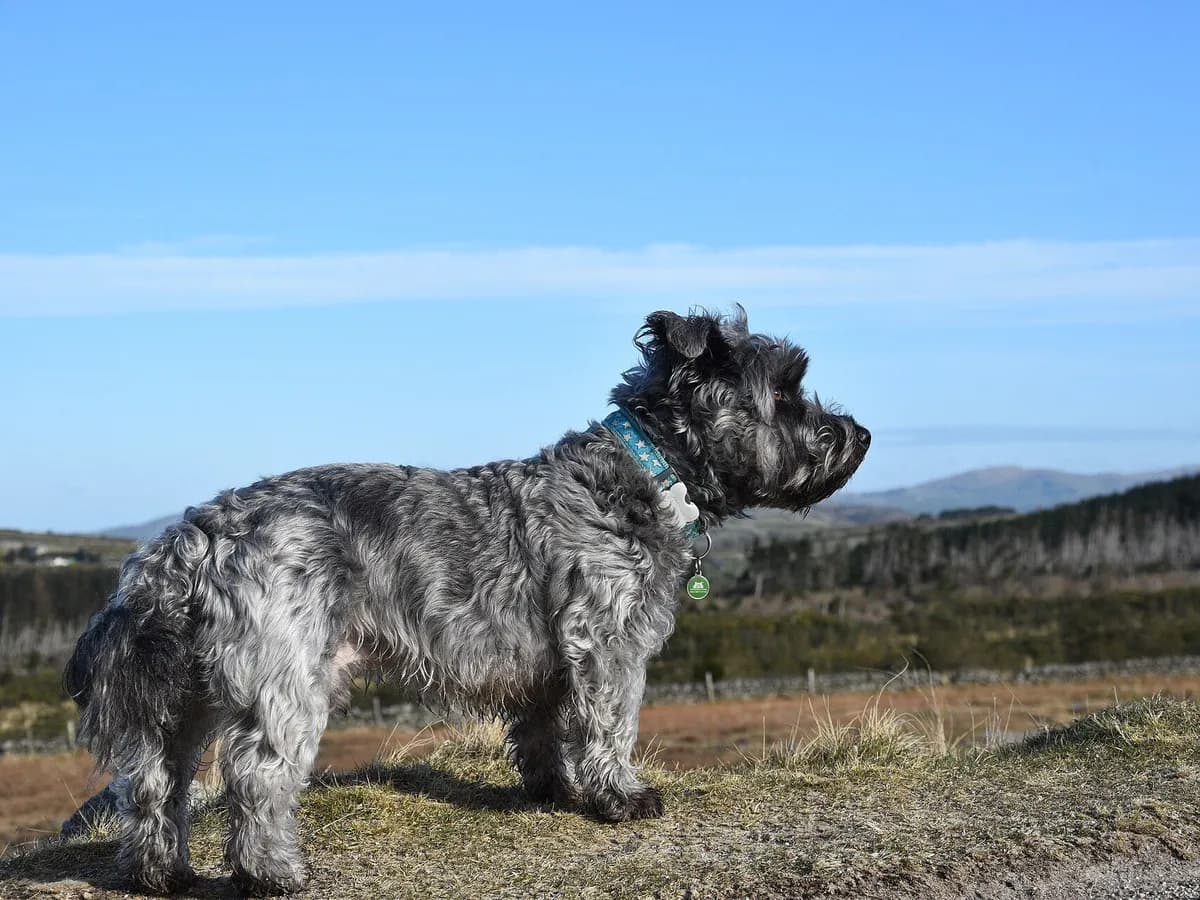

Most important facts
- Group
- Terrier
- Size
- Medium
- Weight
- 14–16 kg
- Lifespan
- 10–14 years
- Coat
- Medium-length
- Energy
- Moderate
- Height
- 30–36 cm
- Colours
- Wheaten, blue or brindle
- Shedding
- Light
- Est. feeding cost
- ~£0.92 a day
- Gear to consider
- Slow-feeder bowl, undercoat rake and stripping knife, sturdy well-fitted harness
Typical dry food, adult
About the Glen of Imaal Terrier
The Glen of Imaal Terrier takes its name from a remote valley in Ireland's Wicklow Mountains, where it worked as an all-purpose farm terrier tackling rats, foxes and badgers. Folklore also credits it with turning the spit-wheel over the kitchen fire. The breed was recognised by the Irish Kennel Club in 1934, and it remains one of the rarest terriers, with only a small number of puppies registered in Britain each year.
Bred to work largely in silence and, legend has it, to turn the spit-wheel in the farmhouse kitchen, the Glen is notably calmer and less vocal than most terriers. It is game and spirited when roused but otherwise gentle and affectionate with its family, a good fit for households that want terrier grit without constant barking.
Like most terriers it keeps an independent, sometimes stubborn streak, so training benefits from patience, consistency and food-based motivation. That same food motivation makes portion control worth watching from puppyhood, since a Glen that expects treats for every request quickly gains more weight than its frame is built to carry.
Common health conditions
Things Glen of Imaal Terrier owners commonly watch for. Guidance, not veterinary advice.
Hip dysplasia
Seen occasionally in the breed, usually mildly. Measured, portion-controlled meals keep an adult lean, which takes strain off the joints.
Progressive retinal atrophy (PRA)
This inherited eye condition takes vision away slowly. Reputable breeders DNA-test parents, so ask to see results before buying a puppy.
Elbow and joint conformation issues
The Glen's short-legged, heavy-boned build means extra bodyweight turns quickly into joint strain. Manage weight carefully and consider a joint-support diet.
Cataracts
These can develop with age and sometimes alongside PRA. Keep up routine eye checks to catch changes early.
Feeding a Glen of Imaal Terrier
The Glen is a heavy-boned, short-legged terrier, so it carries more muscle and weight than its height suggests, but its daily exercise needs are only moderate. Measure portions carefully against body condition rather than by eye, since it is easy to overfeed a dog that doesn't look particularly large.
Because extra weight loads directly onto a compact, short-legged frame, a complete food with added joint-support nutrients such as glucosamine, chondroitin or omega-3s is worth considering, particularly from middle age. Split meals into two a day, keep treats to a small share of daily calories, and reassess portions every few months.
Every dog is different — weight, age and activity all shift what a Glen of Imaal Terrier needs. The turns these breed tendencies into a shortlist matched to your dog’s age, size, budget and needs.
Typical adult weight
14–16 kg
Est. daily calories
610–900 kcal
A broad guide for an average-activity adult in good body condition — not veterinary advice. Real needs vary with age, neutering, activity, health and body condition, so no two Glen of Imaal Terriers eat exactly the same. Get a personalised estimate or estimate feeding costs.


- Per day
- ~£0.92
- Per month
- ~£28
- Per year
- ~£336
A broad typical monthly budget guide, not a live price quote. Food format, calorie density, pack size and retailer pricing all change the real cost.
Find the right food for your Glen of Imaal Terrier
Foods ranked to your dog
Answer a few quick questions and the Food Finder ranks foods to your Glen of Imaal Terrier by score, price, life stage and fit.
Breed at a glance
- Exercise needs4/10
- Appetite6/10
- Trainability6/10
- Good with children7/10
- Shedding2/10
- Tolerates being alone5/10
The good & the worth-knowing
The good
- Calmer, quieter and less excitable than many terrier breeds
- Low-shedding, weatherproof coat suited to an active outdoor life
- Sturdy, solid build that copes well with family life

Worth knowing
- Independent, stubborn streak typical of terriers, so training needs patience and consistency
- Rough coat needs regular combing plus hand-stripping once or twice a year
- Easily tips into overweight given the short-legged, heavy-boned frame
Best matched accessories
All accessoriesThe collections that suit the breed, judged by the same independent standard.



Common owner questions
How much should I feed a Glen of Imaal Terrier?
There's no single figure that suits every dog. Start from the feeding guide on the packaging for the dog's weight and activity, then adjust to body condition, making sure you can feel but not see the ribs. Our Food Finder can help narrow down a suitable food for this build.
Are Glens prone to putting on weight?
Yes, more so than many terriers. Their short-legged, heavy-boned build makes it easy to underestimate how many calories they need, and extra weight strains the hips and joints. Regular weigh-ins and measured portions keep this in check.
How much exercise does a Glen of Imaal Terrier need?
Around thirty minutes to an hour a day of walking, plus some mental stimulation, is usually enough. They're less highly strung than many terriers and content with steady, moderate activity.
Is the Glen of Imaal Terrier good with children?
Generally yes. They have a reputation as a patient, good-natured family dog compared with more excitable terriers. As with any breed, time with young children is best supervised.
Similar breeds
Photo: Irish-Terrier-2023, CC BY-SA 4.0, via Wikimedia Commons