



Most important facts
- Group
- Hound
- Size
- Medium
- Weight
- 16–18 kg
- Lifespan
- 10–12 years
- Coat
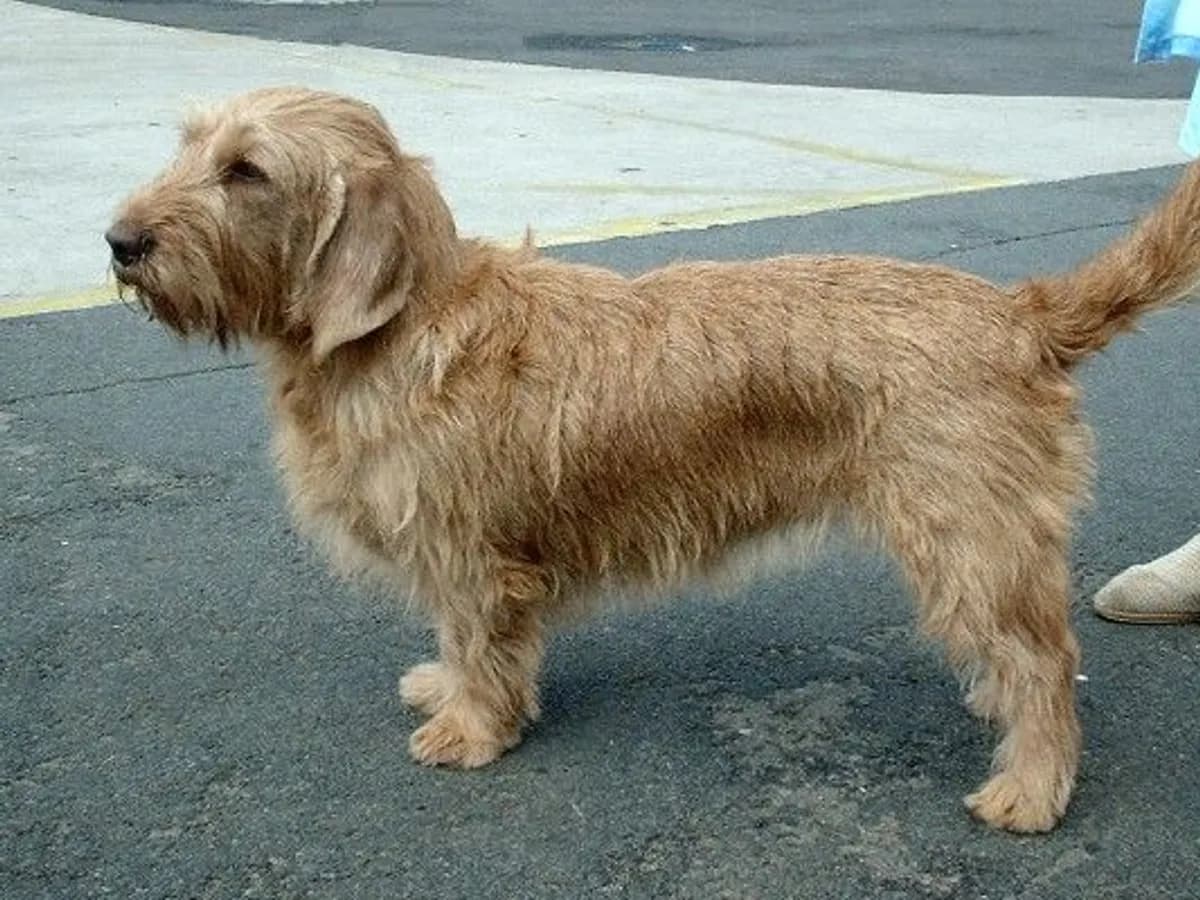
- Wire-haired
- Energy
- High
- Height
- 32–38 cm
- Colours
- Fawn to red-wheaten
- Shedding
- Moderate
- Est. feeding cost
- ~£1.02 a day
- Gear to consider
- Slow-feeder bowl, long training line, sturdy no-pull harness
Typical dry food, adult
About the Basset Fauve de Bretagne
The Basset Fauve de Bretagne is Brittany's wire-coated hunting basset, bred down from the larger Griffon Fauve to push through gorse and bramble after rabbit and hare. The harsh fawn coat is armour for scrubland work rather than decoration. Nearly lost after the Second World War, the breed was rebuilt in France and crossed the Channel late in the twentieth century, cheerful and entirely unbothered by its own rarity.
Bred to hunt in packs through thick cover, the Fauve is cheerful and brave, and that heritage shows in a confident, faintly stubborn nature. It is friendly with people, children and other dogs, but once the nose finds a trail the independence takes over, so consistency beats harshness in training.
That working drive makes it strongly food-motivated, a real training asset when treats come out of the measured daily allowance rather than on top of it. Bred to work in company, it does not cope well with long hours alone and is happiest in the thick of an active household.
Common health conditions
Things Basset Fauve de Bretagne owners commonly watch for. Guidance, not veterinary advice.
Intervertebral disc disease (IVDD)
The long back and short legs strain the spine, so keeping this breed lean is the most protective thing an owner can do.
Ear infections (otitis externa)
Time in undergrowth leaves moisture and debris caught in those long, low-set ears, so check and dry them after every outing.
Glaucoma
An inherited eye condition causing painful pressure build-up. Regular vet checks help catch the early signs.
Weight gain and obesity
A keen appetite means portions need weighing, because extra weight loads the spine directly.
Feeding a Basset Fauve de Bretagne
Bred to work scent trails for hours, the Fauve needs a complete diet with enough energy for a genuinely active day. It is also a compact breed with a scent-hound appetite, and it will happily eat past its needs. Weighing the food to its actual weight is the single most useful habit.
The long back and short legs already load the spine, so a lean body condition matters more than for most dogs this size. Split the food across two meals and match the recipe to life stage and activity. Let the food drive earn its keep in training, and not at the bowl.
Every dog is different — weight, age and activity all shift what a Basset Fauve de Bretagne needs. The turns these breed tendencies into a shortlist matched to your dog’s age, size, budget and needs.
Typical adult weight
16–18 kg
Est. daily calories
670–1,100 kcal
A broad guide for an average-activity adult in good body condition — not veterinary advice. Real needs vary with age, neutering, activity, health and body condition, so no two Basset Fauve de Bretagnes eat exactly the same. Get a personalised estimate or estimate feeding costs.

- Per day
- ~£1.02
- Per month
- ~£31
- Per year
- ~£373
A broad typical monthly budget guide, not a live price quote. Food format, calorie density, pack size and retailer pricing all change the real cost.
Find the right food for your Basset Fauve de Bretagne
Foods ranked to your dog
Answer a few quick questions and the Food Finder ranks foods to your Basset Fauve de Bretagne by score, price, life stage and fit.
Breed at a glance
- Exercise needs8/10
- Appetite8/10
- Trainability6/10
- Good with children8/10
- Shedding4/10
- Tolerates being alone3/10
The good & the worth-knowing
The good
- Cheerful, affectionate and good with other dogs
- A hardy hound built for the outdoors
- The wiry coat sheds relatively little
Worth knowing
- Recall takes real work once the nose engages
- Extra weight quickly strains the spine
- Bred for company and dislikes being alone
Best matched accessories
All accessoriesThe collections that suit the breed, judged by the same independent standard.
Common owner questions
How much exercise does a Basset Fauve de Bretagne need?
Plan for around two hours a day, ideally on varied routes where the nose gets a workout. This hardy little hound struggles far more with boredom and confinement than with too much activity.
What should I feed a Basset Fauve de Bretagne?
A complete diet matched to its activity and current shape, fed in weighed portions and never left down. Overfeeding is the likelier risk with this appetite, and the Food Finder can match a diet to its size and energy needs. Two daily meals suit most adults well.
Is the Basset Fauve de Bretagne easy to train?
It is clever and eager to please but scent-driven, and stubborn once the nose is engaged. Positive, food-based training works well here, as long as the treats you use are counted inside your dog's daily portion.
Does this breed shed much and how much grooming does it need?
Shedding is low to moderate, and the harsh wire coat needs weekly brushing plus hand-stripping around twice a year. Check and dry the ears after every walk given their long, low-set shape.