


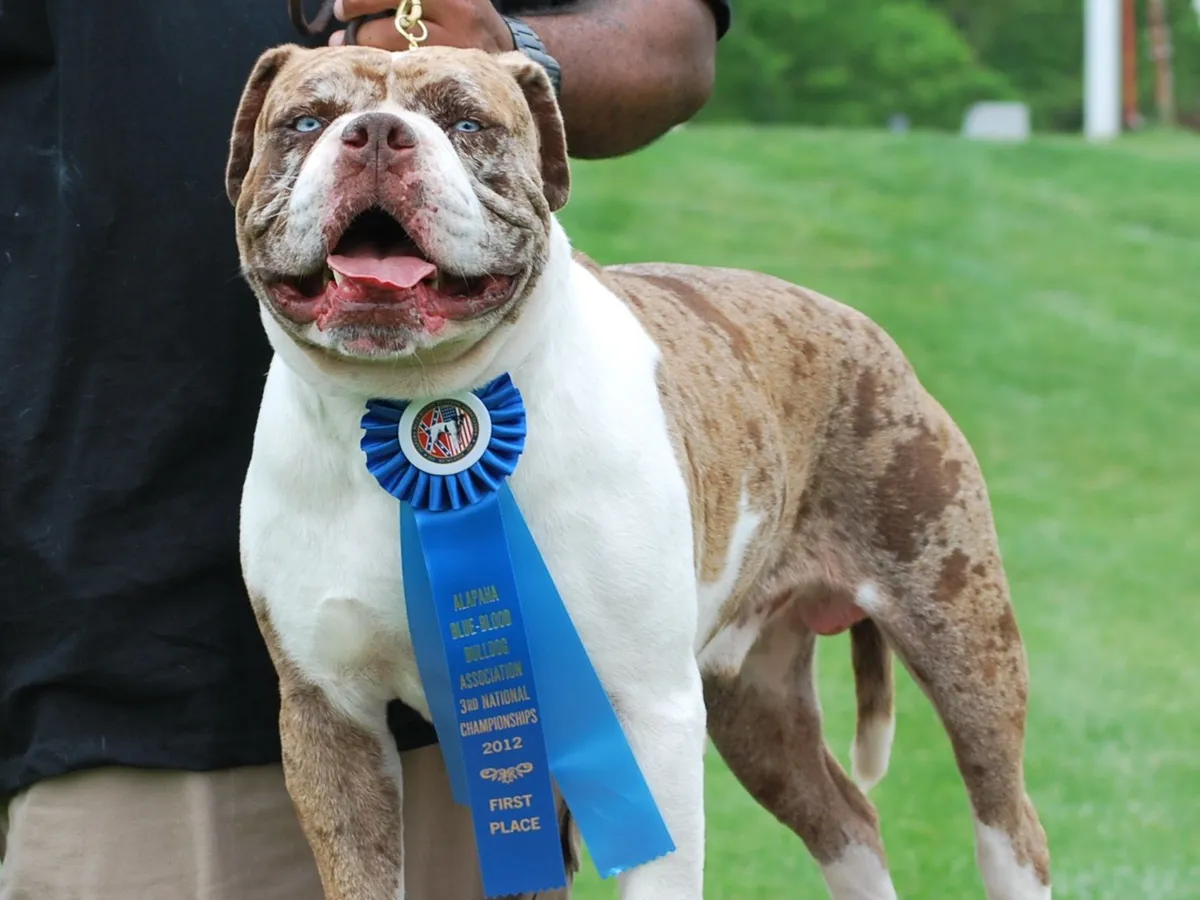

Most important facts
- Group
- Utility
- Size
- Large
- Weight
- 25–41 kg
- Lifespan
- 12–15 years
- Coat
- Short, dense and smooth
- Energy
- Moderate
- Height
- 51–63 cm
- Colours
- White with coloured patches
- Shedding
- Light
- Est. feeding cost
- ~£1.50 a day
- Gear to consider
- Wide, well-padded harness, slow-feeder bowl, orthopaedic bed
Typical dry food, adult
About the Alapaha Blue Blood Bulldog
The Alapaha Blue Blood Bulldog comes from the farmlands around the Alapaha River in southern Georgia, where plantation and homestead dogs were bred to catch livestock and guard the property. The grand name was reputedly a family flourish for a strain kept pure over generations. It remains a rare breed, unrecognised by the UK Kennel Club, and finding one here takes patience and careful checking.
Bred as an all-round Southern farm dog, the Alapaha is watchful, loyal and naturally protective of family and territory. That guarding instinct makes an effective watchdog, and it also means wide, early socialisation with people and places is what keeps wariness from settling in.
Within the family, Alapahas tend to be affectionate, steady and good with children they have grown up with. They prefer their people's company to long stretches alone. They respond well to consistent, positive training under an owner who sets clear, calm boundaries from the start.
Common health conditions
Things Alapaha Blue Blood Bulldog owners commonly watch for. Guidance, not veterinary advice.
Hip and elbow dysplasia
The main long-term worry in large, muscular breeds. A measured large-breed growth diet rather than free-feeding avoids the rapid gain that strains developing joints.
Bloat (gastric dilatation-volvulus)
A deep-chested breed with raised risk of a twisted stomach. Two or three modest meals suit this breed best, with hard exercise kept well away from mealtimes.
Cherry eye
A prolapsed third-eyelid gland, fairly common in bulldog types, usually needing straightforward surgical repair.
Skin and food sensitivities
Some Alapahas develop itchy skin linked to food intolerances. A simpler diet, introduced gradually, often helps pin down the trigger.
Hearing or vision issues in merle-coloured dogs
Breeding two merle-patterned parents together raises the risk of deafness and eye problems, which is a question to put to any breeder.
Feeding a Alapaha Blue Blood Bulldog
This is a large, densely muscled dog, and the food needs to support lean muscle without adding weight that loads the hips and elbows. A complete diet built on a clearly named animal protein, with moderate fat and controlled calories, suits most adults better than a generic high-energy formula. Their exercise needs are moderate.
Deep-chested breeds carry a higher bloat risk, so two or three smaller meals a day with a rest either side is worth building in from puppyhood. Puppies do best on a large-breed growth formula that paces calcium and calories, and any change of food should be gradual for a stomach that can be sensitive.
Every dog is different — weight, age and activity all shift what a Alapaha Blue Blood Bulldog needs. The turns these breed tendencies into a shortlist matched to your dog’s age, size, budget and needs.
Typical adult weight
25–41 kg
Est. daily calories
940–1,810 kcal
A broad guide for an average-activity adult in good body condition — not veterinary advice. Real needs vary with age, neutering, activity, health and body condition, so no two Alapaha Blue Blood Bulldogs eat exactly the same. Get a personalised estimate or estimate feeding costs.


- Per day
- ~£1.50
- Per month
- ~£46
- Per year
- ~£547
A broad typical monthly budget guide, not a live price quote. Food format, calorie density, pack size and retailer pricing all change the real cost.
Find the right food for your Alapaha Blue Blood Bulldog
Foods ranked to your dog
Answer a few quick questions and the Food Finder ranks foods to your Alapaha Blue Blood Bulldog by score, price, life stage and fit.
Breed at a glance
- Exercise needs6/10
- Appetite6/10
- Trainability6/10
- Good with children7/10
- Shedding3/10
- Tolerates being alone4/10
The good & the worth-knowing
The good
- A devoted, protective family guardian
- Fewer exaggerated features than some bulldog breeds
- A low-maintenance short coat

Worth knowing
- Rare in the UK, so provenance needs careful checking
- Strong guarding instincts demand early socialisation
- Joint and bloat risks call for attentive feeding
Best matched accessories
All accessoriesThe collections that suit the breed, judged by the same independent standard.




Common owner questions
How much exercise does an Alapaha Blue Blood Bulldog need?
Around an hour a day split across a couple of walks, plus some safe off-lead time, suits most adults. They are athletic rather than hyperactive, so steady exercise plus training games keeps them content without pounding the joints.
Is the Alapaha Blue Blood Bulldog prone to being overweight?
It can carry weight easily if overfed, and extra kilos make joint problems worse in a breed already prone to dysplasia. Feed a measured daily amount, check their waistline regularly and skip the free-feeding.
What should I feed a growing Alapaha puppy?
A large-breed puppy formula that controls calcium and calorie density is the safer choice, because rapid growth in a heavy-boned breed is linked to later joint trouble. Little and often also helps guard against bloat as they grow.
Is the Alapaha Blue Blood Bulldog good with children?
Typically yes. They are devoted and gentle with their own family's children, which fits their history of guarding people and livestock alike. Their wariness of strangers means early socialisation matters so protectiveness stays in proportion.