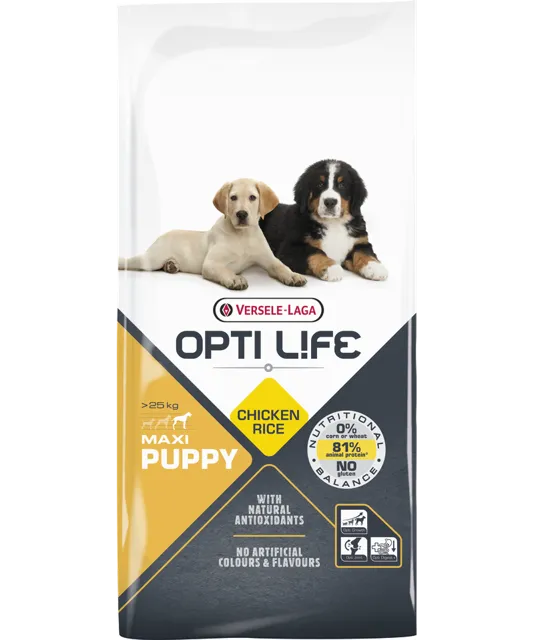

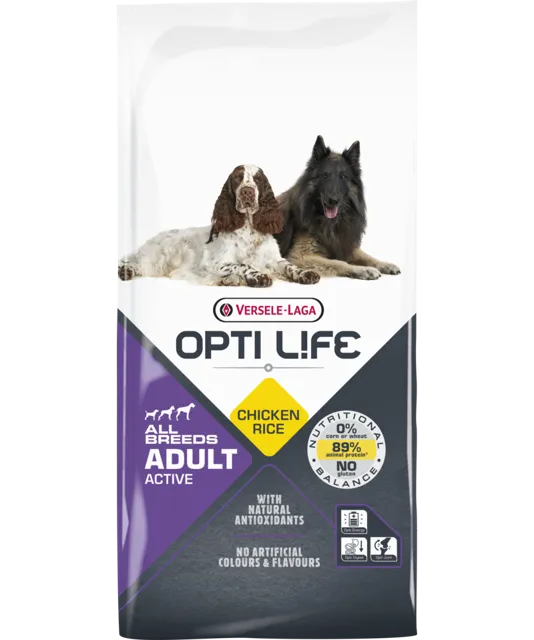

Opti Life
Opti Life Adult Care: Skin Care Medium & Maxi review
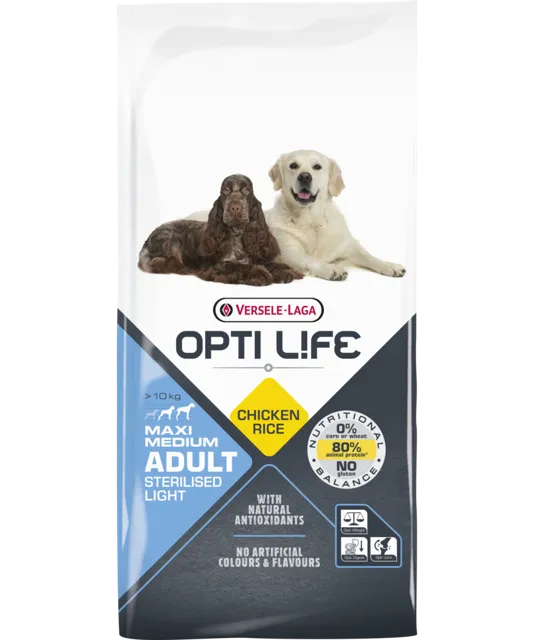
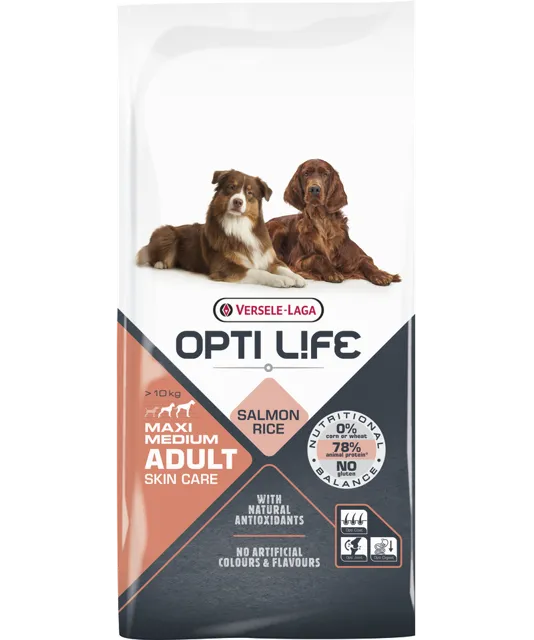
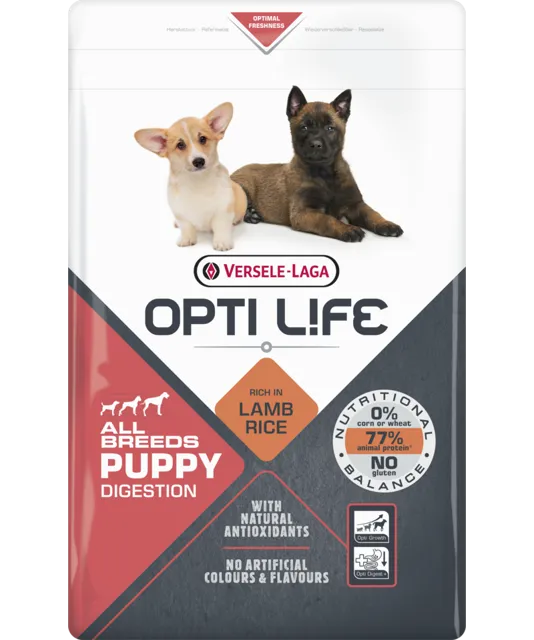
Opti Life Adult Care is two jobs done twice over. A pair of recipes is built on dehydrated lamb and rice for dogs whose digestion needs an easy life. Another pair uses dehydrated salmon and rice for dogs whose skin and coat need the attention. Each job comes in a mini kibble and a medium and maxi one. Glucosamine is dosed in print on all four, the fibre is declared down to the percentage, and prebiotic FOS and MOS sit behind it. All four land in our Good band.
Our view
Likely to suit
Your dog's stomach or their coat may be what keeps you turning bags over, and this range points a recipe straight at either one.
- Dogs with easily upset digestion, with the two Digestion recipes built on dehydrated lamb and rice and nothing exotic behind them
- Dogs with a dull coat, since the two Skin Care recipes lead on dehydrated salmon and top it up with salmon oil at 1%
- Small dogs and big ones equally, since every job in the range is made as a mini kibble and as a medium and maxi one
- Stiffening older dogs, with glucosamine printed at 500 mg/kg on the larger-breed bags and 250 mg/kg on the minis
- Owners who like a settled gut routine, with FOS and MOS each declared at 0.1% and beet pulp behind them
Worth watching
Pick a bag with these honest limits in mind.
- Across the four labels the animal fat goes unnamed, and so do the hydrolysed animal proteins, so none of these recipes can anchor a strict elimination trial
- Every recipe carries fish, either as dehydrated salmon or as salmon oil, so there is no fish-free option in the range
- Rice and rice flour are the starch here, with carbohydrate estimated between 44.5% and 48.3% of dry matter across the four
- Cellulose at 4% is purified fibre, not the whole-vegetable sort some owners prefer
Written by our editorial team. Independent guidance, not veterinary advice.
How this scores
How we scoreThe Details
Dog fit
Your dog's stomach or their coat may be what keeps you turning bags over, and this range points a recipe straight at either one. Pick a bag with these honest limits in mind.
Dry
Adult
Medium, Large
Salmon
The score, in context
All four sit in our Good band with almost nothing between them, so the decision is which job you are buying rather than which number is highest. The band is earned by a dehydrated named meat opening every list, with percentages printed beside the meat, the rice and the fibre sources. Glucosamine is stated in milligrams and the vitamin and mineral panel is dosed line by line. It stays there because of the unnamed animal fat and hydrolysed protein, plus a carbohydrate share sitting close to the 46.2% typical of an adult dry food. The typical food itself lands in that same band, so these four sit level with the field.
What's in it
Ingredients, as declared: salmon (dehydrated, 25%), rice (25%), rice flour, animal fat, vegetable fibres (cellulose 4%, beet pulp 1%), linseed, minerals, hydrolysed animal proteins, brewer's yeast, salmon oil (1%), FOS (0.1%), MOS (0.1%), sea algae (Ascophyllum nodosum), glucosamine 500 mg/kg, rosemary (15 mg/kg), green tea (10 mg/kg).
Named ingredients
Nutritional additives
_Nutritional additives:_ vitamin A 22000 IU, vitamin D3 1200 IU, vitamin E 500 mg, vitamin C 200 mg, β-carotene 1 mg, biotin 4 mg, taurine 1100 mg, 3b103 (iron) 75 mg, 3b202 (iodine) 3 mg, 3b405 (copper) 10 mg, 3b413 (copper) 5 mg, 3b503 (manganese) 50 mg, 3b607 (zinc) 42.5 mg, 3b801 (selenium) 0.2 mg, 3b8.12 (selenium) 0.1 mg. _Technological additives:_ antioxidants: tocopherols 22 mg/kg, clinoptilolite of sedimentary origin 10 g/kg, sepiolite 2.2 g/kg.
Ingredient notes
Every recipe opens the same way: a dehydrated named meat, then rice at almost exactly the same percentage. Dehydrated is the word that matters. Dehydrated meat has already given up its moisture before it is weighed, so between 23% and 25% of each finished kibble really is that animal. A fresh-meat headline cannot say the same, because most of its declared weight leaves in the oven. It is a modest headline compared with the meat-heavy end of the market, and a more honest one than it looks.
On the plant side it is rice and rice flour doing the carrying. The analysis follows: protein converts to between 25.0% and 26.1% of dry matter, and carbohydrate to between 44.5% and 48.3%. Rice is the cereal most often chosen for dogs with delicate digestion, which is the point on the Digestion pair and no accident on the others.
The fibre is where the label is most specific and most divisive. Cellulose is declared at 4% and beet pulp at 1%. The beet pulp ferments and a gut can work with it. The cellulose is purified plant fibre and passes through almost untouched. It bulks the stool and it is exactly what a digestive recipe reaches for. It is also a processed powder and not fibre off a vegetable. Printing the percentage is the label telling you straight how much of it there is.
Two entries give a family name where a species should be. Animal fat is a working ingredient here, not a trace one, and the kibble is made worth eating by the hydrolysed animal proteins. Neither is pinned to an animal. That single fact keeps a lamb recipe with lamb at the top from working as a strict single-protein diet. For most dogs this is academic. For a dog on a diagnostic elimination plan it is the whole question.
The tail is well chosen. Plant omega 3s come from linseed and the marine kind from salmon oil. Brewer's yeast supplies B vitamins, sea algae adds iodine and trace minerals, and a prebiotic duo of FOS and MOS at 0.1% each feeds a gut's own bacteria. Taurine is dosed on every bag, at 1100 mg on the two larger-breed recipes and 550 mg on the two minis. The preserving is done by rosemary and green tea at the close of each list, and the clay minerals below them are processing aids, not nutrition.
How this variety differs
Dehydrated salmon at 25% with rice at 25%, and the only recipe of the four to carry biotin, dosed at 4 mg per kilo. Biotin is the B vitamin that does the most for coat condition, and it sits alongside salmon oil at 1% and linseed to make the skin case. Protein reads 23.0% and fat 14.0%, at 395 kcal per 100g, with glucosamine at 500 mg/kg. It is sold in the largest bag only.
Price and value
£4.54 a kilo, whichever of the four you choose. The mini recipes are sold in 2.5kg and 7.5kg bags, Digestion Medium & Maxi in a 2.5kg bag and the largest size, and Skin Care Medium & Maxi in the largest size only.
As a guide, a 15kg adult dog in moderate condition eats between 205 and 215 grams a day depending on the recipe. The target is about 840 kcal a day (110 × bodyweight^0.75, the standard maintenance estimate). That comes to between £0.93 and £0.98 a day. The label's own table asks 175 to 250 grams for a dog between 15kg and 20kg on the medium and maxi recipes. Let the waistline settle any argument.
Nutritional analysis
Declared analysis
23%
14%
3%
7.5%
Dry weight
25%
15.2%
3.3%
8.2%
48.3%
As-fed composition
Estimated breakdown of the finished product by ingredient category, from the declared ingredient list and ingoing weights. These are estimates, not measurements.
34.3%
45.7%
5.9%
7.7%
6.4%
Pricing & size
- Pack size
- 12,5 kg (EAN 5410340311479)
- Retailer pricing
- Coming soon
Live retailer pricing is not yet available for this food. Prices, cost per day and where to buy will appear here once retailer data is live.
Ingredients and nutrition are taken from manufacturer data. Retailer pricing is not yet live for this food.
Related dog food guides
Ranked shortlists that include foods like this one.