


Skip to content
Off the Leash
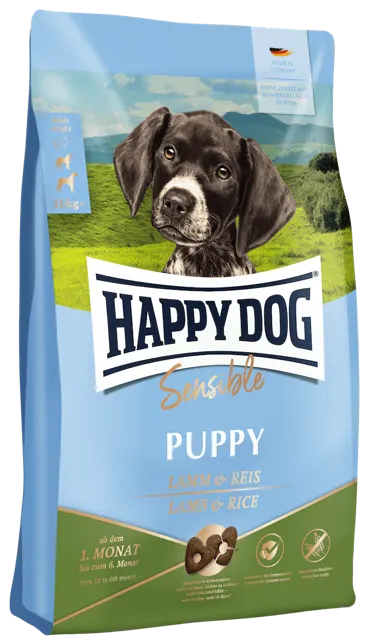
Happy Dog Puppy & Junior Dry – Baby Lamb & Rice

Happy Dog

Happy Dog Puppy & Junior Dry: Baby Lamb & Rice review

61.7/100Good
DryPuppy

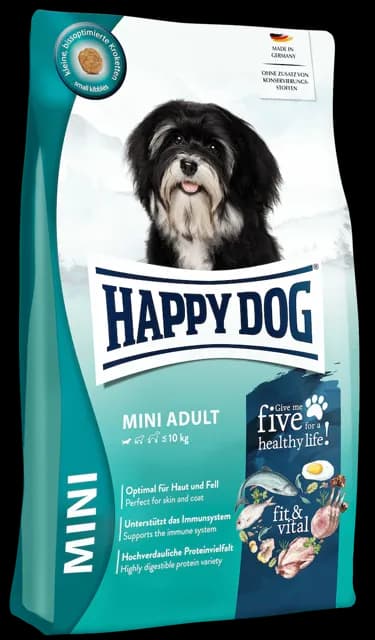
Happy Dog Puppy & Junior Dry is a wide German range that splits growth into a Baby stage and a Junior stage. Poultry, lamb and salmon are offered within each, plus two Mini bags for small breeds. The recipes share a construction: a dried protein up front, a rendered meat ingredient behind it, a rice or maize base through the middle and an unusually detailed tail of herbs, seaweed and mussel meat. Eight of the nine recipes land in our Good band, with Mini Baby Lamb a step below in our Average band.

Where to buy: coming soon
Live retailer pricing is coming soon. Once we have prices from UK retailers, the best price, cost per day and where to buy will appear here.

Our view

Likely to suit

If you like being able to change protein without changing brand, this range is built exactly for that.

  • Households that want a choice of meat, with poultry, lamb and salmon recipes offered at both the Baby and the Junior stage
  • Small breed pups, who get two Mini recipes drawn up for them alone
  • Puppies with a delicate stomach, who have a Mini Baby Lamb recipe built around that need
  • Owners who like a botanical tail, with seaweed, mussel meat and a long dried herb blend closing every recipe
  • Growing dogs settled on cereal, since rice and maize carry the base right across the range

Worth watching

Before you choose a bag, get these few range wide habits straight.

  • Greaves turns up in most of the recipes with no animal attached to it, and the poultry entries name a bird group instead of a species
  • Calcium is declared on eight of the nine recipes, and on most of them the figure runs past what a large breed puppy plan would normally take. Talk it over with your vet when a pup is heading for a big frame
  • Hydrolysed liver or hydrolysed protein runs through the whole range as a palatant, which a genuinely strict elimination diet needs to account for

Written by our editorial team. Independent guidance, not veterinary advice.

How this scores

How we score
61.7/100Good
Protein and processingGood
Nutritional balanceGood
TransparencyExcellent
ValueGood

The Details

Dog fit

If you like being able to change protein without changing brand, this range is built exactly for that. Before you choose a bag, get these few range wide habits straight.

Food type

Dry

Life stage

Puppy

Breed size

Toy, Small, Medium, Large, Giant

Main protein

Lamb

The score, in context

This range holds together more tightly than its size suggests. Eight of the nine recipes settle in our Good band, level with the typical puppy dry food, and only Mini Baby Lamb steps down into our Average band.

Two things separate them: how much of the meat is named, and how much cereal is in the bag. The salmon recipes open with dried chicken and then name their salmon flour, so you can follow the animal protein down the list. The poultry recipes open on a protein concentrate that names a bird group and not a bird, and the Junior bags let the cereal share climb as the declared protein comes down.

What's in it

Ingredients, as declared: Lamb protein* (20%), rice flour (19%), greaves, maize flour, beef fat, rice protein (5.5%), sunflower oil, hydrolysed liver, beet molasses* (desugared), cellulose, apple pomace*, rapeseed oil, potassium chloride, yeast*, sodium chloride, seaweed*, linseed, psyllium husk, mussel meat* (0.05%), yucca schidigera*, yeast* (extracted), milk thistle, artichoke, dandelion, ginger, birch leaves, nettle, chamomile, coriander, rosemary, sage, licorice root, thyme, (dry herbs total 0.16%) *) dried

Named ingredients

Lamb protein* (20%), rice flour (19%), greaves, maize flour, beef fat, rice protein (5.5%), sunflower oil, hydrolysed liver, beet molasses* (desugared), cellulose, apple pomace*, rapeseed oil, potassium chloride, yeast*, sodium chloride, seaweed*, linseed, psyllium husk, mussel meat* (0.05%), yucca schidigera*, yeast* (extracted), milk thistle, artichoke, dandelion, ginger, birch leaves, nettle, chamomile, coriander, rosemary, sage, licorice root, thyme, (dry herbs total 0.16%) *) dried

Nutritional additives

Vitamin A (3a672a) 17000 IU, vitamin D3 (3a671) 1000 IU, vitamin E (all rac-alpha-tocopheryl acetate 3a700) 125 mg, vitamin B1 (thiamine mononitrate 3a821) 4 mg, vitamin B2 (riboflavin 3a825ii) 4 mg, vitamin B6 (pyridoxine hydrochloride 3a831) 4 mg, biotin (3a880) 495 mcg, calcium D-pantothenate (3a841) 10 mg, niacin (3a314) 50 mg, vitamin B12 70 mcg, vitamin C (sodium calcium ascorbyl phosphate 3a312 ) 30 mg, choline chloride (3a890) 55 mg. Trace elements/kg: iron (iron(II) sulfate, monohydrate 3b103) 65 mg, copper (copper(II) sulfate pentahydrate 3b405) 14 mg, zinc (zinc oxide 3b603 100 mg, amino acid zinc chelate, hydrate 3b606 25 mg) 125 mg , manganese (manganese (II) oxide 3b502) 30 mg, iodine (calcium iodate, anhydrous 3b202) 2.5 mg, selenium (sodium selenite 3b801) 0.2 mg. Amino acids/kg: L-Tryptophan (3c440) 1000 mg/kg.Antioxidants: tocopherol extracts from vegetable oils 1b306(i

Ingredient notes

Every recipe here is put together the same way. A dried protein leads, a rendered meat ingredient usually follows it, a rice or maize base fills the middle, and a long and genuinely detailed tail of botanicals closes the list out. Once you have read one label you can read them all.

Greaves is the protein rich solid left behind when animal fat is rendered off. It is a real meat ingredient and it earns its place. The label never says which animal it came from, the single biggest gap in an otherwise talkative list.

Hydrolysed liver or hydrolysed protein appears in all nine recipes as a palatant. It works, and it is one reason these bags go down well. A hydrolysate names no species either, and a genuine exclusion diet has to read past the headline protein.

The declared analysis splits neatly by stage. The Baby recipes print protein at 30.0% and fat at 16.0%; the Junior recipes step down to 26.0% and 13.0% as the fastest growth passes. Crude ash is 7.5% on most and crude fibre 3.0%, and no recipe declares its moisture, which is why the dry matter figures here rest on an assumed 8%.

Carbohydrate converts to between 38.1% and 46.1% of dry matter across the range, against 39.0% typical of a puppy dry food. The three Junior bags sit at the top of that spread, where the cereal fills the space the lower protein leaves.

Calcium is printed on all but one recipe and lands between 1.58% and 1.74% of dry matter. Those are healthy levels for a small or medium pup, who will use every bit of it. They sit above what large breed growth plans generally aim at. That is the one place this range asks for a conversation with your vet, where a pup will grow to a large or giant frame.

The tail is where the range stands apart. Milk thistle, artichoke, dandelion, ginger, birch leaves, nettle, chamomile, coriander, rosemary, sage, licorice root and thyme are all named and add up to a small fraction of the bag. Seaweed, psyllium husk, apple pomace and mussel meat at 0.05% or 0.04% sit alongside them. Read it as seasoning with intent; the recipes stand on their protein and their cereal.

Cellulose does the bulk fibre work in most of the recipes. It is a purified plant fibre, not fibre arriving inside whole food. That is why the apple pomace and psyllium husk beside it are the more interesting entries on the fibre side.

The added panels print their doses rather than bare names, though the Junior Fit & Vital listing stops after the vitamins. L-tryptophan is added at 1000 mg per kilo on several of the lamb recipes, and the vitamin and trace element sets elsewhere cover the ground a complete growth food needs to cover.

How this variety differs

Baby Lamb & Rice puts lamb protein at 20% at the front with rice flour at 19% behind it, then greaves and maize flour. Rice protein at 5.5% adds a plant protein to the mix. The added fat here comes from beef fat and not poultry fat, which is worth knowing if beef is off the menu for your pup. Calcium converts to 1.74% of dry matter, energy is estimated at 365 kcal per 100g, and the recipe sits in our Good band.

Price and value

Across the range the figure runs from £3.28 to £8.25 a kilo, in bags from 800g up to 18kg.

No single figure covers a whole growth period. Read the chart for the stage your pup has reached, and go back to it as the weeks pass, because one scoop will not carry them the whole way.

Nutritional analysis

Declared analysis

Energy
365.2 kcal/100g

Estimated using Modified Atwater factors*

Protein

30%

Fat

16%

Fibre

3%

Ash

7.5%

Dry weight

Protein

32.6%

Fat

17.4%

Fibre

3.3%

Ash

8.2%

Carbs

38.5%

As-fed composition

Estimated breakdown of the finished product by ingredient category, from the declared ingredient list and ingoing weights. These are estimates, not measurements.

Meat

47.2%

Carbs

42.2%

Veg

0.8%

Oils

8.4%

Other

1.5%

Pricing & size
Pack size
1kg, 4kg, 10kg, 18kg
Retailer pricing
Coming soon

Live retailer pricing is not yet available for this food. Prices, cost per day and where to buy will appear here once retailer data is live.

Ingredients and nutrition are taken from manufacturer data. Retailer pricing is not yet live for this food.

Related dog food guides

Ranked shortlists that include foods like this one.
All reviews

Featured feeding accessories

All feeding accessories

Brackenwood

Slow Feeder Maze Bowl

Slows fast eaters and eases gulping at mealtimes.

From £12.99· 4 retailers
View

Tarn & Co

Raised Double Diner

Height-set stand for easier, tidier eating.

From £28.99· 3 retailers
View

Reviewed by Off the Leash Editorial

Last updated 28 August 2026