

Carnilove
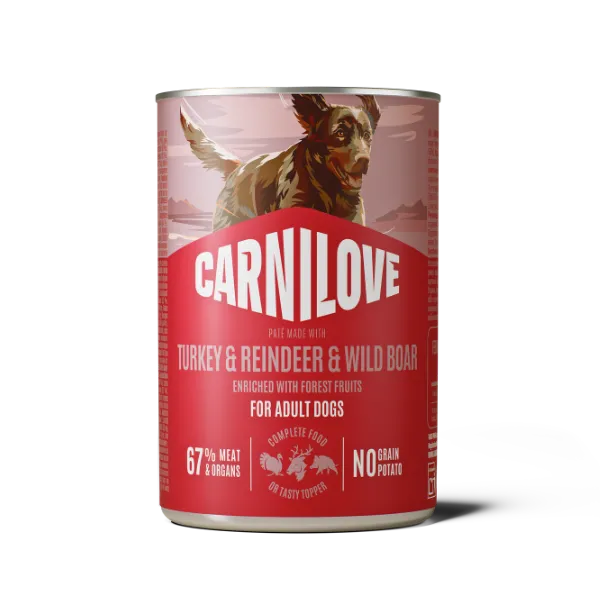
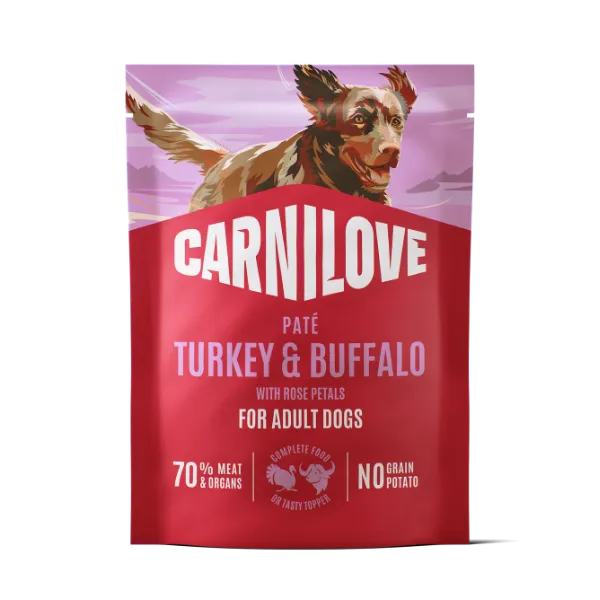
Carnilove Pate Cans: Turkey, Reindeer & Wild Boar review
Flavour
Carnilove's pâté cans keep the ingredient list to a handful of entries, short enough to read in one look. Two or three named animals make up just over two thirds of every can, and water carries much of the rest. Behind them sit blackcurrant at 2%, pea flour at 2%, lignocellulose at 1% and a little calcium carbonate. The animals are the draw here, with pheasant, wild boar and reindeer sharing shelf space with turkey and lamb, and all five cans land in our Outstanding band.
Our view
Likely to suit
If you would rather read a label on the shelf than take it home and study it, you will get on with these cans.
- Owners who want a list short enough to read on the shelf, since no can runs past a handful of entries
- Dogs bored of the everyday meats, with pheasant, wild boar and reindeer among the animals named and counted
- Grain-avoiding households, as pea flour at 2% is the only starch-side entry on any of the cans
- Puppies, thanks to a Turkey & Salmon can worked out to a growth analysis and a copper dose to match
- Owners who like their calories declared, since every can prints its own energy figure
- Dogs that get their taurine straight from the bowl, as all five cans carry an added dose of it
Worth watching
Before you order a case, it helps to know what a list this short is carrying.
- Lignocellulose at 1% is a purified fibre powder, so it adds bulk to the can without bringing anything else with it
- Pea flour at 2% contributes some plant protein, and the printed protein figure cannot separate that from the meat
- Fish comes into the range through the Turkey & Salmon cans, one to note if your dog stays off it
- Water sits second or third on most lists, which is how a pâté is made, but it does mean the meat percentages describe the finished can rather than the recipe before cooking
Written by our editorial team. Independent guidance, not veterinary advice.
How this scores
How we scoreThe Details
Dog fit
If you would rather read a label on the shelf than take it home and study it, you will get on with these cans. Before you order a case, it helps to know what a list this short is carrying.
Wet
Adult
Toy, Small, Medium, Large, Giant
Turkey
The score, in context
Every one of the five cans reaches our Outstanding band, and they finish close together, the turkey, reindeer and wild boar can nosing marginally ahead of the rest. A typical adult wet tin already sits in our Excellent band, since the category scores well with us, and these cans clear that middle of the shelf.
Protein and processing reads Excellent on every can and transparency Outstanding throughout, with nutritional balance coming back Outstanding on all but the adult turkey and salmon can, which reads Excellent.
What's in it
Ingredients, as declared: Turkey (50%), water, reindeer (10%), wild boar (7%), blackcurrant (2%), pea flour (2%), lignocellulose (1%), calcium carbonate (0.3%)
Named ingredients
Nutritional additives
- **Nutritional additives per 1kg:** vitamin D3 (3a671) 200 I.U., vitamin E (3a700) 110 mg, biotin (3a880) 0.5 mg, copper (3b407) 0.4 mg, iron (3b107) 8.0 mg, potassium iodide (3b201) 0.5 mg, manganese (3b505) 2.4 mg, zinc (3b612) 20 mg, taurine (3a370) 800 mg.
Ingredient notes
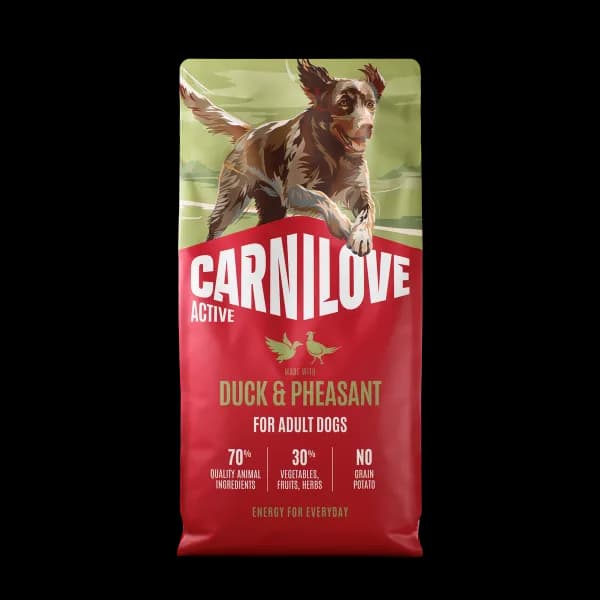
The meat is the whole story. Two or three named animals account for just over two thirds of each can, always with a percentage beside them. You are told that the duck and pheasant can is 41% duck and 26% pheasant, no guesswork needed. Protein converts to between 36.4% and 45.5% of dry matter across the range, and fat sits in the high twenties to mid thirties, which is a proper pâté rather than a light loaf.
Water is declared in its own right and not folded quietly into the meat percentage. That is the honest way of writing a wet label. Blackcurrant at 2% is the only fruit on the list, and at that level it is flavour and colour.
Pea flour at 2% and lignocellulose at 1% are the two entries worth a second look. Milled from roasted peas, pea flour carries useful fibre and minerals, though the protein it brings is not as usable to a dog as protein from meat. Lignocellulose is purified plant fibre, a white powder that adds bulk and next to no calories. It does what fibre should do, though we would always rather see that job done by a vegetable you can name.
Calcium carbonate at 0.3% brings calcium to 0.91% of dry matter, a comfortable level for an adult dog and one that clears the tighter requirement for a large breed puppy on the growth can. The added panel is dosed throughout: vitamin E at 110 mg per kilo, zinc at 20 mg, iron at 8.0 mg, manganese at 2.4 mg, biotin at 0.5 mg and taurine at 800 mg. Taurine is an amino acid dogs make for themselves, but heart-conscious makers often add it anyway.
How this variety differs
Turkey at 50% with reindeer at 10% and wild boar at 7%, three named animals on one label and the most unusual pairing in the range. It carries the least carbohydrate at 5.8% of dry matter and the most energy at a declared 113 kcal per 100g.
Price and value
These come as 400g cans, sold in packs of 6.
On an energy basis, a 15kg adult dog in moderate condition would eat between 743 and 804 grams a day of these cans, working from a maintenance estimate of about 840 kcal (110 × bodyweight^0.75). A growing puppy on the Turkey & Salmon can eats well above that for its size.
Nutritional analysis
Declared analysis
10%
8%
0.4%
2.3%
78%
Dry weight
45.5%
36.4%
1.8%
10.5%
5.8%
As-fed composition
Estimated breakdown of the finished product by ingredient category, from the declared ingredient list and ingoing weights. These are estimates, not measurements.
57%
27.7%
2%
13.3%
Pricing & size
- Pack size
- 6 x 400g
- Retailer pricing
- Coming soon
Live retailer pricing is not yet available for this food. Prices, cost per day and where to buy will appear here once retailer data is live.
Ingredients and nutrition are taken from manufacturer data. Retailer pricing is not yet live for this food.
Related dog food guides
Ranked shortlists that include foods like this one.