
Walk at the cool ends of the day and test the pavement with the back of your hand before you set off. Carry water. At home, give your dog a cool floor, shade that you move as the sun moves, and something frozen to work at. Never leave a dog in a parked car. Learn the signs of heatstroke and phone your vet the moment you see them.
Which dogs feel the heat first?
Every dog feels a hot spell, but some start struggling long before the rest. Flat-faced breeds are at the top of that list. A Pug or a French Bulldog has to cool itself through a shortened airway, so panting shifts far less heat than it does for a long-nosed dog. They can be in real difficulty on a walk another dog would take in its stride.
Thick double coats are the next group. A Siberian Husky is built for cold and carries a dense undercoat all year, and if that coat has not been brushed out properly in spring it holds warm air against the skin. Older dogs feel it too, along with dogs carrying extra weight and any dog with heart or airway trouble. A black coat in full sun soaks up more than a pale one. Puppies rarely know when to stop, so the pacing has to come from you.
When should you walk your dog in hot weather?
Move the walks to the ends of the day. Early morning is the best window, because the ground has had all night to lose its heat. Late evening works too, as long as the pavements have actually cooled. The middle of the day is for sleeping.
Before you set off, press the back of your hand flat on the pavement and hold it there while you count to seven. If you want to take it away, it is too hot for paws. Tarmac holds heat far longer than grass does, so route the walk through the park or the woods and take the shady side of the street.
Carry water every time. A bottle that doubles as a bowl is the most useful thing in the summer walking bag , and it means you are never hunting for a tap with a hot dog at your feet. Have a look through the rest of your walking kit as well, because a dark padded harness sitting on a black coat holds more heat than people expect.
Put the ball thrower away for the summer. Most dogs will chase until they drop, and a hard game of fetch in warm air takes more out of them than a long walk does. Sniffing and a bit of training in the shade will tire a dog out perfectly well.
How do you keep the house and garden cool?
Draw the curtains on the sunny side in the morning and open the house up again when the evening air turns. Most dogs then sort themselves out. If yours has taken to lying on the kitchen tiles or stretched flat in the hallway, that is not odd behaviour, that is a dog doing exactly the right thing.
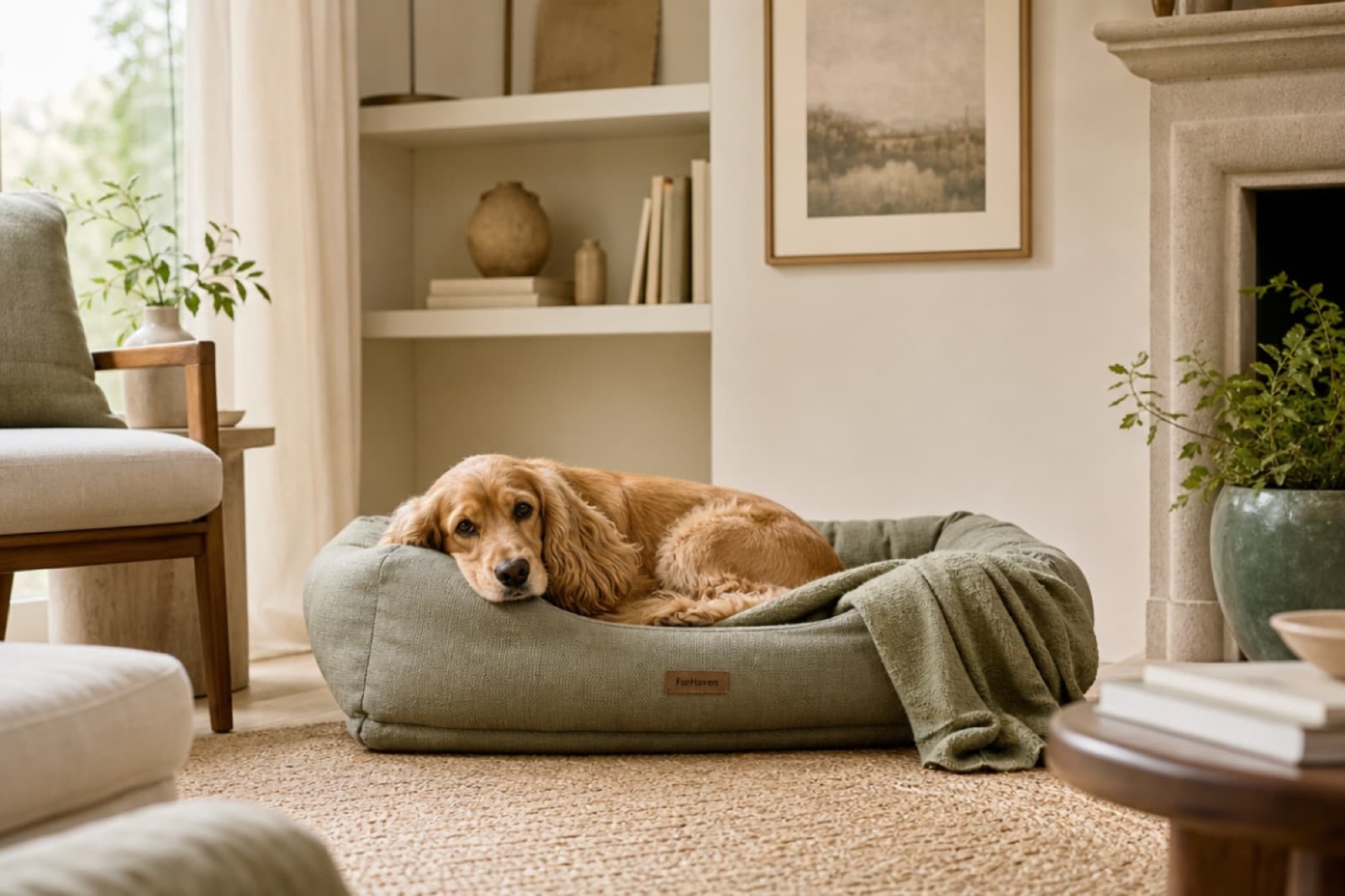
Move the bed out of any patch of afternoon sun. If the usual bed is a deep fleecy thing, put a thinner option on the floor beside it for the hot weeks. A cooling mat suits dogs who will actually use one , though plenty of dogs ignore them and take the tiles instead. A fan does more good moving air across the room than blowing straight at the dog.
Outside, the shade you set up at breakfast will have moved by mid afternoon, so check it again after lunch. A shallow paddling pool makes a good hour for a lot of dogs while you are there watching. Keep water in more than one room and top it up through the day, because a bowl standing in a warm kitchen goes lukewarm and some dogs will not touch it. Wide, heavy bowls are harder to tip and easier to drop ice cubes into.
Frozen things buy you a quiet hour. A rubber toy stuffed with their own wet food and frozen overnight gives a dog something cold to work at, and a carrot straight from the freezer does much the same job.
Is it ever safe to leave a dog in the car?
No. Not with the windows cracked, not in the shade, not for the five minutes it takes to fill up. A parked car warms up quickly even on a day that feels mild outside, and it keeps warming. This is a plain rule rather than a scare story. If the dog cannot come in with you, the dog stays at home.
For journeys you do have to make, the cooling starts before anyone gets in. Run the air conditioning with the doors open for a few minutes so you are not loading a dog into a hot car, and travel at the cool ends of the day. A sunshade on the window your dog sits behind earns its keep. Our guide to travelling with your dog by car covers the rest, including where a dog should actually sit. On a long run, stop somewhere with grass and shade and give your dog a proper drink before you set off again.
What are the signs of heatstroke, and what do you do?
Heatstroke is the emergency at the end of all this, and it is worth knowing what it looks like before you ever need to. Phone the vet if you see heavy panting that does not settle once your dog stops and rests. Drooling much more than usual. Gums that look bright red or unusually dark. Wobbly back legs or an unsteady, drunken walk. Vomiting or loose motions. Confusion, or not responding to you the way they normally would. Collapse.
If you see any of that, act first and phone as you go. Get your dog out of the sun and into shade or indoors. Pour cool water over the body and keep it going, over the neck, the chest and the insides of the legs. Get air moving across the wet coat with a fan or an open window. Offer small drinks if your dog wants them, and never force it. Then ring your vet, say you think it is heatstroke, and do what they tell you. Cooling comes before the journey, so keep pouring water while someone else calls ahead, and keep cooling in the car on the way in.
A dog who seems to pick up still needs to be seen. Your vet comes first on anything clinical here, and nobody has ever been told off for phoning too early.
Should you clip a double coat for summer?
No, and it is the one summer job that tends to do more harm than good. A double coat insulates in both directions. The undercoat holds a layer of still air against the skin, and the longer guard hairs keep the sun off it. Shave that away and you have removed the sun protection, and the coat often grows back patchy for a long time afterwards.
The job that actually helps is getting the dead undercoat out. Our guide to grooming a double coat at home walks through the tools and the technique. A standing appointment with a groomer for a proper de-shed at the start of the season is worth booking. For dogs who really feel it, a cooling coat that you soak and wring out works by evaporation and can make a short walk manageable . That is a different piece of kit from the coat you reach for in winter.
Does the heat change what goes in the bowl?
A little. Plenty of dogs go quiet on food in warm weather and eat properly again once the evening cools. Move the main meal to the cool end of the day and do not fret at a full bowl in the afternoon. Wet food adds water to the day, which is no bad thing in July, although it should not sit out in a warm kitchen for hours.
What is not normal is a dog who goes off food for more than a day, or who eats but seems flat and sorry for themselves. That is a conversation with your vet, not something to solve with a different bag.
Frequently asked questions
Is a short midday walk alright if it is only ten minutes?
Skip it. Ten minutes on hot tarmac is long enough to burn pads, and for a flat-faced or heavy-coated dog it is long enough to bring on real trouble. No dog suffers from missing one walk on a hot afternoon. Let them out in the garden, do five minutes of training indoors instead, and take the proper walk once the ground has cooled.
How hot is too hot for pavements?
Use your hand rather than the forecast. Press the back of your hand flat on the pavement and hold it there while you count to seven. If you want to pull away before you get there, the surface is too hot for paws, so turn back or stick to grass. Tarmac and paving slabs hold heat for hours after the sun has moved off them, so an evening walk can still catch you out.
Should I put ice in my dog's water?
Yes, it is fine. The old worry about ice cubes causing harm does not hold up, and a few of them keep a bowl drinkable through a warm afternoon. What matters more is that water sits in more than one room and gets topped up often. If your dog is drinking less than usual, splashing water into their food or offering some wet food is an easy way to get fluid in.
Can I shave my dog to keep them cooler?
Not a double coat. It insulates against heat as well as cold and shields the skin from the sun, and clipping it can leave the coat patchy for a long time. Brushing the dead undercoat out is the thing that genuinely helps. Single-coated breeds and badly matted dogs are a different conversation, so speak to your groomer before any clippers come out.