


Most important facts
- Group
- Terrier
- Size
- Large
- Weight
- 22–31 kg
- Lifespan
- 10–14 years
- Coat
- Short, flat
- Energy
- Moderate
- Height
- 45–55 cm
- Colours
- White, brindle, red, fawn or tricolour
- Shedding
- Moderate
- Est. feeding cost
- ~£1.33 a day
- Gear to consider
- Slow-feeder bowl, heavy-duty chew toys, secure flat collar or well-fitted harness
Typical dry food, adult
About the English Bull Terrier
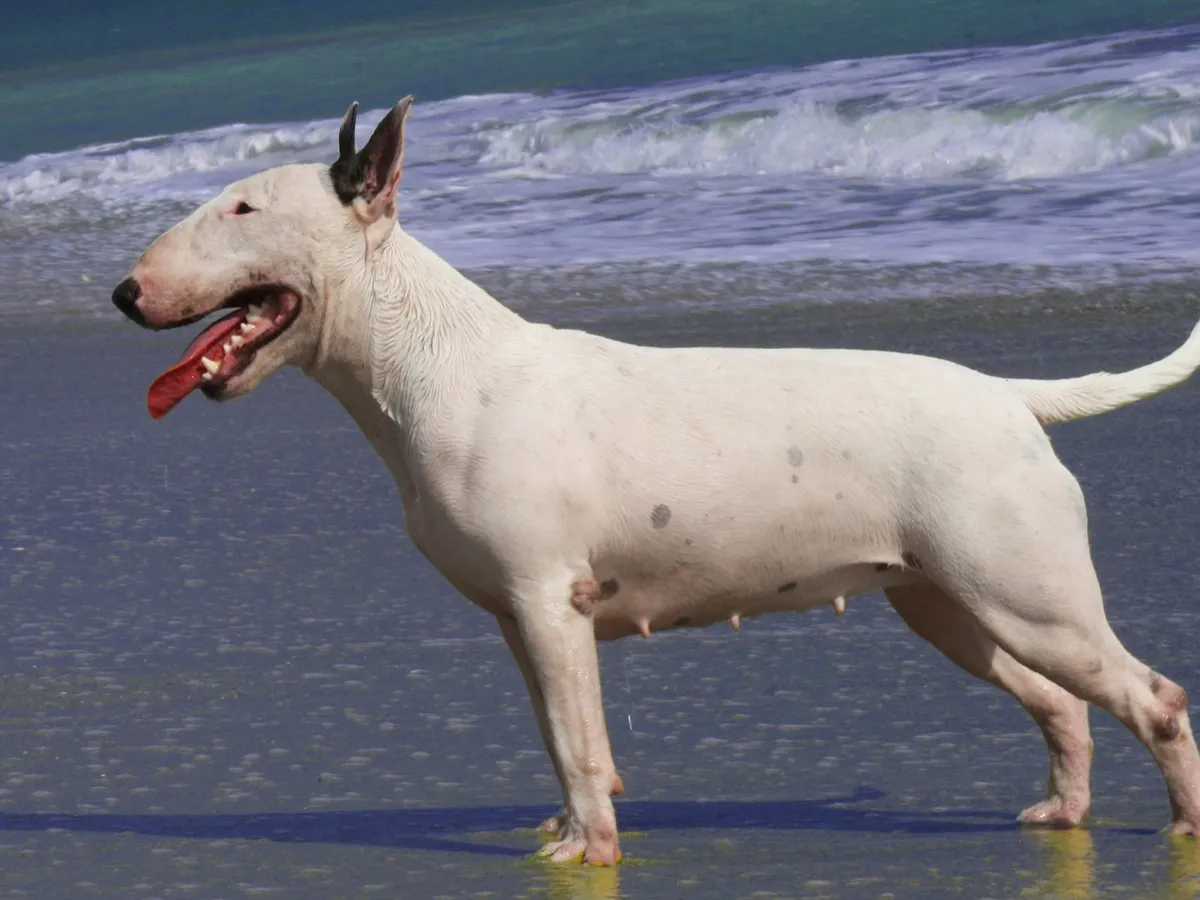
The English Bull Terrier was developed in Birmingham in the 1850s by James Hinks, who refined the rough bull-and-terrier fighting crosses of the day into a stylish, all-white show dog. Coloured varieties followed in the early twentieth century, and the distinctive downward-curved egg head emerged through show breeding. The breed's fighting past is long behind it, and today it is kept purely as a characterful companion.
Bull Terriers are characterful, comical and fiercely loyal, with a mischievous streak owners tend to find endearing rather than frustrating. They thrive on human company and often become the clown of the household. Terrier stubbornness means training has to be consistent and started early, never left to chance.
This is a breed for confident, experienced owners rather than first-timers, as its strong will, prey drive and physical power call for structure from day one. Given plenty of engagement and a predictable routine, they settle into affectionate, good-humoured family dogs, though their enthusiasm at the food bowl always needs management.
Common health conditions
Things English Bull Terrier owners commonly watch for. Guidance, not veterinary advice.
Congenital deafness
More common in white-coated Bull Terriers. Choose a breeder who BAER-tests puppies. Deaf dogs feed and live perfectly well.
Lethal acrodermatitis (LAD)
A rare, serious inherited condition seen mainly in white lines, causing poor growth and skin and digestive problems from puppyhood. Affected pups need specialist veterinary and dietary care.
Patellar luxation
The kneecap can slip out of place. Keep this stocky breed lean through measured, portion-controlled meals to take pressure off the joints.
Polycystic kidney disease (PKD)
An inherited kidney condition that can be screened for in breeding stock. Dogs with reduced kidney function may later need a vet-guided renal diet.
Heart disease (mitral valve and aortic issues)
Some lines carry a predisposition to valve or aortic abnormalities. Keep up regular vet checks so murmurs are caught early.
Feeding a English Bull Terrier
Bull Terriers are stocky, muscular dogs that put on weight easily. Their enthusiasm for food means portions have to be measured out. A complete diet with moderate energy density and decent protein supports their muscle without tipping a healthy body condition into a tubby, joint-straining one. Splitting meals into two a day helps keep energy even and curbs the begging this breed is known for.
Some Bull Terriers, particularly from white lines, are prone to skin allergies, so a diet with good-quality animal protein and added omega-3 and omega-6 oils supports the skin and coat. Because they eat fast, a slow-feeder bowl reduces gulping and excess wind, and a dog with a diagnosed kidney or heart condition should be fed to its vet's advice.
Every dog is different — weight, age and activity all shift what a English Bull Terrier needs. The turns these breed tendencies into a shortlist matched to your dog’s age, size, budget and needs.
Typical adult weight
22–31 kg
Est. daily calories
850–1,470 kcal
A broad guide for an average-activity adult in good body condition — not veterinary advice. Real needs vary with age, neutering, activity, health and body condition, so no two English Bull Terriers eat exactly the same. Get a personalised estimate or estimate feeding costs.
- Per day
- ~£1.33
- Per month
- ~£40
- Per year
- ~£484
A broad typical monthly budget guide, not a live price quote. Food format, calorie density, pack size and retailer pricing all change the real cost.
Find the right food for your English Bull Terrier
Foods ranked to your dog
Answer a few quick questions and the Food Finder ranks foods to your English Bull Terrier by score, price, life stage and fit.
Breed at a glance
- Exercise needs6/10
- Appetite8/10
- Trainability5/10
- Good with children6/10
- Shedding4/10
- Tolerates being alone3/10
The good & the worth-knowing
The good
- Deeply loyal, affectionate and endlessly entertaining companion
- Short, low-maintenance coat that needs only a weekly brush
- Distinctive, characterful personality that bonds closely with its family
Worth knowing
- Strong-willed and mischievous, so needs an experienced, consistent handler
- High prey drive and a stubborn streak mean off-lead recall can never be fully relied on
- Predisposed to inherited conditions that call for health-tested breeding lines and regular check-ups
Best matched accessories
All accessoriesThe collections that suit the breed, judged by the same independent standard.

Common owner questions
Are English Bull Terriers good with children?
They can be, especially when raised with children and well socialised from puppyhood, but their strength and boisterous play style mean time with younger children should always be supervised.
How much should I feed my Bull Terrier?
Feed a complete food in two measured meals a day, adjusting the amount to keep your dog in lean, athletic condition. Pack guidelines are a starting point only, as this breed will happily overeat. Our Food Finder can help match a diet to their size and activity.
Why are white Bull Terriers linked to deafness?
The gene responsible for an all-white coat is linked to a higher rate of congenital deafness in one or both ears. Reputable breeders BAER-test puppies, and deaf dogs can live full, happy lives with adapted training.
Do Bull Terriers need a lot of exercise?
They need a solid hour or so of walking and play each day, plus mental stimulation such as training games or puzzle feeders. They're not as relentlessly high-energy as some terriers, and happily flop on the sofa afterwards.