


Skip to content
Off the Leash
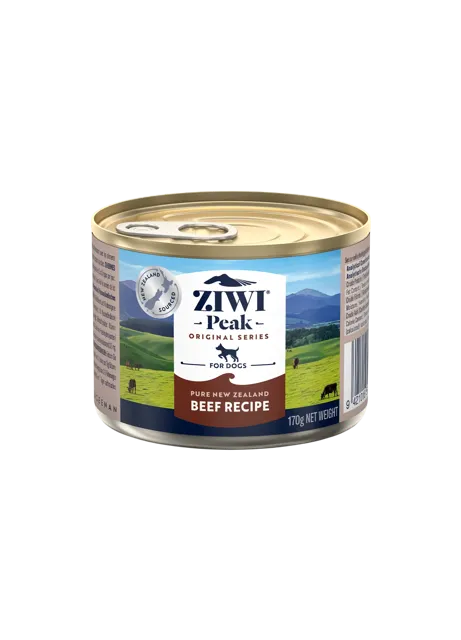
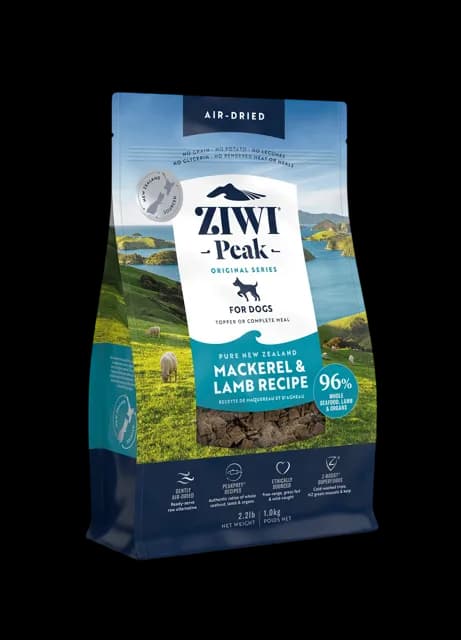
Ziwi Peak Tins – Beef

Ziwi Peak

Ziwi Peak Tins: Beef review

86.7/100Outstanding
WetAdult

Ziwi Peak Tins bring the brand's whole prey thinking to a wet format. Each tin is built on a named animal and its organs at around two thirds of the recipe, with chickpeas as the only starch. New Zealand green mussel at 3% and a little dried kelp close the list. Four recipes cover beef, chicken, mackerel with lamb, and venison, and all four sit in our Outstanding band with barely anything between them.

Where to buy: coming soon
Live retailer pricing is coming soon. Once we have prices from UK retailers, the best price, cost per day and where to buy will appear here.

Our view

Likely to suit

A dog that eats like a dog, offal and all, will find plenty to get on with here.

  • Dogs raised on offal, since lung, kidney, tripe, liver and heart are named on the labels alongside the muscle meat
  • Owners after a list they can read at a glance, with six entries on most of these tins and every one of them a thing you can picture
  • Dogs after an unusual protein, with venison and a mackerel recipe sitting alongside the everyday beef and chicken
  • Households keeping grain out, because chickpeas carry the only starch anywhere in the range
  • Older dogs beginning to stiffen, as New Zealand green mussel at 3% appears in every tin at a level that means something

Worth watching

The labels are short and clear, but a few points repay a closer look before you choose one.

  • Green mussel and dried kelp are in every tin, and the Mackerel and Lamb pairs fish with a red meat, so none of the four is a one animal food
  • Ash at 18.2% of dry matter and fibre at 9.1% put the Chicken recipe above its siblings, a sign of more bone in that tin
  • Calcium is not declared on any of these tins, which is worth a query to Ziwi Peak if your dog needs it capped

Written by our editorial team. Independent guidance, not veterinary advice.

How this scores

How we score
86.7/100Outstanding
Protein and processingExcellent
Nutritional balanceOutstanding
TransparencyOutstanding
ValueOutstanding

The Details

Dog fit

A dog that eats like a dog, offal and all, will find plenty to get on with here. The labels are short and clear, but a few points repay a closer look before you choose one.

Food type

Wet

Life stage

Adult

Breed size

Toy, Small, Medium, Large, Giant

Main protein

Beef

The score, in context

All four recipes read Outstanding on our scoring, with next to nothing between them. The wet shelf is a strong category whose middle already reaches our Excellent band, so this range sits a step clear of the better part of it. The reasons are on the tin: two thirds of each recipe is a named animal with its organs listed out, there is a single starch, and no entry is written as a legal category.

What's in it

Ingredients, as declared: 65% Beef and Beef Organs (including Beef, Lung, Kidney, Tripe, Liver, Bone, Cartilage), Chickpeas, 3% New Zealand Green Mussel, Lecithin, Minerals, Dried Kelp

Named ingredients

65% Beef and Beef Organs (including Beef, Lung, Kidney, Tripe, Liver, Bone, Cartilage), Chickpeas, 3% New Zealand Green Mussel, Lecithin, Minerals, Dried Kelp

Nutritional additives

Nutritional Additives (Additives per kg): Vitamin D3 695 IU, Zinc (as Zinc Chelate of Protein Hydrolysates) 34 mg, Copper (as Copper (II) Chelate of Protein Hydrolysates) 3.7 mg, Iron (as Iron (II) Chelate of Glycine Hydrate) 20 mg, Manganese (as Manganese Chelate of Protein Hydrolysates) 3.3mg.

Ingredient notes

Every tin is put together the same way. A named animal with its organs takes the front, 65% on the Beef and the Venison, 66% on the Chicken, while the Mackerel and Lamb splits its front end 39% fish to 26% lamb. The organs are listed one by one, so you can see the lung, kidney, tripe, liver, heart and bone going in. That is the point of a whole prey recipe, and very few labels bother to spell it out.

Nothing in an animal is more nutrient dense than its organs, liver especially, and tripe is among the easiest things for a dog to digest. The bone and cartilage in the mix are where much of the mineral content comes from, which is exactly why a recipe like this does not need a long added panel behind it.

Chickpeas are the only starch and they carry no percentage, which is the one real gap in these lists. The estimated carbohydrate gives you a sense of the size of it. The Chicken sits at 6.8% of dry matter and the Beef at 16.3%, against the 15.8% typical for adult wet food. Whichever tin you pick, this is a low starch bowl by wet food standards.

At 3%, the New Zealand green mussel is in there in earnest, not as a token sprinkle. It is the ingredient owners of older dogs tend to go looking for. Dried kelp closes each list and brings iodine with it, which is useful given how short the added panel is.

The analysis is strong across the board. Protein converts to between 40.9% and 55.1% of dry matter, with the Mackerel and Lamb and the Venison at the top of that spread, and fat runs from 22.4% to 28.6%. The Chicken tin is the outlier, with ash at 18.2% of dry matter, high enough to suggest a more generous share of bone in that particular recipe than in its siblings.

The added panel is brief, and every trace element in it is chelated. Zinc, copper, iron and manganese are bound to protein or glycine, not supplied as plain sulphates, and that is the form a dog takes up most readily. Vitamin D3 sits alongside them. With this much organ meat and bone in the tin, a short added panel reads as confidence in the ingredients.

How this variety differs

Beef and beef organs at 65%, the list running through lung, kidney, tripe, liver, bone and cartilage. It is the richest of the four in fat at 28.6% of dry matter and the highest in estimated carbohydrate at 16.3%, and lecithin appears here where the Chicken does without it.

Price and value

Sold in 170g and 390g tins, both by the case of 12, with the same recipe inside either size.

As a guide, a 15kg adult dog in moderate condition gets through 672 to 700 grams a day, depending on the recipe. That comes off an estimate of 840 kcal a day (110 × bodyweight^0.75, the standard maintenance estimate). These are dense tins for wet food, so that works out at a little under two of the 390g size a day, or about four of the 170g.

Nutritional analysis

Declared analysis

Energy
125 kcal/100g
Protein

11%

Fat

7%

Fibre

0.5%

Ash

2%

Moisture

75.5%

Dry weight

Protein

44.9%

Fat

28.6%

Fibre

2%

Ash

8.2%

Carbs

16.3%

As-fed composition

Estimated breakdown of the finished product by ingredient category, from the declared ingredient list and ingoing weights. These are estimates, not measurements.

Meat

68%

Added water

19.2%

Carbs

8%

Veg

1%

Other

3.8%

Pricing & size
Pack size
170g (Case of 12), 390g (Case of 12)
Retailer pricing
Coming soon

Live retailer pricing is not yet available for this food. Prices, cost per day and where to buy will appear here once retailer data is live.

Ingredients and nutrition are taken from manufacturer data. Retailer pricing is not yet live for this food.

Related dog food guides

Ranked shortlists that include foods like this one.
All reviews
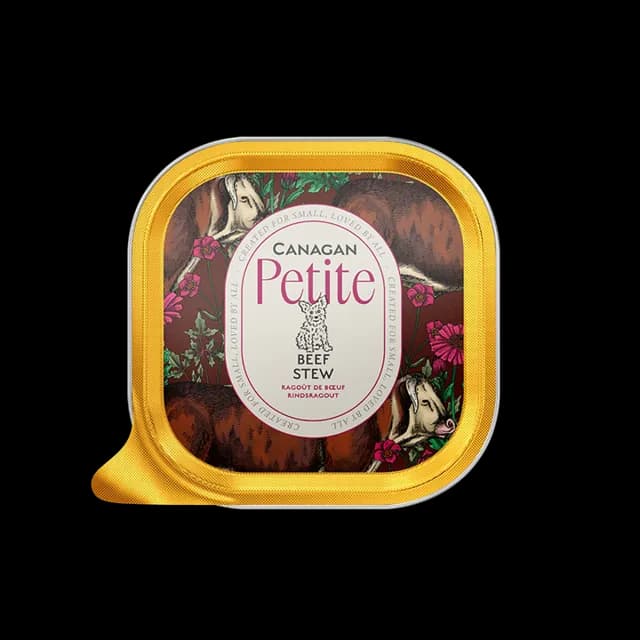
Canagan Petite – Beef Stew Paté
89/100Outstanding
9 varieties

Canagan

Petite

WetAll life stagesSingle protein
View review

Featured feeding accessories

All feeding accessories

Brackenwood

Slow Feeder Maze Bowl

Slows fast eaters and eases gulping at mealtimes.

From £12.99· 4 retailers
View

Tarn & Co

Raised Double Diner

Height-set stand for easier, tidier eating.

From £28.99· 3 retailers
View

Reviewed by Off the Leash Editorial

Last updated 28 August 2026