Skip to content
Off the Leash
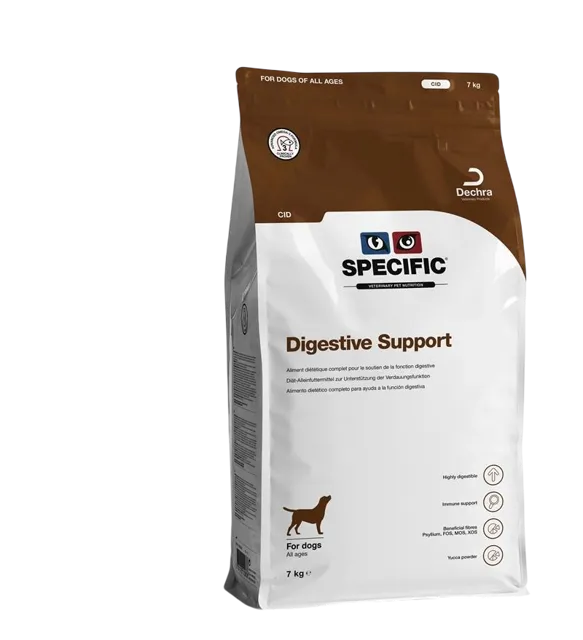
Specific CID Digestive Support – —

Specific

Specific CID Digestive Support review

We don't put a score on this food. It is a veterinary diet, formulated for a diagnosed condition and meant to be fed on a vet's advice. Your vet has seen your dog and we have not, so a number from us could only pull you towards their advice or away from it, and neither of those is ours to do. What follows is what the label declares, what the analysis works out at, and where to buy it, with no judgement attached to any of it.

Specific places this one in its CID Digestive Support line, a highly digestible dry diet built on rice and egg for dogs having their digestion managed under veterinary supervision.

DryPuppyAdult
Where to buy: coming soon
Live retailer pricing is coming soon. Once we have prices from UK retailers, the best price, cost per day and where to buy will appear here.

The Details

Dog fit
Food type

Dry

Life stage

Puppy, Adult, Senior

Breed size

Toy, Small, Medium, Large, Giant

Main protein

Fish

What's in it

Ingredients, as declared: Rice, egg powder, fish meal, maize, beet pulp, minerals (including zeolite), dextrose, pork fat, animal protein hydrolysate, vitamins and trace elements (including chelated trace elements), fish oil, Antarctic krill, yeast (including sources of ß-1.3/1.6-glucans and mannanoligo-saccharides), yeast fermentation product (Saccharomyces cerevisiae products, calcium carbonate), fructo-oligo-saccharides, psyllium husk, AuraGuard (calcium carbonate, citrus extract, maltodextrin, sodium chloride), xylo-oligo-saccharides, Yucca powder, rosemary extract. With natural antioxidants (tocopherols and vitamin C).

Named ingredients

Rice, egg powder, fish meal, maize, beet pulp, minerals (including zeolite), dextrose, pork fat, animal protein hydrolysate, vitamins and trace elements (including chelated trace elements), fish oil, Antarctic krill, yeast (including sources of ß-1.3/1.6-glucans and mannanoligo-saccharides), yeast fermentation product (Saccharomyces cerevisiae products, calcium carbonate), fructo-oligo-saccharides, psyllium husk, AuraGuard (calcium carbonate, citrus extract, maltodextrin, sodium chloride), xylo-oligo-saccharides, Yucca powder, rosemary extract. With natural antioxidants (tocopherols and vitamin C).

Nutritional additives

inline in ingredients — the site publishes no separate additives panel.

What's on the label

Rice opens the label with egg powder directly behind it, then fish meal and maize, so the kibble rests on cooked starch with two concentrated protein sources sitting high on the list. Fish meal is the only meat meal declared anywhere, and pork turns up as fat and not as a protein, which is the kind of detail that matters when a species is being tracked.

Antarctic krill adds a further animal ingredient lower down, and an animal protein hydrolysate names no species at all. Hydrolysis breaks protein into smaller fragments, so there is less for the gut to do with it. An unnamed source does mean this recipe cannot stand as a strict exclusion diet if that is what is being attempted.

Midway down the list comes dextrose, a simple sugar there for palatability and for the way it behaves in manufacture rather than for nutrition. Yucca powder near the end is the sort of inclusion makers reach for on the smell of what the dog produces. Neither has a percentage printed against it.

The mineral entry is declared as including zeolite, a mineral used in feed to bind moisture and ammonia as they pass through. Calcium carbonate appears twice over, once inside the yeast fermentation product and again inside AuraGuard, which Specific itemises as calcium carbonate, citrus extract, maltodextrin and sodium chloride. Salt is therefore on the list without a level beside it.

The gut directed group runs long. Yeast supplies beta glucans and mannan oligosaccharides, a Saccharomyces cerevisiae fermentation product follows, and fructo oligosaccharides, xylo oligosaccharides and psyllium husk close it out. None of them carries a declared inclusion, so the label confirms they are present without saying how much.

The analysis declares protein at 25.0%, fat at 13.2% and crude fibre at 1.4%, with moisture at 8.5% and energy at 378 kcal per 100g. So little water is declared that the as fed figures sit close to their dry matter equivalents. Crude fibre that far down is what a low residue digestive diet is built to do, not something missing from it. Only the vet who knows the case can say whether that design fits your dog.

Specific lists the food for puppies and adults, and for older dogs too. The feeding table on the pack starts at 55 grams a day for a 2.5kg dog, reaches 205 grams at 15kg and tops out at 710 grams for an 80kg dog. Portions on a therapeutic diet are normally set in the consultation rather than read off the bag.

Price and where to buy

It is sold in 2kg, 7kg and 12kg bags, with the 2kg also available three at a time, and works out at £7.08 a kilo.

Nutritional analysis

Declared analysis

Energy
378.1 kcal/100g
Protein

25%

Fat

13.2%

Fibre

1.4%

Moisture

8.5%

Dry weight

Protein

27.3%

Fat

14.4%

Fibre

1.5%

As-fed composition

Estimated breakdown of the finished product by ingredient category, from the declared ingredient list and ingoing weights. These are estimates, not measurements.

Meat

41.1%

Carbs

53.6%

Oils

1.2%

Other

4.2%

Pricing & size
Pack size
2 kg, 3 x 2 kg, 7 kg, 12 kg
Retailer pricing
Coming soon

Live retailer pricing is not yet available for this food. Prices, cost per day and where to buy will appear here once retailer data is live.

Ingredients and nutrition are taken from manufacturer data. Retailer pricing is not yet live for this food.

Related dog food guides

Ranked shortlists that include foods like this one.
All reviews

Featured feeding accessories

All feeding accessories

Brackenwood

Slow Feeder Maze Bowl

Slows fast eaters and eases gulping at mealtimes.

From £12.99· 4 retailers
View

Tarn & Co

Raised Double Diner

Height-set stand for easier, tidier eating.

From £28.99· 3 retailers
View

Reviewed by Off the Leash Editorial

Last updated 24 August 2026