
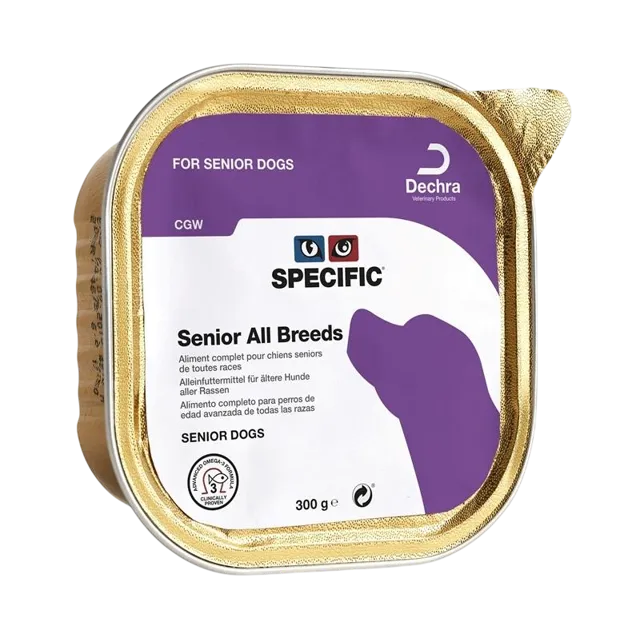

Specific
Specific CGW Senior all breeds review
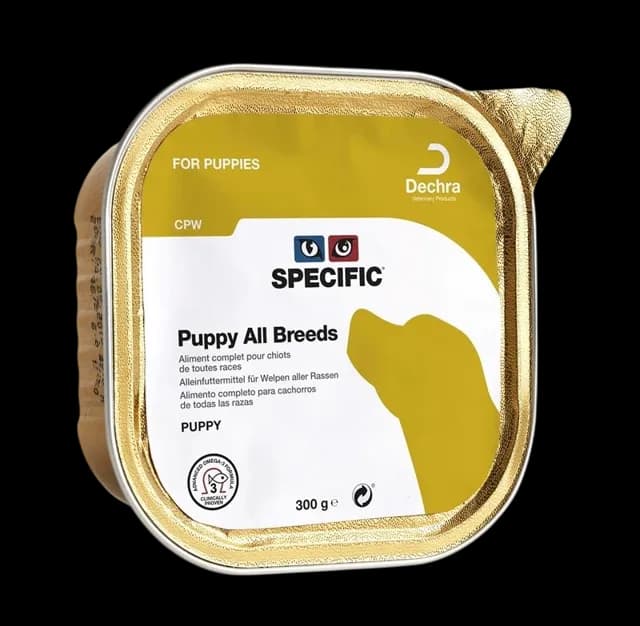
Specific CGW Senior is built for the older dog, and the analysis says so before the ingredients do. Protein sits at 4.8% and fat at 4.6% as fed, with moisture at 81.0%, so this is one of the lighter recipes on the wet shelf. Pork leads the list, with maize and fish behind it. The tail of the label carries taurine and L-carnitine, plus a yeast source of prebiotic fibre. It finishes in our Good band.
Our view
Likely to suit
An older dog who has gone off their food will often eat better from something soft and warm-smelling.
- Older dogs with a faded appetite, since a very moist meal is easier to eat and easier to smell
- Dogs new to pork, an uncommon meat in everyday food and a genuine change for one raised on chicken and beef
- Owners who would rather see taurine and L-carnitine in the recipe than buy them separately, both named here
- Senior dogs that drink too little, with four fifths of every serving arriving as water
- Owners who want gut support written into the food, with a yeast source of mannan-oligosaccharides on the list
Worth watching
A senior recipe makes some deliberate trade-offs, and this label wears a few of them openly.
- Protein is low at 4.8% as fed, deliberate in a senior recipe, though worth raising with your vet should your dog start losing muscle
- Fish, egg and pork all appear, which rules the food out as the base of an elimination diet
- Portions run large because the food is so light, with the label asking 1170 grams a day for a 20 kg dog
Written by our editorial team. Independent guidance, not veterinary advice.
How this scores
How we scoreThe Details
Dog fit
An older dog who has gone off their food will often eat better from something soft and warm-smelling. A senior recipe makes some deliberate trade-offs, and this label wears a few of them openly.
Wet
Adult, Senior
Toy, Small, Medium, Large, Giant
Pork
The score, in context
This one settles into our Good band. The middle of the wet shelf sits a rung higher, in our Excellent band, and the distance comes down to two things a senior recipe accepts on purpose. Protein is held low, which our scoring reads as a thinner analysis even when it is exactly what the diet intends. Maize also takes a large share of a recipe where we would normally expect more meat. Against that, the extras on the label are chosen for the older dog rather than for the front of the pack.
What's in it
Ingredients, as declared: Pork, maize, fish, fish oil, egg powder, cellulose powder, vitamins and trace elements (including chelated trace elements), dextrose, minerals, sunflower oil, psyllium husk, xylose, taurine, yeast (source of mannan-oligosaccharides and ß-1.3/1.6-glucans), L-carnitine.
Named ingredients
Nutritional additives
inline in ingredients — the site publishes no separate additives panel.
Ingredient notes
Pork leads, and it is the more interesting choice on this label. It appears rarely in mainstream dog food. For a great many dogs it is a genuinely new meat, and it is both palatable and well digested. A dog who has run out of options with chicken, beef and lamb often does well on it.
Maize comes second and does the carbohydrate work. Cooked, it is a perfectly serviceable grain that supplies energy and linoleic acid. It is a cereal all the same, and a household keeping grain out will want to know maize sits this high.
Fish and egg powder join the pork on the protein side. Egg comes close to a perfect protein for a dog, and the fish adds a second animal source, though neither entry is pinned to a species.
The label's real point of difference comes next. Taurine and L-carnitine are named, and a yeast brings mannan-oligosaccharides with beta-glucans. Taurine is the amino acid makers reach for when the heart is the concern. L-carnitine turns fat into energy while lean muscle is held on to. The yeast fraction is a prebiotic that the bacteria of the large intestine feed on. None of the three is dosed in print, so read them as part of the recipe's intent rather than as a measured programme.
Cellulose powder and psyllium husk cover the fibre between them, one insoluble and one soluble, and crude fibre is declared at 1.2%. Even by wet food standards, moisture at 81.0% is high, and the energy figure follows it down to 81 kcal per 100g, well under the 97 typical for adult wet food. There is no standalone additives panel here, so the vitamins, chelated trace elements and minerals appear inline among the ingredients.
Price and value
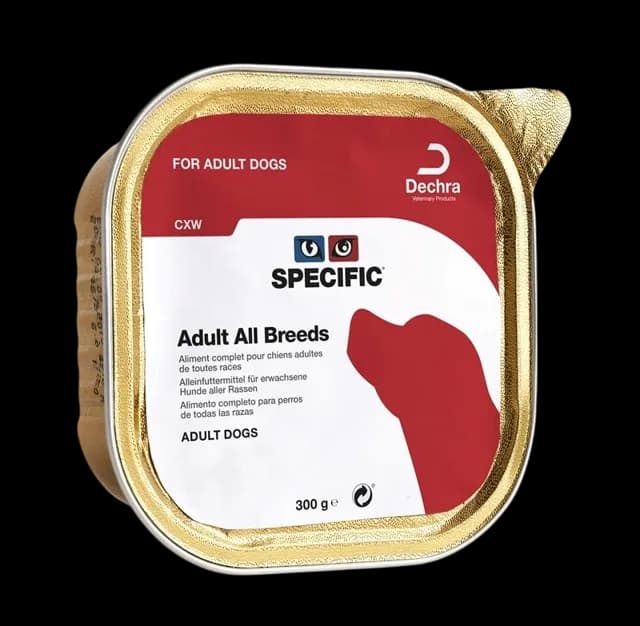
£8.65 a kilo, in a 300 g pack sold in sixes.
As a guide, feeding a 15kg adult dog in moderate condition calls for about 840 kcal a day, using the standard maintenance estimate of 110 × bodyweight^0.75. At 81 kcal per 100g that comes to roughly 1033 grams a day and about £8.94. The label's own chart runs on a similar scale, asking 895 grams a day for a 14 kg dog.
Nutritional analysis
Declared analysis
4.8%
4.6%
1.2%
81%
Dry weight
25.3%
24.2%
6.3%
As-fed composition
Estimated breakdown of the finished product by ingredient category, from the declared ingredient list and ingoing weights. These are estimates, not measurements.
54.5%
16%
22%
4.1%
3.4%
Pricing & size
- Pack size
- 6 x 300 g
- Retailer pricing
- Coming soon
Live retailer pricing is not yet available for this food. Prices, cost per day and where to buy will appear here once retailer data is live.
Ingredients and nutrition are taken from manufacturer data. Retailer pricing is not yet live for this food.
Related dog food guides
Ranked shortlists that include foods like this one.