

Skip to content
Off the Leash
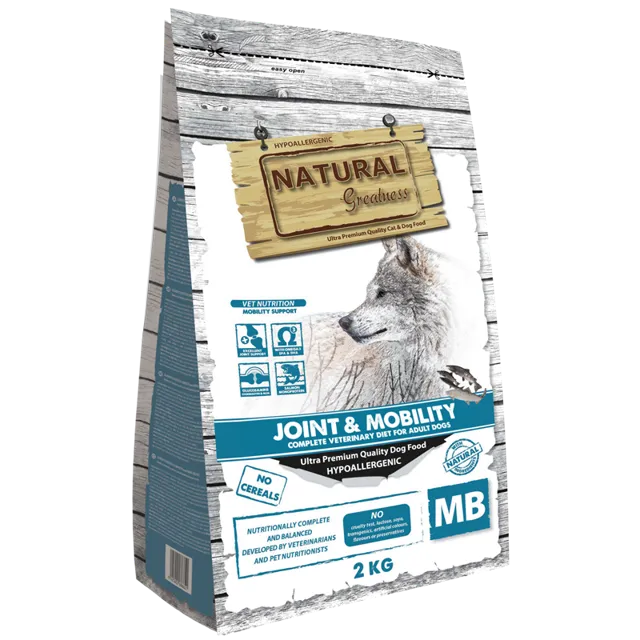
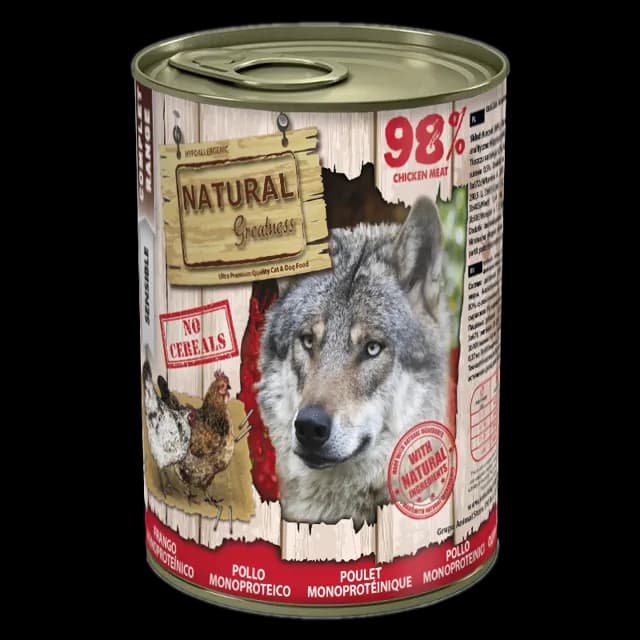
Natural Greatness Veterinary Dry – Joint & Mobility

Natural Greatness

Natural Greatness Veterinary Dry: Joint & Mobility review

We don't put a score on this food. It is a veterinary diet, formulated for a diagnosed condition and meant to be fed on a vet's advice. Your vet has seen your dog and we have not, so a number from us could only pull you towards their advice or away from it, and neither of those is ours to do. What follows is what the label declares, what the analysis works out at, and where to buy it, with no judgement attached to any of it.

Natural Greatness puts these six kibbles in its Veterinary line, one recipe per condition, each built on named meats with printed percentages and sold for dogs whose feeding a vet is directing.

DryAdult
Where to buy: coming soon
Live retailer pricing is coming soon. Once we have prices from UK retailers, the best price, cost per day and where to buy will appear here.

The Details

Dog fit
Food type

Dry

Life stage

Adult

Breed size

Toy, Small, Medium, Large, Giant

Main protein

Salmon

What's in it

Ingredients, as declared: Dehydrated Salmon 14%, Peas, Pea Protein, Fresh Salmon 10%, Apple Pulp, Salmon Oil 8.5%, Tapioca, Beet Pulp, Flaxseed, Hydrolysed Salmon 2.5%, Lentils 2%, Quinoa 2%, Minerals, Yeasts, Vegetable Fibres, Fruit Mix 0.3% (plum and pear), Vegetable Mix 0.3% (spinach, pumpkin, broccoli and dog rose), MSM 1.200 mg/kg, Inulin (FOS), Hydrolysed Yeast Cell Wall (source of MOS), Glucosamine 900 mg/ kg, Yucca Schidigera, Chondroitin Sulphate 300 mg/kg, Fenugreek, Ginger, Turmeric.

Named ingredients

Dehydrated Salmon 14%, Peas, Pea Protein, Fresh Salmon 10%, Apple Pulp, Salmon Oil 8.5%, Tapioca, Beet Pulp, Flaxseed, Hydrolysed Salmon 2.5%, Lentils 2%, Quinoa 2%, Minerals, Yeasts, Vegetable Fibres, Fruit Mix 0.3% (plum and pear), Vegetable Mix 0.3% (spinach, pumpkin, broccoli and dog rose), MSM 1.200 mg/kg, Inulin (FOS), Hydrolysed Yeast Cell Wall (source of MOS), Glucosamine 900 mg/ kg, Yucca Schidigera, Chondroitin Sulphate 300 mg/kg, Fenugreek, Ginger, Turmeric.
What's on the label

The six share an architecture. A dehydrated meat opens most of them, with a fresh meat of the same species behind it. The starch is some arrangement of potato, tapioca, peas, lentils and quinoa depending on which recipe you have. Apple pulp and beet pulp carry fibre in several of them, and carob turns up in four.

Every one of the six declares inulin as a source of FOS and hydrolysed yeast cell wall as a source of MOS, both prebiotic fibres. Every one also carries glucosamine and chondroitin sulphate. Four print the milligram per kilogram doses beside them; the gastrointestinal and renal recipes name the pair without figures. Manufactured glucosamine is usually drawn from shellfish shells, so a shellfish reaction on file is worth mentioning to the vet.

Hydrolysed fractions run right through the line, and which animal they come from depends on the recipe: chicken, salmon, turkey liver, or turkey and chicken liver together. The urinary one adds hydrolysed milk protein at 0.1%. Breaking a protein into fragments does not put the animal it came from outside the bowl, which is the thing to hold on to when the point of the diet is exclusion.

None of the six is a fish-free option: a fish oil is in all of them, salmon in five and blue fish in the renal recipe. Chicken oil appears in four, which puts chicken into recipes whose meat is otherwise turkey. The label style makes that easy to check, since every animal entry is named.

None of the six declares its moisture, so the dry matter columns rest on a standard assumption, and none prints a vitamin or trace mineral panel, so those doses are not there to read. Energy is given recipe by recipe and runs from 303 to 384 kcal per 100g, and four of the six write their feeding tables for a lightly exercised dog. Which of the six belongs in your dog's bowl is a choice to make with the vet who knows the diagnosis.

How this variety differs

This is the salmon recipe and it holds to salmon throughout: dehydrated salmon at 14%, fresh salmon at 10% and hydrolysed salmon at 2.5%, plus salmon oil at 8.5%. No other animal meat appears anywhere on the statement. Peas, pea protein, tapioca, lentils at 2% and quinoa at 2% make up the rest, and yucca, fenugreek, ginger and turmeric finish it.

MSM is declared at 1,200 mg per kilogram, glucosamine at 900 mg and chondroitin sulphate at 300 mg. Protein converts to 28.3% of dry matter, fat to 16.3% and crude fibre to 7.6%, with carbohydrate estimated at 39.1% and energy at 345 kcal per 100g. The table gives 199 grams a day at 15kg.

Price and where to buy

All six are listed in the same two bag sizes, 2kg and 6kg.

Nutritional analysis

Declared analysis

Energy
345 kcal/100g
Protein

26%

Fat

15%

Fibre

7%

Ash

8%

Dry weight

Protein

28.3%

Fat

16.3%

Fibre

7.6%

Ash

8.7%

Carbs

39.1%

As-fed composition

Estimated breakdown of the finished product by ingredient category, from the declared ingredient list and ingoing weights. These are estimates, not measurements.

Meat

26.5%

Carbs

54.3%

Veg

7.1%

Oils

8.5%

Other

3.6%

Pricing & size
Pack size
2 y 6 kg.
Retailer pricing
Coming soon

Live retailer pricing is not yet available for this food. Prices, cost per day and where to buy will appear here once retailer data is live.

Ingredients and nutrition are taken from manufacturer data. Retailer pricing is not yet live for this food.

Related dog food guides

Ranked shortlists that include foods like this one.

All reviews

Featured feeding accessories

All feeding accessories

Brackenwood

Slow Feeder Maze Bowl

Slows fast eaters and eases gulping at mealtimes.

From £12.99· 4 retailers
View

Tarn & Co

Raised Double Diner

Height-set stand for easier, tidier eating.

From £28.99· 3 retailers
View

Reviewed by Off the Leash Editorial

Last updated 24 August 2026