


Skip to content
Off the Leash
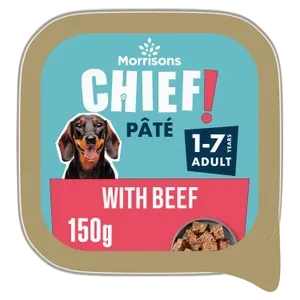
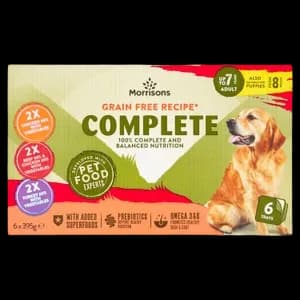
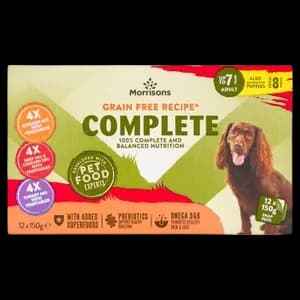
Morrisons Chief Pate Trays 150g – With Beef

Morrisons

Morrisons Chief Pate Trays 150g: With Beef review

50.2/100Good
WetAdult

Morrisons Chief Pate Trays are single-serve trays in beef and chicken, each holding a smooth pate with meat and animal derivatives declared at 60% and the named animal fixed at 4% within that. Both trays share one analysis panel, and the beef falls in our Good band with the chicken a step below it in Average. That placement comes from a label written almost entirely in legal categories, not from anything unusual in the tray itself.

Where to buy: coming soon
Live retailer pricing is coming soon. Once we have prices from UK retailers, the best price, cost per day and where to buy will appear here.

Our view

Likely to suit

Single-serve trays take the guesswork out of portioning, and for a lot of households that is the whole appeal.

  • Anyone who dislikes covering a part-used pack and finding fridge space for it, since each tray is opened fresh
  • Small dogs and light eaters, since a 150g tray is close to a meal in itself
  • Older dogs and dogs with sore mouths, since a pate needs no chewing at all
  • Dogs kept on low starch, with carbohydrate converting to an estimated 13.2% of dry matter
  • Households alternating between red meat and poultry, with the beef and chicken trays built alike

Worth watching

The trays are simple to use, but the ingredient list takes a bit more unpicking.

  • The 60% animal figure is meat and animal derivatives, and only the 4% named species is held fixed, so neither tray can carry an exclusion diet
  • Beef is named on one tray only, and oils and fats is a category entry, so parts of both labels stay unspecified
  • Various sugars sit on both labels, added for palatability

Written by our editorial team. Independent guidance, not veterinary advice.

How this scores

How we score
50.2/100Good
Protein and processingAverage
Nutritional balanceOutstanding
TransparencyExcellent
ValueGood

The Details

Dog fit

Single-serve trays take the guesswork out of portioning, and for a lot of households that is the whole appeal. The trays are simple to use, but the ingredient list takes a bit more unpicking.

Food type

Wet

Life stage

Adult

Breed size

Toy, Small, Medium, Large, Giant

Main protein

Beef

The score, in context

The beef tray lands in our Good band and the chicken tray a step below it in our Average band. The typical adult wet food reaches Excellent, so the distance is genuine, and it is measured almost entirely in what these labels decline to name. The animal content, the oils and the vegetable entry are all umbrella terms, and the 4% species is the only thing nailed down. Protein and processing reads Average on both trays while nutritional balance reads Outstanding, and the analysis panel backs that up. The band is a comment on disclosure, not a warning about what is in the tray. A plain own-label pate that a dog finishes happily is doing most of what an owner asks of it.

What's in it

Ingredients, as declared: Meat and Animal Derivatives (60%, including 4% Beef), Minerals, Oils and Fats (0.2% Fish Oil), Various Sugars, Derivatives of Vegetable Origin (0.1% Chicory)

Named ingredients

Meat and Animal Derivatives (60%, including 4% Beef), Minerals, Oils and Fats (0.2% Fish Oil), Various Sugars, Derivatives of Vegetable Origin (0.1% Chicory)

Nutritional additives

_Nutritional additives /kg_ — Vitamin D₃ 140IU; Vitamin E 30mg; Zinc (zinc sulphate monohydrate) 12mg; Copper (copper (II) sulphate pentahydrate) 0.5mg; Manganese (manganese (II) oxide) 1.0mg; Iodine (calcium iodate anhydrous) 0.3mg

Ingredient notes

The whole animal side of each tray arrives as one entry, meat and animal derivatives at 60%. Under EU labelling rules that phrase covers the fleshy parts and processing products of slaughtered warm-blooded land animals. It is broad enough to include very good meat and plain material alike, and broad enough for the mix to change with supply. At 4%, the named species is the one fixed point on each label. Beef is guaranteed in the beef tray and chicken in the chicken one, and neither figure rules anything else out.

No grain of any kind is listed, and no starch binder either. Carbohydrate works out at an estimated 13.2% of dry matter against the 15.8% typical for adult wet food. That is a good showing for a pate, because the easiest route to a smooth texture is to build one around cereal.

Fish oil at 0.2% is named inside the broader oils and fats entry, bringing omega-3 with it. Chicory at 0.1% is named inside derivatives of vegetable origin, and chicory root is a useful prebiotic. Both are traces, but a label that opens up two of its own category terms is doing more than it strictly has to.

Various sugars complete the list without a quantity attached. It is there because dogs find sweetness hard to resist, and on a tray meant to be finished in one sitting that is doing exactly what the maker intends.

The panel reads steadily: 9.0% protein and 5.0% fat as fed, converting to 47.4% and 26.3% of dry matter, with 81% moisture and ash at 10.5% of dry matter. Energy is not printed, and our estimate puts these at about 83 kcal per 100g, so a fair weight of tray goes into a full day's feeding.

The added panel is the most detailed thing on these labels, and every entry on it is dosed. Per kilogram of food that is vitamin D3 at 140 IU, vitamin E at 30 mg, zinc at 12 mg, copper at 0.5 mg, manganese at 1.0 mg and iodine at 0.3 mg. That is a fuller micronutrient declaration than a lot of wet labels bother with.

How this variety differs

The beef tray, with beef named at 4% inside the 60% animal content. Beef is a red meat, well liked by most dogs and easy for them to digest, and it is the option to reach for in a household rotating away from poultry. The analysis is shared with the chicken tray, so this is a change of flavour rather than a change of recipe.

Price and value

£1.97 a kilo, in 150g and 300g trays.

As a guide, feeding a 15kg adult dog in moderate condition comes to about £2.00 a day, or roughly 1014 grams, assuming about 840 kcal a day (110 × bodyweight^0.75, the standard maintenance estimate). For a dog of that weight the tray itself suggests 750 to 1050 grams a day.

Nutritional analysis

Declared analysis

Energy
82.8 kcal/100g

Estimated using Modified Atwater factors*

Protein

9%

Fat

5%

Fibre

0.5%

Ash

2%

Moisture

81%

Dry weight

Protein

47.4%

Fat

26.3%

Fibre

2.6%

Ash

10.5%

Carbs

13.2%

As-fed composition

Estimated breakdown of the finished product by ingredient category, from the declared ingredient list and ingoing weights. These are estimates, not measurements.

Meat

60%

Added water

24%

Carbs

6.7%

Oils

3.5%

Other

5.8%

Pricing & size
Pack size
150g · 300g
Retailer pricing
Coming soon

Live retailer pricing is not yet available for this food. Prices, cost per day and where to buy will appear here once retailer data is live.

Ingredients and nutrition are taken from manufacturer data. Retailer pricing is not yet live for this food.

Related dog food guides

Ranked shortlists that include foods like this one.
All reviews

Featured feeding accessories

All feeding accessories

Brackenwood

Slow Feeder Maze Bowl

Slows fast eaters and eases gulping at mealtimes.

From £12.99· 4 retailers
View

Tarn & Co

Raised Double Diner

Height-set stand for easier, tidier eating.

From £28.99· 3 retailers
View

Reviewed by Off the Leash Editorial

Last updated 28 August 2026