

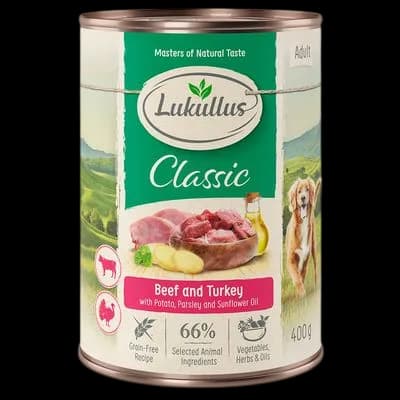

Lukullus
Lukullus Classic Junior Dry review
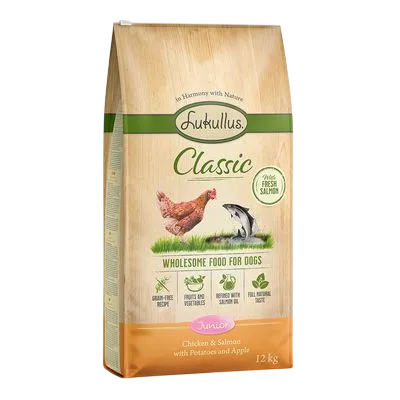
Lukullus Classic Junior is a single growth recipe built on a maize and pea base but pushed hard on protein and energy. Chicken protein leads at 26%, salmon protein and hydrolysed poultry protein back it up, and pea protein takes on a share of the load. Calcium is declared and lands inside a sensible window for a large breed puppy, which is the one figure a growth label most needs to print. It sits in our Excellent band.
Our view
Likely to suit
Growing puppies go through a bowl at speed, and this one is put together with that appetite in mind.
- Puppies of any size, with calcium declared and working out at 1.54% of dry matter, a level a large breed puppy can safely be grown on
- A household with a puppy and a grown dog in it, since the label covers both stages
- Hungry, fast-growing dogs, with protein at 38.5% of dry matter and 386 kcal in every 100g
- Owners who like knowing every line on the label, since nothing hides behind a botanical tail
- Puppies who take to chicken, since that is the animal leading the recipe
Worth watching
Read these few label details before you make this your puppy's growth food.
- Pea protein at 9% sits high on the list, so not all of the headline protein figure is coming from animals
- The poultry fat gives no bird and neither does the hydrolysed poultry protein, one to note if you are tracking a specific sensitivity
- Salmon oil is on the list, and that keeps the bag from being fish free
- Maize at 20% puts it firmly among the grain-inclusive foods
Written by our editorial team. Independent guidance, not veterinary advice.
How this scores
How we scoreThe Details
Dog fit
Growing puppies go through a bowl at speed, and this one is put together with that appetite in mind. Read these few label details before you make this your puppy's growth food.
Dry
Puppy, Adult
Toy, Small, Medium, Large, Giant
Chicken
The score, in context
This one comes out in our Excellent band, a step clear of the Good band the broad middle of the dry shelf occupies. The protein is high by any measure, and estimated carbohydrate stops at 32.4% of dry matter where the typical adult dry food runs to 46.2%. The calcium figure a growth label most needs to declare is printed too. Fed to a puppy that gets on with chicken, it is a solid and generous bowl.
What's in it
Ingredients, as declared: Chicken protein (26%), maize (20%), peas (16%), poultry fat (10%), pea protein (9%), salmon protein (6%), hydrolysed poultry protein (5%), dried apple pulp (3.6%), hydrolysed poultry liver (2%), salmon oil (1%), potassium chloride (0.4%), sodium chloride (0.3%), pea meal, dried parsley (0.1%), mannan-oligosaccharides (0.0198%), fructo-oligosaccharides (0.015%), mojave yucca (0.015%).
Named ingredients
Nutritional additives
Additives per kg: Nutritional additives:
Ingredient notes
Chicken protein at 26% opens the list, with salmon protein at 6% and hydrolysed poultry protein at 5% behind it. These are dried forms with the water already out, so the declared percentage is near enough what reaches the kibble. The result is 35.0% protein as fed, 38.5% once the moisture is taken out, which is a proper growth-level figure rather than an adult one with a puppy label on it.
The base is maize at 20% and peas at 16%, and estimated carbohydrate finishes at 32.4% of dry matter, well under the 46.2% typical for adult dry food. Most everyday kibble carries a heavier starch load than that, and on a growing dog the room it leaves is being used for protein and fat.
Pea protein at 9% is the entry to read carefully. It is a concentrate left over from pea processing. It lifts the protein number on the analysis, though for amino acid profile and digestibility plant protein is no match for meat. At 9% it is doing a real share of the work here, so the headline protein figure should not be read as all animal.
Poultry fat at 10% is the energy source, and the 1% salmon oil is there for marine omega 3s. A growing brain and a growing coat both draw on them. Hydrolysed poultry liver at 2% keeps the bowl interesting, dried apple pulp at 3.6% and pea meal handle fibre, and potassium chloride at 0.4% with sodium chloride at 0.3% top up minerals. The prebiotic pair of mannan-oligosaccharides and fructo-oligosaccharides sits at the bottom with mojave yucca.
On a puppy bag calcium matters more than any other number, and this label declares it at a level that converts to 1.54% of dry matter. That sits inside the window a large breed puppy needs, where too much calcium during growth causes as many problems as too little. You can read that figure off the bag, and nothing else this recipe does is more useful.
Price and value
£3.79 a kilo, sold in 1kg and 12kg bags and as a pair of 12kg.
A 15kg dog in moderate condition would eat about 218 grams a day, coming to £0.82, worked from an energy need of roughly 840 kcal a day using the standard 110 × bodyweight^0.75 maintenance estimate. A growing puppy needs more than a maintenance figure, so use the maker's growth guidance and the shape of the puppy in front of you rather than that number.
Nutritional analysis
Declared analysis
35%
17%
2.6%
6.8%
9%
Dry weight
38.5%
18.7%
2.9%
7.5%
32.4%
As-fed composition
Estimated breakdown of the finished product by ingredient category, from the declared ingredient list and ingoing weights. These are estimates, not measurements.
39%
45.6%
3.6%
11%
0.8%
Pricing & size
- Pack size
- New Recipe! 1kg, New Recipe! 12kg, New Recipe! Economy Pack: 2 x 12kg
- Retailer pricing
- Coming soon
Live retailer pricing is not yet available for this food. Prices, cost per day and where to buy will appear here once retailer data is live.
Ingredients and nutrition are taken from manufacturer data. Retailer pricing is not yet live for this food.
Related dog food guides
Ranked shortlists that include foods like this one.