


Skip to content
Off the Leash
Edgard & Cooper Puppy Cups – —

Edgard & Cooper

Edgard & Cooper Puppy Cups review

73.5/100Excellent
WetPuppy

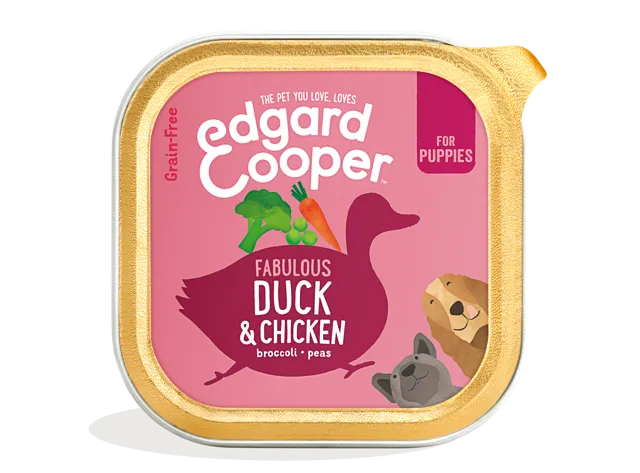
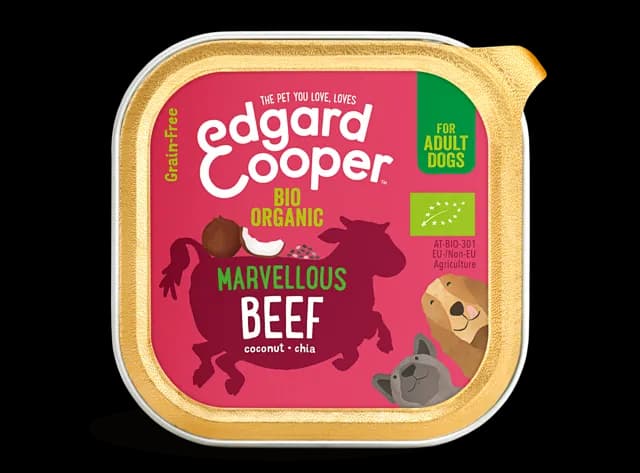
Edgard & Cooper Puppy Cups put two quite different recipes under one range name. The first pot is duck at 30% and chicken at 26%, the only two meats in it. The second is certified organic from top to bottom, built on organic chicken at 26% with beef, fish and pork behind it. Both are meat led wet foods with almost no starch in them, and protein converts to 50.0% and 52.8% of dry matter. The duck and chicken pot takes our Excellent band, with the organic pot a step behind in Good.

Where to buy: coming soon
Live retailer pricing is coming soon. Once we have prices from UK retailers, the best price, cost per day and where to buy will appear here.

Our view

Likely to suit

If you are feeding a young pup little and often, single serve pots take a good deal of the guesswork out of the day.

  • Puppies that thrive on poultry, with duck at 30% and chicken at 26% making up the bulk of the first pot
  • Owners who want starch kept out of the bowl, since carbohydrate converts to 5.2% of dry matter in one recipe and 2.7% in the other, against 13.6% typical for wet puppy food
  • Households buying organic, with every meat, vegetable and herb in the second pot certified
  • Small appetites that need coaxing, since a wet food declared at 81.0% and 82.0% moisture goes down easily
  • Owners who prefer a label they can finish reading in one glance

Worth watching

Before you commit, there is a little on these labels to take in.

  • No calcium figure is printed on either pot, and for large and giant breed growth calcium is the figure that matters most, so owners of big pups will want to ask the maker for it
  • Beef, fish and pork all join the chicken in the organic recipe, so a pup held to one or two proteins wants the other pot
  • Salmon oil runs through the duck and chicken pot, which puts fish on its allergen picture even though the meats are birds
  • The organic pot declares zinc, manganese and iodine but no vitamins at all, which is worth checking if these cups are doing the whole job rather than topping up a dry diet

Written by our editorial team. Independent guidance, not veterinary advice.

How this scores

How we score
73.5/100Excellent
Protein and processingGood
Nutritional balanceOutstanding
TransparencyOutstanding
ValueExcellent

The Details

Dog fit

If you are feeding a young pup little and often, single serve pots take a good deal of the guesswork out of the day. Before you commit, there is a little on these labels to take in.

Food type

Wet

Life stage

Puppy

Breed size

Toy, Small, Medium, Large, Giant

Main protein

Chicken

The score, in context

The duck and chicken pot finishes in our Excellent band, level with the middle of the wet puppy field, and the organic pot sits a step behind in Good. The company here is strong, and this range holds its own in it.

Between the two, the duck and chicken pot is the stronger read: transparency comes out Outstanding on it against Excellent on the organic pot, with nutritional balance Outstanding on both. That gap is mostly about what the organic label is prepared to certify and declare rather than about anything wrong with the other pot.

What's in it

Ingredients, as declared: duck 30%, chicken 26%, minerals, carrot 2%, broccoli 1%, apple 1%, pumpkin 1%, peas 1%, salmon oil 0.5%, parsley 0.1%, dill 0.1%

Named ingredients

Duck 30%, chicken 26%, minerals, carrot 2%, broccoli 1%, apple 1%, pumpkin 1%, peas 1%, salmon oil 0.5%, parsley 0.1%, dill 0.1%

Nutritional additives

vitamin D3 140 IU, zinc (zinc sulphate, monohydrate) 12 mg, manganese (manganese(II) oxide) 1 mg, copper (copper(II) sulphate, pentahydrate) 0.5 mg, iodine (calcium iodate, anhydrous) 0.3 mg · Technological additives: `/` (the site prints a slash, i.e. none)

Ingredient notes

The duck and chicken pot is unusually plain spoken. Duck at 30% and chicken at 26% are the only animals in it, both named as meat with no category word in sight. Together they account for over half the recipe before anything else gets a look in. Duck is easy on most young digestions and tends to go down well with fussy eaters, which is a useful pairing with chicken.

After the meat the list turns to garnish. Carrot at 2% is the biggest of the plant entries, with broccoli, apple, pumpkin and peas at 1% apiece and parsley and dill at 0.1%. Carrot brings vitamin A and a little soluble fibre. The peas are whole and at this level they add real nutrition, well beyond the bulking job peas sometimes end up doing.

The organic pot is built on a wider base. Organic chicken at 26% leads, with organic beef, organic fish at 10% and organic pork behind it, then organic carrot and organic peas at 2% each and traces of rosehip and chamomile. Four species in one recipe gives a broad amino acid spread, and pork is uncommon enough in dog food that many puppies will be meeting it for the first time here.

The analysis is where both pots make their case. Protein converts to 50.0% of dry matter in the duck and chicken recipe and 52.8% in the organic one, with fat at 31.6% and 30.6%. Carbohydrate barely shows: 5.2% of dry matter in one and 2.7% in the other, well under the 13.6% typical for wet puppy food. Energy runs to 93 kcal and 87 kcal per 100g against a typical 106 kcal, which simply means slightly fuller pots at mealtimes.

Minerals are added to what the meat already supplies, with ash converting to 11.6% and 12.2% of dry matter. The duck and chicken pot declares vitamin D3 at 140 IU, zinc at 12 mg, manganese at 1 mg, copper at 0.5 mg and iodine at 0.3 mg. The organic pot prints zinc at 15.2 mg, manganese at 3.2 mg and iodine at 0.5 mg, and stops there. Neither label carries a calcium figure, and neither carries any technological additive, the site printing a plain slash where preservatives and colourings would go.

How this variety differs

This is the duck forward pot of the pair. Duck at 30% heads the composition with chicken at 26% behind it, and no other animal appears except the salmon oil at 0.5% that supplies marine omegas. Carrot at 2% leads the plant side, then broccoli, apple, pumpkin and peas at 1% each with parsley and dill at 0.1%. Moisture is declared at 81.0%, protein converts to 50.0% of dry matter, fat to 31.6% and carbohydrate to 5.2%, and the pot carries 93 kcal per 100g. Its added panel is the fuller of the two: vitamin D3 at 140 IU alongside zinc at 12 mg, manganese at 1 mg, copper at 0.5 mg and iodine at 0.3 mg.

Price and value

£7.87 a kilo for the duck and chicken cups and £14.11 a kilo for the organic ones. The duck and chicken pots come in 150 g and 300 g sizes sold singly and in cases of 11 and 18. The organic pots come in a 100 g size sold singly or in a case of 17.

Growing pups eat to a moving target, so let the guide on the pack and the shape of your puppy set the amount.

Nutritional analysis

Declared analysis

Energy
93.2 kcal/100g
Protein

9.5%

Fat

6%

Fibre

0.3%

Ash

2.2%

Moisture

81%

Dry weight

Protein

50%

Fat

31.6%

Fibre

1.6%

Ash

11.6%

Carbs

5.2%

As-fed composition

Estimated breakdown of the finished product by ingredient category, from the declared ingredient list and ingoing weights. These are estimates, not measurements.

Meat

56%

Added water

22.4%

Carbs

1%

Veg

5%

Oils

0.5%

Other

15.1%

Pricing & size
Pack size
150 g - £1.49 · 11 x 150 g - £15.49 · 300 g - £2.49 · 18 x 300 g - £42.49
Retailer pricing
Coming soon

Live retailer pricing is not yet available for this food. Prices, cost per day and where to buy will appear here once retailer data is live.

Ingredients and nutrition are taken from manufacturer data. Retailer pricing is not yet live for this food.

Related dog food guides

Ranked shortlists that include foods like this one.
All reviews

Featured feeding accessories

All feeding accessories

Brackenwood

Slow Feeder Maze Bowl

Slows fast eaters and eases gulping at mealtimes.

From £12.99· 4 retailers
View

Tarn & Co

Raised Double Diner

Height-set stand for easier, tidier eating.

From £28.99· 3 retailers
View

Reviewed by Off the Leash Editorial

Last updated 28 August 2026