


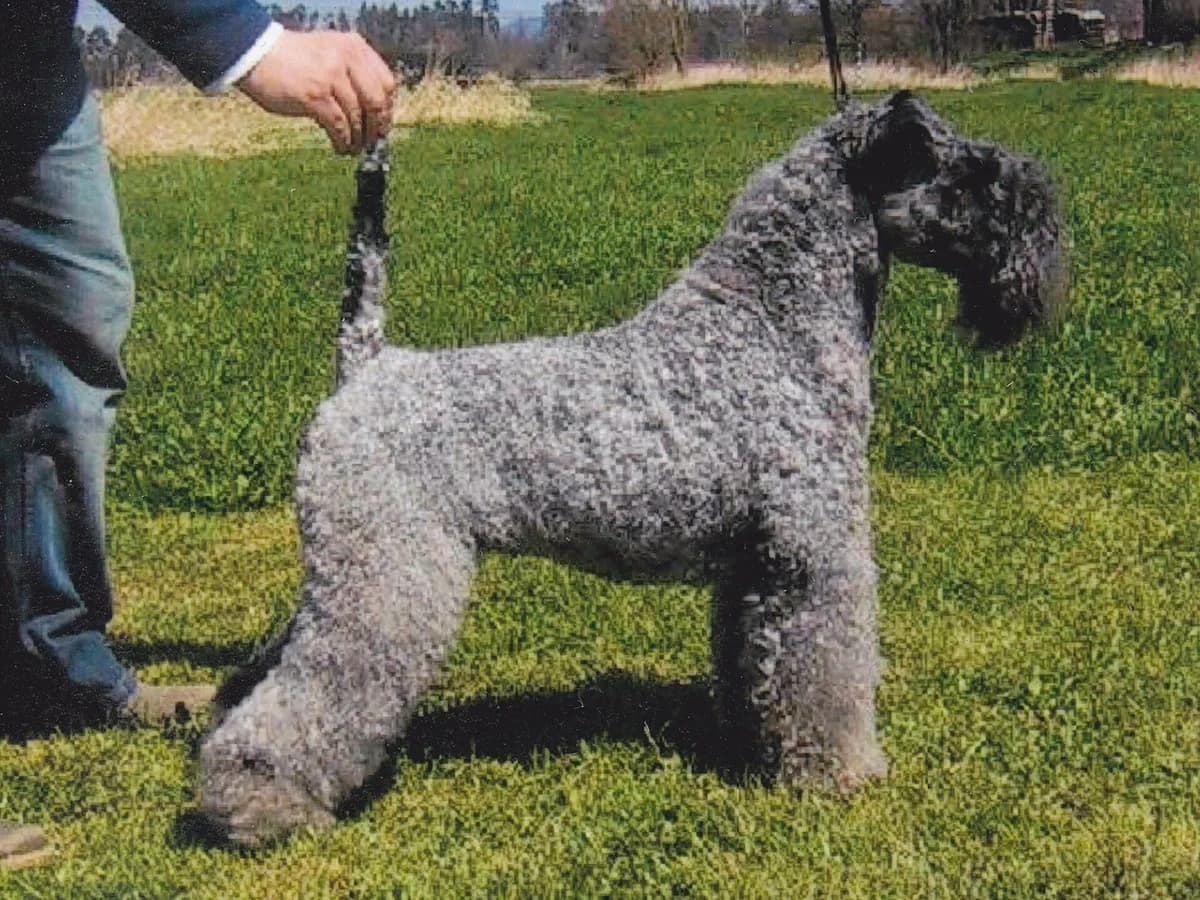

Most important facts
- Group
- Terrier
- Size
- Medium
- Weight
- 13–17 kg
- Lifespan
- 12–15 years
- Coat
- Soft
- Energy
- Moderate
- Height
- 44–48 cm
- Colours
- Shades of blue-grey
- Shedding
- Light
- Est. feeding cost
- ~£0.91 a day
- Gear to consider
- Slicker brush and grooming clippers, no-pull harness, durable chew and tug toys
Typical dry food, adult
About the Kerry Blue Terrier
The Kerry Blue Terrier worked the farms of County Kerry for generations as ratter, herder, guard and occasional poacher's accomplice. Local legend traces its blue coat to a dog that swam ashore from the wreck of the Spanish Armada. It became a nationalist symbol in early twentieth-century Ireland, with Michael Collins among its devoted owners. In Britain it is now classed as a vulnerable native breed.
Kerry Blues are intelligent and often described as one-family dogs, forming strong bonds while remaining watchful of strangers. Their terrier heritage shows in a headstrong streak and real prey drive, so consistent, reward-based training from puppyhood matters. They keep a puppyish sense of fun well into middle age.
Left under-exercised or under-stimulated, a Kerry Blue can become vocal or destructive, and males in particular can be selective with other dogs without early socialisation. With the right owner they are loyal, biddable and good fun, thriving on having a job to do alongside their daily walks.
Common health conditions
Things Kerry Blue Terrier owners commonly watch for. Guidance, not veterinary advice.
Hip dysplasia
Screened under the BVA/KC hip scheme. Keep a Kerry Blue lean as a puppy and adult, and avoid overfeeding during growth.
Progressive neuronal abiotrophy
A rare, inherited neurological condition occasionally seen in puppies from unscreened lines. Look for a breeder who health-tests the parents.
Factor XI deficiency
An inherited mild bleeding disorder found in the breed. Ask a breeder about the DNA test, and mention it to your vet before surgery or dental work.
Footpad hyperkeratosis (spiculosis)
A hereditary thickening of the footpad skin seen in the breed. Feed a skin-supporting diet and work with your vet on management, as it cannot be cured.
Eye conditions (entropion and cataracts)
Both are seen in the breed. Book regular eye checks and keep facial furnishings trimmed away from the eyes.
Feeding a Kerry Blue Terrier
Kerry Blues carry moderate muscle for their frame and do best on a diet built around good-quality, digestible protein to support lean condition. They are not an especially high-energy breed once past the boisterous puppy stage. Portion to the dog in front of you, checking that the waist shows and the ribs are easy to feel. That matters more than any single headline ingredient, and two measured meals a day suit most adults better than one.
Because the coat needs frequent handling for grooming and clipping, treats used during grooming desensitisation and general training should be counted within the daily allowance to avoid gradual weight creep. A skin-supporting food with adequate omega fatty acids helps condition alongside regular clipping.
Every dog is different — weight, age and activity all shift what a Kerry Blue Terrier needs. The turns these breed tendencies into a shortlist matched to your dog’s age, size, budget and needs.
Typical adult weight
13–17 kg
Est. daily calories
580–940 kcal
A broad guide for an average-activity adult in good body condition — not veterinary advice. Real needs vary with age, neutering, activity, health and body condition, so no two Kerry Blue Terriers eat exactly the same. Get a personalised estimate or estimate feeding costs.


- Per day
- ~£0.91
- Per month
- ~£28
- Per year
- ~£331
A broad typical monthly budget guide, not a live price quote. Food format, calorie density, pack size and retailer pricing all change the real cost.
Find the right food for your Kerry Blue Terrier
Foods ranked to your dog
Answer a few quick questions and the Food Finder ranks foods to your Kerry Blue Terrier by score, price, life stage and fit.
Breed at a glance
- Exercise needs6/10
- Appetite6/10
- Trainability7/10
- Good with children6/10
- Shedding1/10
- Tolerates being alone4/10
The good & the worth-knowing
The good
- Low-shedding coat that suits many allergy-conscious households
- Loyal, alert and affectionate with its own family
- Versatile terrier that enjoys walks, training and having a job to do

Worth knowing
- High grooming commitment, with professional clipping every six to eight weeks plus home brushing
- An independent, sometimes stubborn terrier temperament suited to a consistent handler
- Real prey drive and potential for dog selectivity, so early socialisation matters
Best matched accessories
All accessoriesThe collections that suit the breed, judged by the same independent standard.




Common owner questions
Do Kerry Blue Terriers shed much?
No. The coat grows continuously and does not moult seasonally, so what you get is regular clipping every six to eight weeks and not heavy shedding.
How much should I feed a Kerry Blue Terrier?
Feed to body condition rather than a fixed amount, checking the waist and ribs regularly and adjusting portions with age and activity. Kerry Blues gain condition quietly under the coat, so hands-on checks beat the eye, and a food matched via the Food Finder can set a sensible starting point.
Are Kerry Blue Terriers good with children?
They can do well in families, particularly when raised alongside children, though their terrier assertiveness means supervision and teaching gentle handling both ways is important.
What health screening should I ask a Kerry Blue breeder about?
Ask about BVA/KC hip scoring and eye testing. Ask too for DNA results on factor XI deficiency and any history of footpad hyperkeratosis in the line.
Similar breeds
Photo: Peter Kumpert, Germany, CC BY-SA 3.0 de, via Wikimedia Commons