



Tails.com
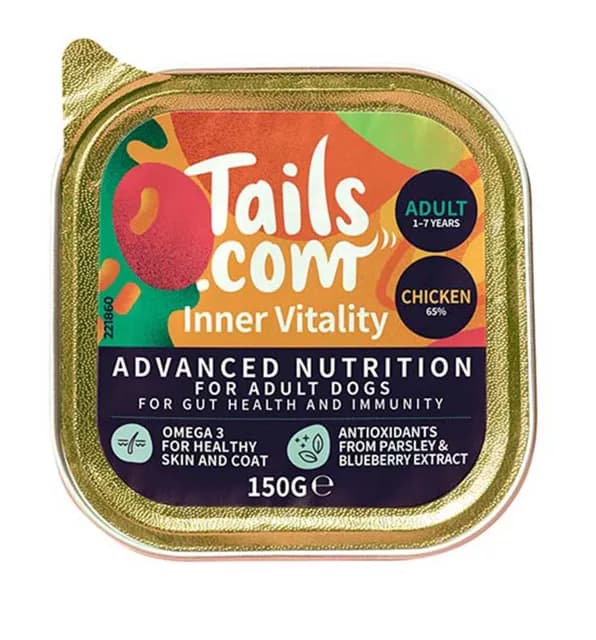
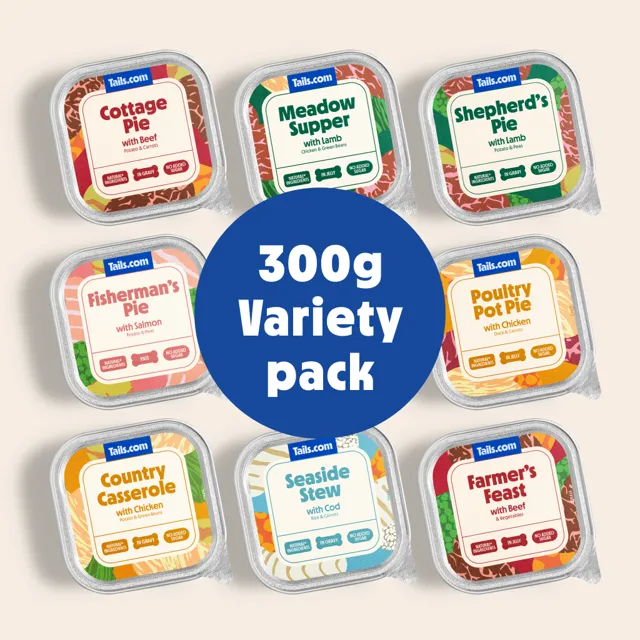
Tails.com Recipes in Jelly: Poultry Pot Pie with Chicken, Duck & Carrots review
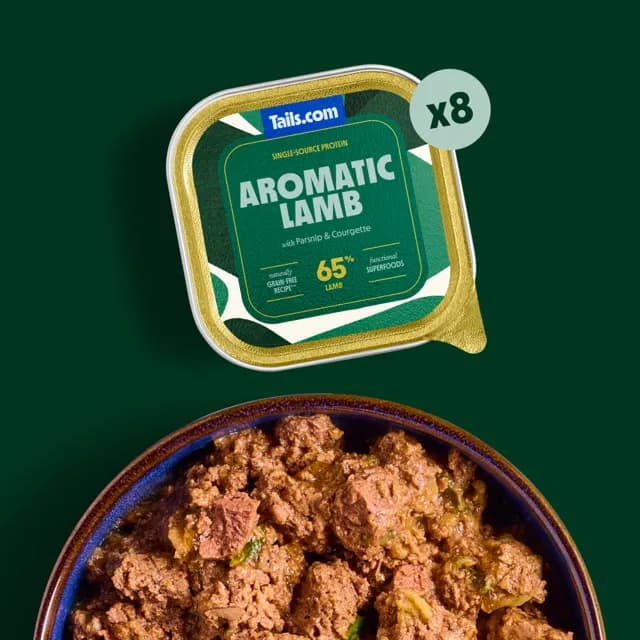
Tails.com Recipes in Jelly puts a pair of dinners on the shelf, a lamb and chicken supper and a chicken and duck pot pie. Each names two animals at 4% apiece inside a meat and animal derivatives base, adds one vegetable with its own printed share, and finishes with a fish entry, minerals and yeast. The pot pie lands in our Good band with the supper a step behind it in Average. Their analysis is identical, so pick whichever animals your dog enjoys.
Our view
Likely to suit
Jelly is a texture dogs are famously particular about, and you get it in both of these trays.
- Poultry-minded dogs, who get chicken in both trays and duck alongside it in one
- Owners rotating meals, since the pair swap animals without changing the underlying recipe
- Dogs that suit a lighter tray, with energy at an estimated 72 kcal per 100g
- Dogs that need extra fluid at mealtimes, with moisture declared at 82.0% on each tray
- Households whose dogs come in different sizes, as a single tray is written for toy up to giant
Worth watching
These are honest everyday trays, and knowing where the label stops helps you use them well.
- Two animals are named at 4% each on every tray, and everything else on the animal side stays as meat and animal derivatives
- A fish and fish derivatives entry appears on both without a species, so neither tray suits a dog kept clear of fish
- No calorie figure appears on either label, and the energy quoted here is worked out from the analysis
Written by our editorial team. Independent guidance, not veterinary advice.
How this scores
How we scoreThe Details
Dog fit
Jelly is a texture dogs are famously particular about, and you get it in both of these trays. These are honest everyday trays, and knowing where the label stops helps you use them well.
Wet
Adult
Toy, Small, Medium, Large, Giant
Chicken
The score, in context
The pot pie comes out in our Good band and the supper a step behind it in Average, and the pillars show the shape of both. Nutritional balance reads Outstanding on each, with protein and processing and transparency level with one another at Good. Across the two trays the label names four animals, at 4% each, then hands the rest of the animal content to a category term that could be almost anything and could change between batches. Because the wet category generally scores well, with its midpoint in our Excellent band, a pair of trays that keeps most of its meat unnamed finishes some distance behind. On the analysis these are ordinary, sensible wet foods, protein converting to 50.0% of dry matter and carbohydrate estimated at 16.7%, close to the 15.8% typical.
What's in it
Ingredients, as declared: Meat and animal derivatives (including 4% Chicken*, 4% Duck*), Vegetables* (4% carrots), Fish and fish derivatives*, Minerals, Yeast. *Natural Ingredients
Named ingredients
Nutritional additives
Vitamin D3 140.0iu/kg, Iodine (as Calcium Iodate Anhydrous) 0.3mg/kg, Zinc (as Zinc Sulphate Monohydrate) 12.0mg/kg, Manganese (as Manganous Oxide) 1.0mg/kg, Copper (as Copper Sulphate Pentahydrate) 0.5mg/kg
Ingredient notes
The two lists are built the same way. Meat and animal derivatives leads, with two animals named inside it at 4% each, then a vegetable carrying its own percentage, then fish and fish derivatives, minerals and yeast. Five entries per tray, two of them category terms.
Meat and animal derivatives is a legal description covering fleshy parts and processing products from warm-blooded land animals. It is used right across the wet aisle and it is not by itself a sign of poor material, since it stretches from prime meat to the roughest offcuts. Which of those it is, and in what proportion, the label does not say.
The fish entry is the one to note if you keep an avoidance list. It reads fish and fish derivatives on both trays with no species attached, so it could be almost any fish. That also means neither recipe can honestly be called a single-animal diet, even with the named meats printed.
The named vegetables do real work at the shares given. Cooked green beans and carrots both sit easily in a dog's digestion, and carrots bring vitamin A with a useful spread of antioxidants. Yeast rounds each list off, valued in wet food for palatability and for the prebiotic fractions in its cell walls.
The analysis is identical across the pair: protein at 50.0% of dry matter, fat at 19.4% and an estimated carbohydrate of 16.7% of dry matter. Neither tray declares its energy, so the 72 kcal per 100g shown is our own estimate.
The added panel is short and fully dosed on both labels, with vitamin D3 at 140.0iu/kg, zinc at 12.0mg/kg, manganese at 1.0mg/kg, copper at 0.5mg/kg and iodine at 0.3mg/kg.
How this variety differs
Chicken and duck at 4% each on a carrot base declared at 4%. Duck is the less common of the two birds. If your dog has gone off plain chicken, this is the tray that changes things up.
Price and value
Both recipes come in 300 g trays, sold in packs of 8.
A 15kg adult dog in moderate condition would eat roughly 1170 grams a day of either, based on about 840 kcal a day (110 × bodyweight^0.75, the standard maintenance estimate). That is close to four trays.
Nutritional analysis
Declared analysis
Estimated using Modified Atwater factors*
9%
3.5%
0.5%
2%
82%
Dry weight
50%
19.4%
2.8%
11.1%
16.7%
As-fed composition
Estimated breakdown of the finished product by ingredient category, from the declared ingredient list and ingoing weights. These are estimates, not measurements.
59.6%
17%
15.8%
7.6%
Pricing & size
- Pack size
- 300 g trays (sold in 8-tray packs)
- Retailer pricing
- Coming soon
Live retailer pricing is not yet available for this food. Prices, cost per day and where to buy will appear here once retailer data is live.
Ingredients and nutrition are taken from manufacturer data. Retailer pricing is not yet live for this food.
Related dog food guides
Ranked shortlists that include foods like this one.