



Royal Canin
Royal Canin Yorkshire Terrier Puppy review
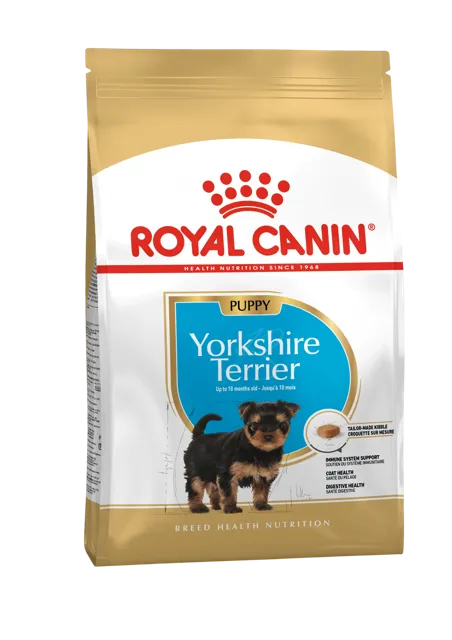
Royal Canin Yorkshire Terrier Puppy is a growth kibble written for one small breed, and it is built rich to suit a little dog with a quick metabolism, declaring 29.0% protein and 20.0% fat. Dehydrated poultry protein heads the list with rice and maize flour behind it, and the tail runs to prebiotics, borage oil and a marigold source of lutein. Naming is where it gives least away. The poultry names no bird, the animal fats no animal and the hydrolysed animal proteins none either. The food lands in our Average band.
Our view
Likely to suit
With a Yorkie puppy taking food a thimbleful at a time, every mouthful has to count.
- Yorkshire terrier puppies, the one breed this recipe was drawn up around
- Small pups with a quick burn on energy, since this bag holds 408 kcal per 100g against the 376 a puppy dry food typically gives
- Owners who like the micronutrient panel spelled out, from vitamin E at 590 mg per kg down to selenium at 0.08 mg
- Households who like gut support printed on the pack, since fructo-oligo-saccharides at 0.34% and a hydrolysed yeast for manno-oligo-saccharides are both there
- Puppies whose coats need looking after from the start, with borage oil at 0.1% and biotin at 3 mg per kg in print
Worth watching
Some habits in the way this label is written are worth knowing before you commit.
- With the meat given as poultry and no bird named, a pup already reacting to chicken or turkey cannot be kept clear of it here
- The animal fats go unnamed too, as do the hydrolysed animal proteins, and that counts on a strict exclusion diet
- Soya oil and fish oil are both there, so the bowl is neither soya free nor fish free
- Calcium is nowhere on this label, and it stays the number most worth knowing on any growth food
- Moisture is missing from the panel, so the dry matter figures work from our assumed 8% for a kibble
Written by our editorial team. Independent guidance, not veterinary advice.
How this scores
How we scoreThe Details
Dog fit
With a Yorkie puppy taking food a thimbleful at a time, every mouthful has to count. Some habits in the way this label is written are worth knowing before you commit.
Dry
Puppy
Small
Poultry
The score, in context
Our reading puts Royal Canin Yorkshire Terrier Puppy in the Average band, a step under the Good band where a typical puppy dry food settles. Transparency is the one pillar reading Poor, with protein and processing at Average and nutritional balance at Good, so this comes down to print more than to substance. The heart of it is what the label declines to say. The animal ingredients arrive as categories, the analysis stops before moisture and calcium, and rice with maize flour carries a fair share of the bag.
None of that means the food will not agree with a Yorkie, and plenty of them do well on it. It does mean an owner is given less to check than most growth foods now offer.
What's in it
Ingredients, as declared: Dehydrated poultry protein, rice, maize flour, animal fats, vegetable protein isolate*, beet pulp, hydrolysed animal proteins, minerals, soya oil, fish oil, yeasts and parts thereof, fructo-oligo-saccharides (0.34%), hydrolysed yeast (source of manno-oligo-saccharides), borage oil (0.1%), yeasts extracts (source of betaglucans), marigold extract (source of lutein).
Named ingredients
Nutritional additives
Additives (per kg): Nutritional additives: Vitamin A: 29000 IU, Vitamin D3: 800 IU, Vitamin E: 590 mg, E1 (Iron): 39 mg, E2 (Iodine): 3.9 mg, E4 (Copper): 12 mg, E5 (Manganese): 51 mg, E6 (Zinc): 106 mg, E8 (Selenium): 0.08 mg - Biotin: 3 mg - Technological additives: Clinoptilolite of sedimentary origin: 10 g - Sensory additives: Yucca extract: 125 mg - Preservatives - Antioxidants.
Ingredient notes
First on the list is dehydrated poultry protein, and that word dehydrated is worth decoding. The water has already gone. What is declared therefore carries through to the finished kibble more directly than a fresh meat headline would, and protein converts to 31.5% of dry matter, a respectable figure for growth. Poultry is the catch, since the word covers chicken and turkey as easily as duck or any other domestic fowl, and the mix can move from batch to batch.
Rice comes second and maize flour third, so the starch base is grain led rather than grain free. Carbohydrate is estimated at 37.0% of dry matter, a shade under the 39.0% typical of a puppy dry food. The grain is doing an ordinary amount of work here. There is beet pulp too, a gentle and well tolerated fibre at 1.4% of dry matter.
Fat is where this recipe is generous, at 21.7% of dry matter, and it arrives from more than one direction. Animal fats leads and names no species. Soya oil and fish oil follow. Fish oil carries the long chain omega 3s, which a growing brain and coat both need. Borage oil at 0.1% adds gamma linolenic acid on the skin side.
Vegetable protein isolate and the soya oil are the two entries that put soya in the allergen picture. A dog digests plant protein less well than meat protein, so read the isolate as a top up to the analysis and not as extra meat.
What follows at the tail is the interesting part. The gut's useful bacteria are fed by yeasts and parts thereof, by fructo-oligo-saccharides at 0.34% and by a hydrolysed yeast as a manno-oligo-saccharide source. Yeast extracts supply betaglucans on the immune side, and marigold extract carries lutein. Clinoptilolite at 10 g per kg is a technological additive and not a nutrient. Yucca extract at 125 mg per kg is in the bag for stool odour.
The declared analysis prints protein, fat, fibre and ash, then stops. No moisture figure is given, so the dry matter column works from our assumed 8% for a kibble, and calcium is absent altogether. A Yorkshire terrier is not a large breed puppy, so the calcium question is less loaded here than on a bag aimed at big dogs. It is still the figure a careful owner would want printed.
Price and value
£9.16 a kilo, sold in a 1.5kg bag.
How much a puppy needs each day keeps moving. Age changes it, and so does the adult size the pup is heading for. Feed to the weight and age chart on the pack, not to a fixed scoop. Our standard energy estimate puts a 5kg puppy between 4 and 12 months old at roughly 103.2 to 126.1 grams a day.
Nutritional analysis
Declared analysis
29%
20%
1.3%
7.7%
Dry weight
31.5%
21.7%
1.4%
8.4%
37%
As-fed composition
Estimated breakdown of the finished product by ingredient category, from the declared ingredient list and ingoing weights. These are estimates, not measurements.
41.6%
46%
4.1%
6.4%
1.9%
Pricing & size
- Pack size
- 1.5 kg
- Retailer pricing
- Coming soon
Live retailer pricing is not yet available for this food. Prices, cost per day and where to buy will appear here once retailer data is live.
Ingredients and nutrition are taken from manufacturer data. Retailer pricing is not yet live for this food.
Related dog food guides
Ranked shortlists that include foods like this one.