
Skip to content
Off the Leash
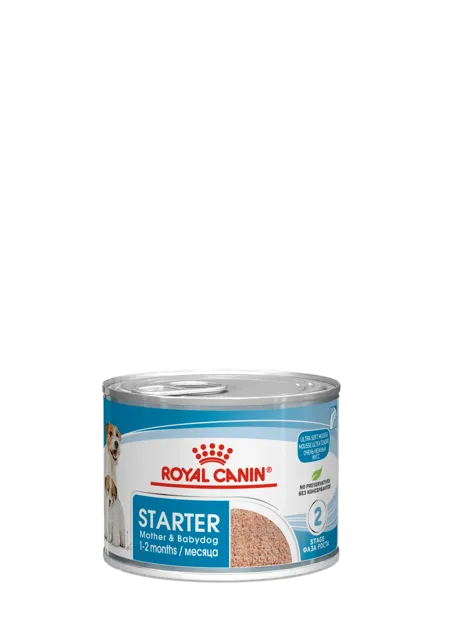
Royal Canin Starter Mother & Babydog Ultra Soft Mousse – —

Royal Canin

Royal Canin Starter Mother & Babydog Ultra Soft Mousse review

40.5/100Average
WetPuppyAdult

Royal Canin Starter Mother and Babydog Ultra Soft Mousse is not an ordinary dinner. It is a very soft mousse built to do two jobs at once, carrying a bitch through pregnancy and nursing and giving her puppies their first food away from the teat. Milk and milk derivatives sit on the list to ease that handover. The analysis behind it is concentrated and protein heavy, exactly as that job demands. Every entry on the list is written in category language, and that is what puts the mousse in our Average band.

Where to buy: coming soon
Live retailer pricing is coming soon. Once we have prices from UK retailers, the best price, cost per day and where to buy will appear here.

Our view

Likely to suit

Weaning is a messy, anxious fortnight, and something soft enough to lap from a saucer takes a good deal of the worry out of it.

  • Breeders weaning a litter, since the mousse needs no chewing at all
  • Bitches in late pregnancy and through nursing, when energy demands climb well above normal
  • Puppies just leaving milk, with milk and milk derivatives on the list to bridge the change
  • Dogs who need a protein rich bowl, as protein converts to 46.5% of dry matter and fat to 27.9%
  • Owners who want the starch kept low, with carbohydrate estimated at 13.0% of dry matter against 15.8% for the typical adult wet food

Worth watching

A food written for mothers and newborn puppies carries more responsibility than an ordinary tray does, so read this one closely.

  • Calcium is not declared on the label, which matters more for a growing litter than for a settled adult, so talk it through with your vet if the mousse is doing most of the feeding
  • Milk and milk derivatives are on the list, so a dog who reacts to dairy should not be fed from it
  • A puppy showing early sensitivities cannot be narrowed down here, since the list names neither an animal nor a grain
  • The label prints no energy figure at all, and the 96 kcal per 100g we show is our own estimate

Written by our editorial team. Independent guidance, not veterinary advice.

How this scores

How we score
40.5/100Average
Protein and processingAverage
Nutritional balanceOutstanding
TransparencyAverage
ValueAverage

The Details

Dog fit

Weaning is a messy, anxious fortnight, and something soft enough to lap from a saucer takes a good deal of the worry out of it. A food written for mothers and newborn puppies carries more responsibility than an ordinary tray does, so read this one closely.

Food type

Wet

Life stage

Puppy, Adult

Breed size

Small

The score, in context

Our scoring is built around everyday feeding, and this mousse is doing a specialist job, so the Average result needs that context sitting beside it. The typical adult wet food reaches our Excellent band and the mousse finishes well behind. The reasons will be familiar by now: no animal named, no grain named, nothing given a proportion, and calcium left undeclared on a product partly intended for growth. Protein and processing and transparency each read Average on that basis, and only nutritional balance comes back Outstanding.

What the analysis does show is strong. Protein converts to 46.5% of dry matter, the carbohydrate estimate comes in at 13.0% and the moisture is declared at 78.5%. Together those describe a genuinely concentrated food of the kind a nursing bitch actually needs. Royal Canin has been supporting breeders through weaning for a very long time, and this product is reached for constantly in whelping rooms for good reasons. The placement reflects a label that will not show its working, nothing more.

What's in it

Ingredients, as declared: Meat and animal derivatives, cereals, derivatives of vegetable origin, minerals, oils and fats, milk and milk derivatives, yeasts.

Named ingredients

Meat and animal derivatives, cereals, derivatives of vegetable origin, minerals, oils and fats, milk and milk derivatives, yeasts.

Nutritional additives

Additives (per kg): Nutritional additives: Vitamin D3: 170 IU, Iron (3b103): 6 mg, Iodine (3b202): 0.3 mg, Copper (3b405, 3b406): 2.5 mg, Manganese (3b502, 3b503, 3b504): 1.7 mg, Zinc (3b603, 3b605, 3b606): 17 mg - Technological additives: Clinoptilolite of sedimentary origin: 2 g.

Ingredient notes

Milk and milk derivatives is the entry that explains what this product is for. A puppy coming off the teat is still set up to digest milk, and keeping some in the first solid food makes the transition gentler on a very young gut. It is also the entry that rules the mousse out for any dog with a dairy problem, which is a small population but a real one.

Above it, the familiar umbrella terms do the heavy lifting. Meat and animal derivatives heads the list, a legal description covering the fleshy parts and processing derivatives of warm blooded land animals and spanning material of every quality. Cereals and derivatives of vegetable origin follow, neither of them tied to a named source, and oils and fats sit below the minerals. Yeasts close the list, bringing B vitamins and a savoury smell that helps get a reluctant puppy started.

The analysis is where this product earns its place. Protein converts to 46.5% of dry matter and fat to 27.9%, both high, and the carbohydrate estimate is 13.0% of dry matter, lower than the 15.8% the typical adult wet food carries. A pregnant or nursing bitch has energy and protein needs well above her normal ones, and a weaning puppy has to get a great deal of nutrition into a very small stomach. A concentrated recipe is exactly the right shape for both.

The gap in all this is calcium. A growing puppy has a narrow window for getting calcium right. The label prints no figure for it, and nothing on the pack lets you check the mousse against what a litter needs. That is not a claim that anything is wrong with it, and Royal Canin will have formulated to a growth standard. It does mean the check has to happen through your vet or your breeder rather than on the back of the pack.

The added panel is short and dosed: vitamin D3 at 170 IU per kilo, iron at 6 mg, iodine at 0.3 mg, copper at 2.5 mg, manganese at 1.7 mg and zinc at 17 mg. Clinoptilolite at 2 g per kilo goes in as a technological aid. Vitamin D3 is the one to notice here, since it works hand in hand with calcium in a growing skeleton, and it is printed while its partner is not.

Price and value

£11.59 a kilo. The servings are 195 g, twelve to a pack.

Fed to a 15kg adult dog in moderate condition, which is not the dog this mousse is meant for, feeding would be about £10.16 a day, or roughly 877 grams. That assumes around 840 kcal a day (110 × bodyweight^0.75, the standard maintenance estimate) and our estimated 96 kcal per 100g. A nursing bitch and a hungry litter will move through it a good deal faster than that.

Nutritional analysis

Declared analysis

Energy
95.8 kcal/100g

Estimated using Modified Atwater factors*

Protein

10%

Fat

6%

Fibre

0.7%

Ash

2%

Moisture

78.5%

Dry weight

Protein

46.5%

Fat

27.9%

Fibre

3.3%

Ash

9.3%

Carbs

13%

As-fed composition

Estimated breakdown of the finished product by ingredient category, from the declared ingredient list and ingoing weights. These are estimates, not measurements.

Meat

39.4%

Added water

13.5%

Carbs

37.8%

Oils

2.6%

Other

6.7%

Pricing & size
Pack size
12x195 g
Retailer pricing
Coming soon

Live retailer pricing is not yet available for this food. Prices, cost per day and where to buy will appear here once retailer data is live.

Ingredients and nutrition are taken from manufacturer data. Retailer pricing is not yet live for this food.

Related dog food guides

Ranked shortlists that include foods like this one.
All reviews

Featured feeding accessories

All feeding accessories

Brackenwood

Slow Feeder Maze Bowl

Slows fast eaters and eases gulping at mealtimes.

From £12.99· 4 retailers
View

Tarn & Co

Raised Double Diner

Height-set stand for easier, tidier eating.

From £28.99· 3 retailers
View

Reviewed by Off the Leash Editorial

Last updated 28 August 2026