


Skip to content
Off the Leash
Royal Canin Puppy Dachshund – —

Royal Canin

Royal Canin Puppy Dachshund review

42.9/100Average
DryPuppy

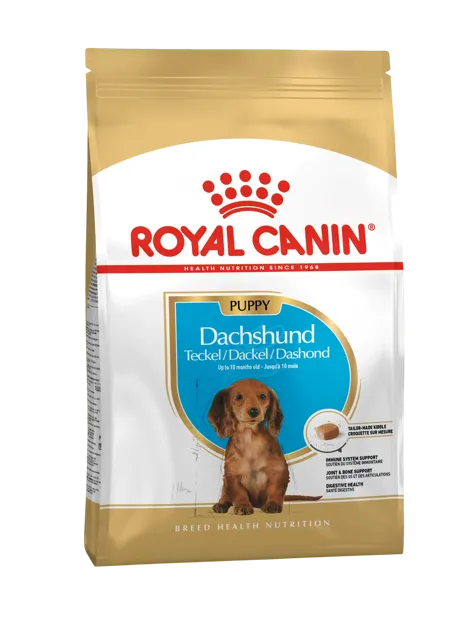
Royal Canin Puppy Dachshund is a breed specific growth kibble, and it carries something most puppy bags leave until later in life. Hydrolysed crustaceans and hydrolysed cartilage close the list, named as sources of glucosamine and chondroitin. The cereal picture is simpler than most of its neighbours too, with rice and maize doing the work and no wheat anywhere on the label. Protein converts to 32.6% of dry matter and energy runs to 389 kcal per 100g, and with the meat, the fats and the hydrolysed proteins all left unnamed, the food sits in our Average band.

Where to buy: coming soon
Live retailer pricing is coming soon. Once we have prices from UK retailers, the best price, cost per day and where to buy will appear here.

Our view

Likely to suit

Long backed pups attract a lot of advice, and this bag at least starts the joint conversation early.

  • Dachshund puppies, the breed this recipe and its feeding guide are built around
  • Owners thinking about joints from the beginning, since glucosamine here comes from hydrolysed crustaceans and chondroitin from hydrolysed cartilage
  • Households avoiding wheat, because the starch here is rice and maize
  • Pups with plenty to burn, at 389 kcal per 100g against the 376 typical of a puppy dry food
  • Owners minding a young pup's gut, with a hydrolysed yeast for manno-oligo-saccharides and fructo-oligo-saccharides at 0.34%

Worth watching

Before this becomes your pup's daily bag, there are a few things to have straight.

  • Neither the glucosamine nor the chondroitin source carries a printed dose, and the label never says how much reaches the bowl
  • No species is named for the poultry, the animal fats or the hydrolysed proteins, and that rules the food out for an elimination trial
  • Maize sits second in the recipe after rice, worth knowing for a household avoiding it
  • Fish oil means fish is in the bowl, however small the inclusion
  • Calcium is not printed on the label, and growth is the stage where owners most want to see it

Written by our editorial team. Independent guidance, not veterinary advice.

How this scores

How we score
42.9/100Average
Protein and processingAverage
Nutritional balanceGood
TransparencyPoor
ValueAverage

The Details

Dog fit

Long backed pups attract a lot of advice, and this bag at least starts the joint conversation early. Before this becomes your pup's daily bag, there are a few things to have straight.

Food type

Dry

Life stage

Puppy

Breed size

Small

Main protein

Poultry

The score, in context

Our Average band is where this food finishes, a step under the typical puppy dry food in Good, with nutritional balance reading Good, protein and processing Average and transparency Poor.

The honest reading is that the recipe does several thoughtful things, joint sources and prebiotics among them. It still builds its protein on categories rather than named animals, and rice and maize fill the middle of the bag. That mix is what the scoring weighs, and carbohydrate at 40.1% of dry matter sits marginally above the 39.0% typical as well.

What's in it

Ingredients, as declared: dehydrated poultry protein, rice, maize, vegetable protein isolate*, animal fats, beet pulp, hydrolysed animal proteins, soya oil, fish oil, minerals, fructo-oligo-saccharides (0.34%), hydrolysed yeast (source of manno-oligo-saccharides), yeasts extracts (source of betaglucans), marigold extract (source of lutein), hydrolysed crustaceans (source of glucosamine), hydrolysed cartilage (source of chondroitin).

Named ingredients

Dehydrated poultry protein, rice, maize, vegetable protein isolate*, animal fats, beet pulp, hydrolysed animal proteins, soya oil, fish oil, minerals, fructo-oligo-saccharides (0.34%), hydrolysed yeast (source of manno-oligo-saccharides), yeasts extracts (source of betaglucans), marigold extract (source of lutein), hydrolysed crustaceans (source of glucosamine), hydrolysed cartilage (source of chondroitin).

Nutritional additives

Additives (per kg): Nutritional additives: Vitamin A: 27000 IU, Vitamin D3: 700 IU, vitamine E: 550 mg, E1 (Iron): 40 mg, E2 (Iodine): 4 mg, E4 (Copper): 12 mg, E5 (Manganese): 52 mg, E6 (Zinc): 110 mg, E8 (Selenium): 0.09 mg - Technological additives: Clinoptilolite of sedimentary origin: 10 g - Sensory additives: Yucca extract: 125 mg - Preservatives - Antioxidants.

Ingredient notes

The end of this ingredients list is the interesting part. Hydrolysed crustaceans are the standard route to glucosamine, which is concentrated in shellfish shells, and hydrolysed cartilage is the usual source of chondroitin. Both are joint nutrients seen far more often in senior and large breed foods, so putting them in a long backed puppy's bag shows a sensible instinct. Neither carries a dose, so read them as present rather than measured.

At the top, dehydrated poultry protein does the heavy lifting. Dried meat is the straightforward form of a meat entry, because the weight declared is near enough the weight that ends up in the kibble. Poultry, though, is a term for any domestic fowl, and the bird behind it need not be the same one twice.

After the meat come rice and maize for the starch, then a vegetable protein isolate and beet pulp. There is no wheat on this list and no maize gluten either, which makes the cereal side simpler to read than several of its stablemates.

Fish oil and soya oil sit beside the unnamed animal fats. The fish oil earns its place for a growing pup, bringing the long chain omega 3 fats a young brain and coat draw on. It is also the reason fish shows up on this food's allergen picture.

Protein is 30.0% as fed and fat 16.0%. The label prints no moisture of its own, and on the standard 8% assumption those figures become 32.6% and 17.4% of dry matter. Energy is declared at 389 kcal per 100g and carbohydrate works out at 40.1% of dry matter.

A calcium figure is nowhere on it. For a breed that finishes small the consequences of that unknown are limited, since it is fast growing large breeds where calcium balance does the real damage. On a bag sold for growth, though, it is the first line many owners look for, and it is not here.

The added panel is dosed in full per kilo: vitamin A at 27000 IU, D3 at 700 IU and E at 550 mg. The minerals follow, with manganese at 52 mg, iron at 40 mg, zinc at 110 mg, copper at 12 mg, iodine at 4 mg and selenium at 0.09 mg. The panel ends with yucca extract at 125 mg, a plant extract that helps keep stool odour down.

Price and value

£9.16 a kilo, sold in a 1.5 kg bag.

A growing pup's portions change faster than most owners expect. Follow the chart on the bag, and every couple of weeks run your hands over your pup's ribs to check it.

Nutritional analysis

Declared analysis

Energy
388.7 kcal/100g
Protein

30%

Fat

16%

Fibre

1.5%

Ash

7.6%

Dry weight

Protein

32.6%

Fat

17.4%

Fibre

1.6%

Ash

8.3%

Carbs

40.1%

As-fed composition

Estimated breakdown of the finished product by ingredient category, from the declared ingredient list and ingoing weights. These are estimates, not measurements.

Meat

41.4%

Carbs

45.8%

Veg

6.4%

Oils

5%

Other

1.4%

Pricing & size
Pack size
1.5 kg
Retailer pricing
Coming soon

Live retailer pricing is not yet available for this food. Prices, cost per day and where to buy will appear here once retailer data is live.

Ingredients and nutrition are taken from manufacturer data. Retailer pricing is not yet live for this food.

Related dog food guides

Ranked shortlists that include foods like this one.
All reviews

Featured feeding accessories

All feeding accessories

Brackenwood

Slow Feeder Maze Bowl

Slows fast eaters and eases gulping at mealtimes.

From £12.99· 4 retailers
View

Tarn & Co

Raised Double Diner

Height-set stand for easier, tidier eating.

From £28.99· 3 retailers
View

Reviewed by Off the Leash Editorial

Last updated 28 August 2026