




48/100Average
Pets at Home
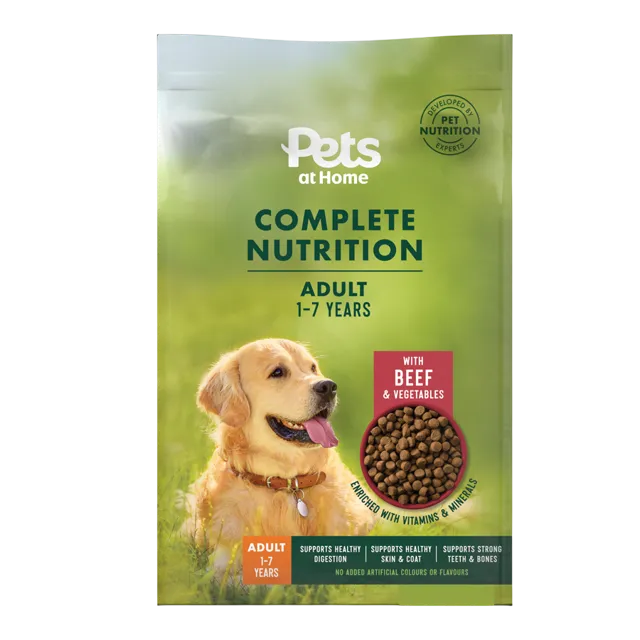
The shop's own everyday kibble, in beef and chicken versions built the same way, and both sit in our Poor band. That reflects how quiet the label is about its contents more than anything wrong in the bowl. For an adult dog with no particular dietary demands it is a straightforward complete food, sold wherever you buy the lead and the treats.
Written by our editorial team. Independent guidance, not veterinary advice.
Listed for adults of every size up to large. Calcium works out at 2.17% of dry matter, fine for a grown dog but higher than a growing large breed wants.
Dry
Adult
Toy, Small, Medium, Large
Beef
All two Poor. Typical dry food: Good.
The result is mostly a reading of what the label declines to say, with four umbrella terms our scoring cannot give credit for; plenty of dogs eat this happily for years.
Vitamins A, D3 and E and methionine, with zinc as the oxide, which dogs absorb less readily than a chelate.
The unnamed rest of the meat means this cannot rule chicken out with any confidence.
Named ingredients
The version to reach for if chicken has caused trouble before.
Both recipes follow one blueprint. Cereals lead, then meat and animal derivatives at 22%, of which only 4% is named as the meat on the front of the bag. Derivatives of vegetable origin and oils and fats are umbrella terms too, so the grain, the rest of the meat and the fat source can all change between batches. Peas are the only vegetable with a number, and the label prints the fresh equivalent beside it.
The analysis is the same in both: protein at 23.9% of dry matter, fat at 7.6% and estimated carbohydrate at 55.4%. Only the named 4% differs.
22%
7%
4.5%
7.5%
8%
23.9%
7.6%
4.9%
8.2%
55.4%
Estimated breakdown of the finished product by ingredient category, from the declared ingredient list and ingoing weights. These are estimates, not measurements.
27.4%
59.9%
4.5%
5.8%
2.4%
A lighter kibble, so the daily bowl ends up a little fuller than on a richer food.
Budget end of the market for a dry food, though the price still runs ahead of what the analysis shows.
Ingredients and nutrition are taken from manufacturer data. Retailer pricing is not yet live for this food.
Ranked shortlists that include foods like this one.
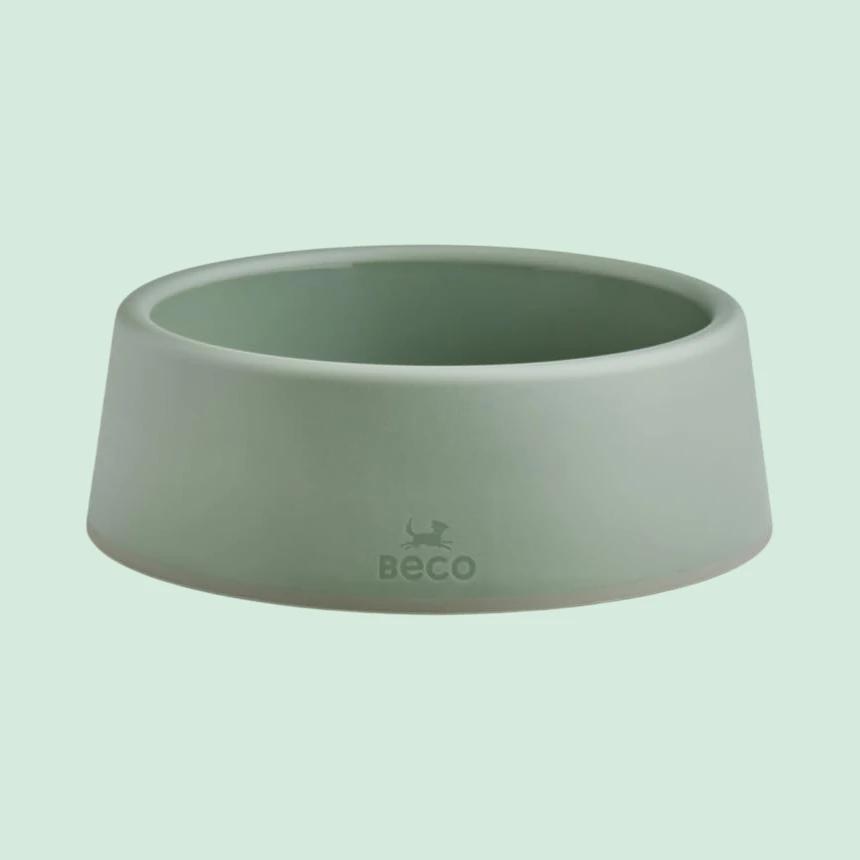
Beco
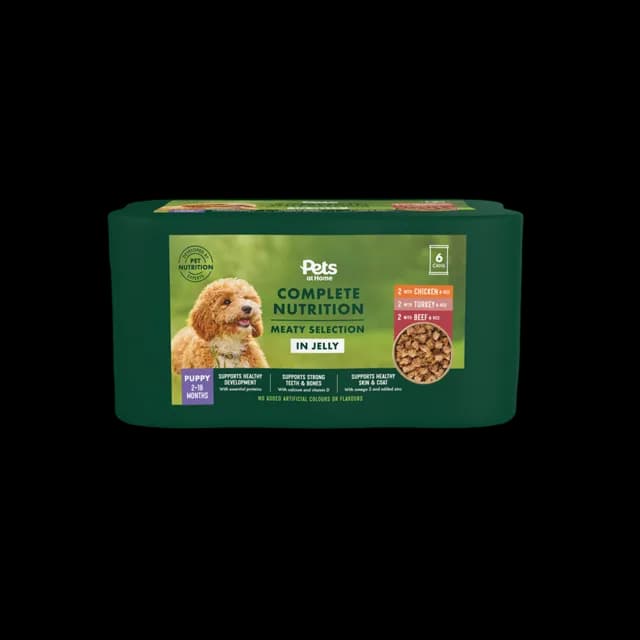
A recycled plastic dog bowl with a wide weighted base that stays where you put it.
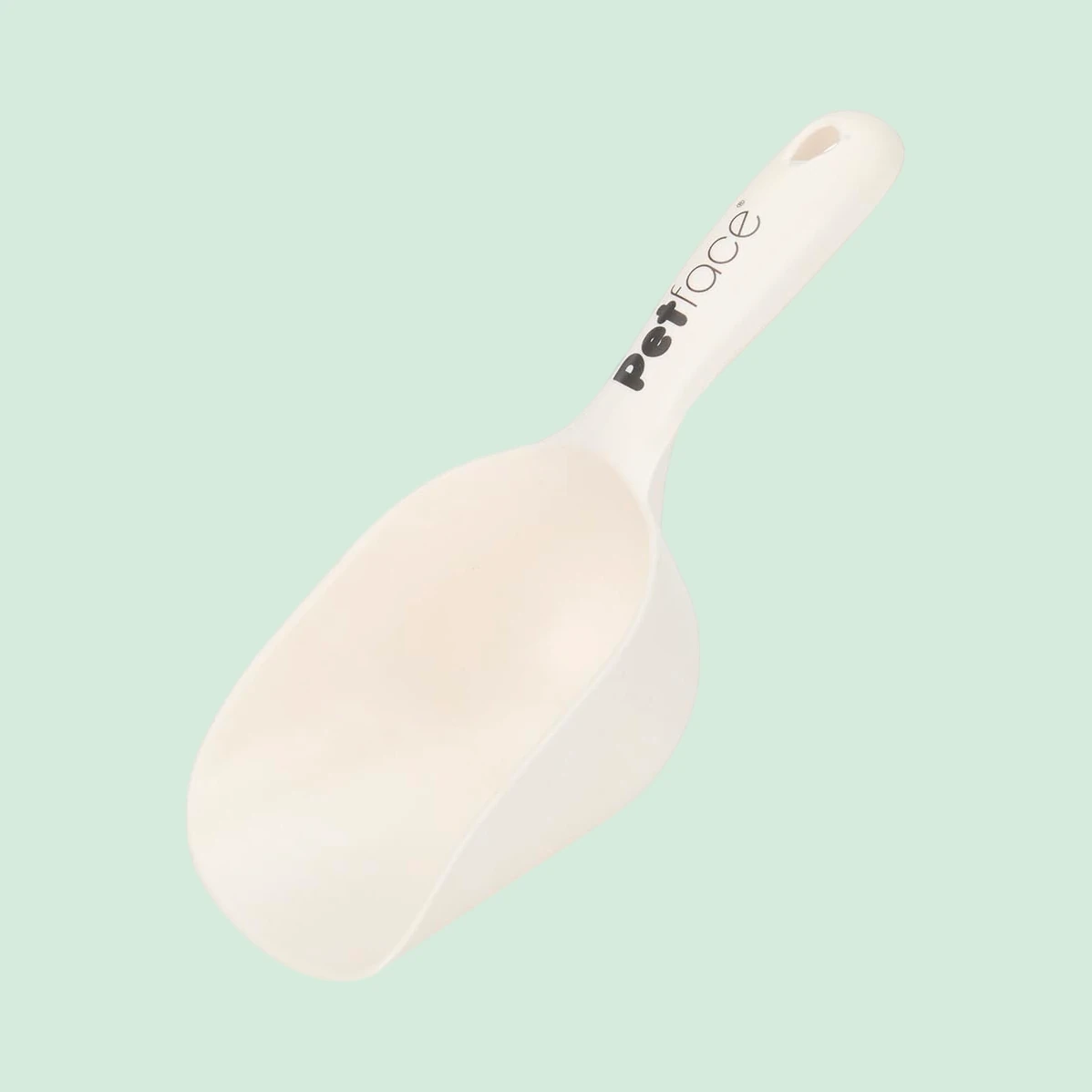
Petface
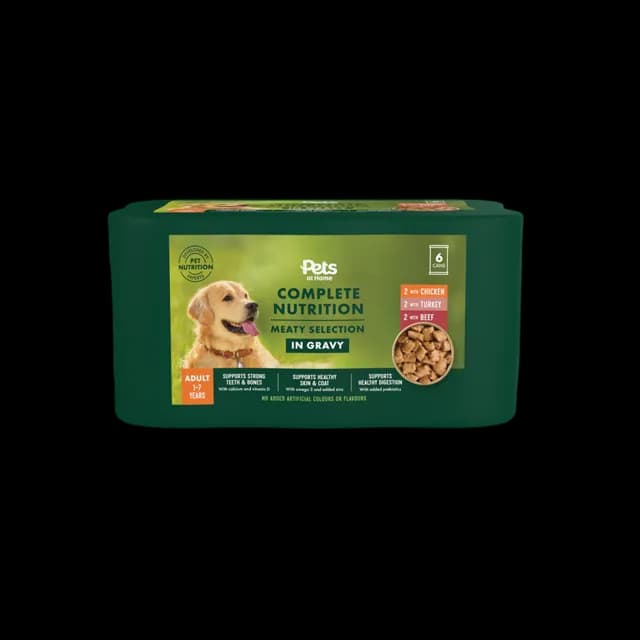
A light plastic food scoop that makes measuring kibble a daily habit.
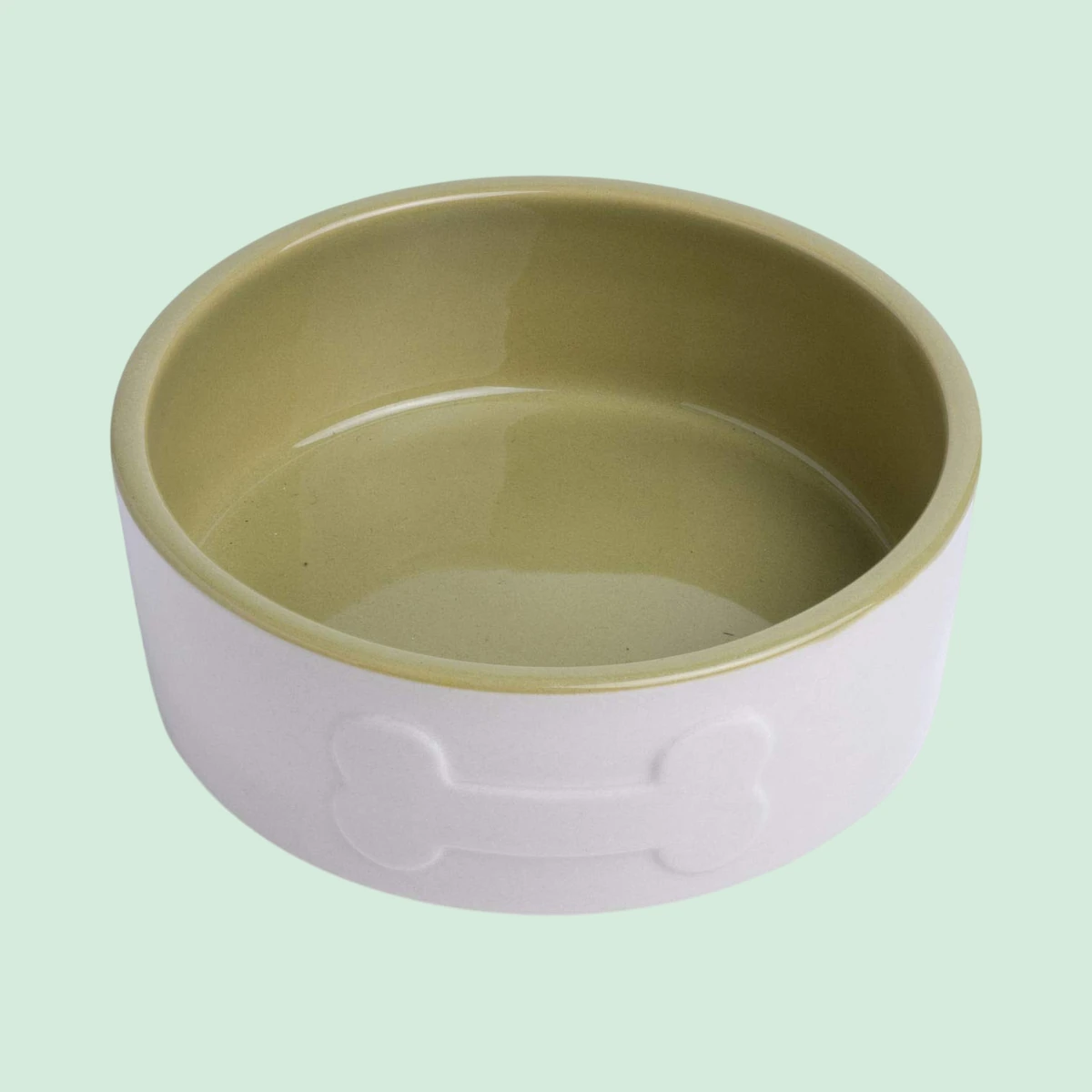
Petface
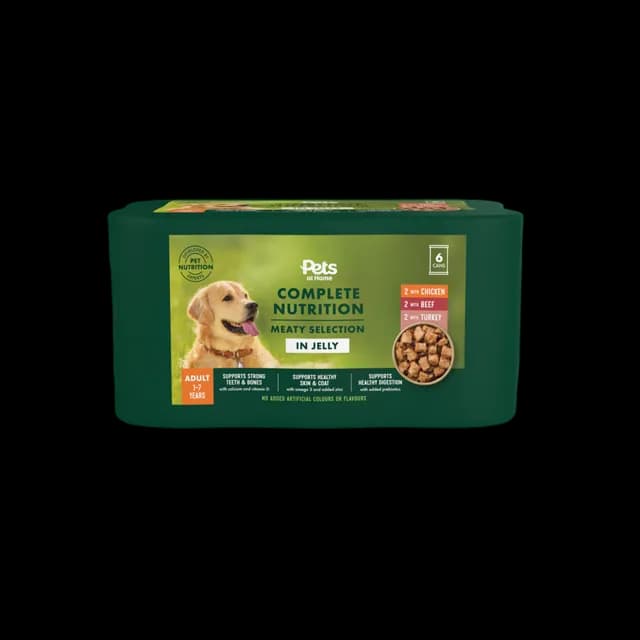
A 15cm ceramic dog bowl in cream and green, sized for toy and small breeds.
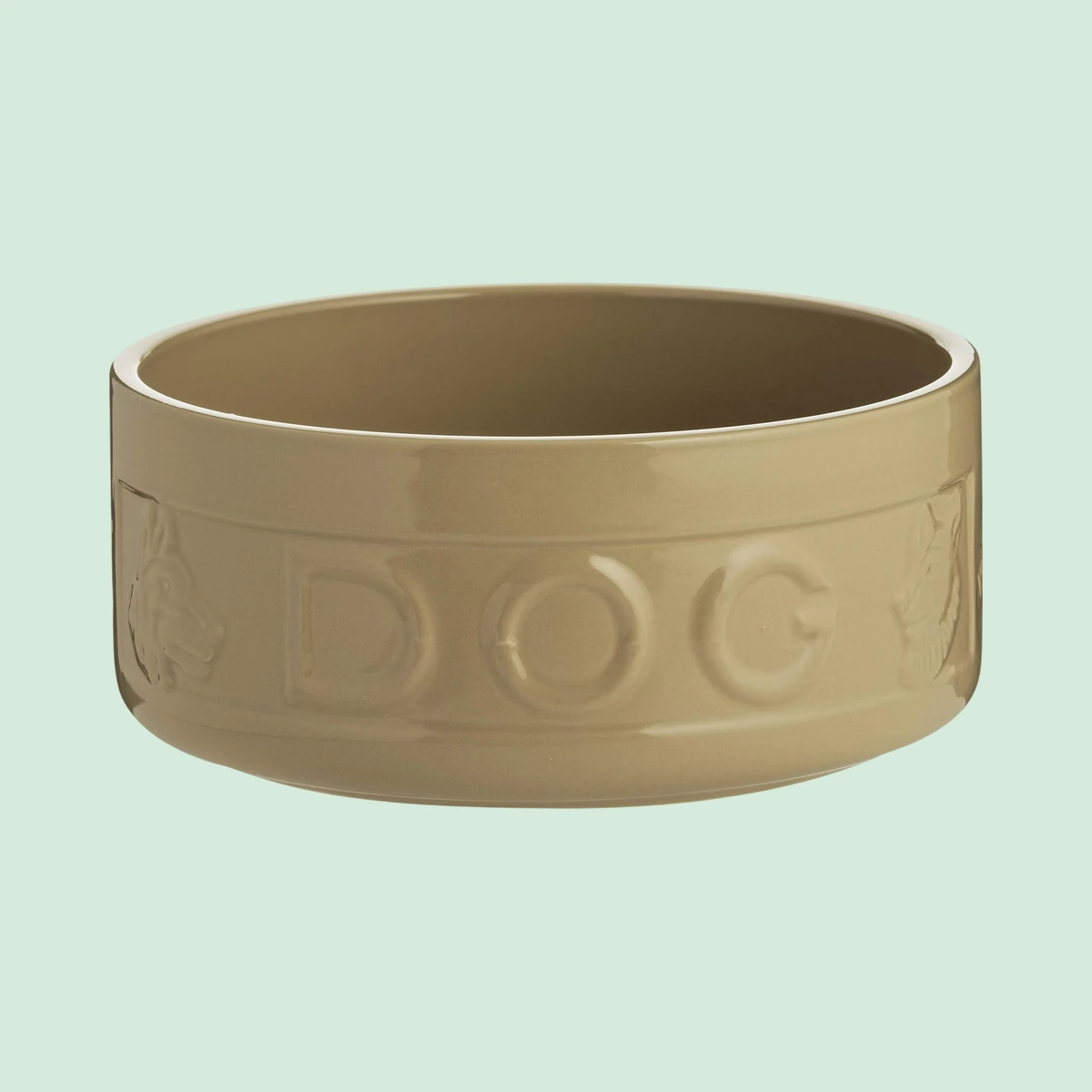
Mason Cash
The Derbyshire stoneware classic, a 20cm dog bowl holding 1.6 litres and dishwasher safe.