


Skip to content
Off the Leash
Opti Life Baby – —

Opti Life

Opti Life Baby review

42.7/100Average
DryPuppy

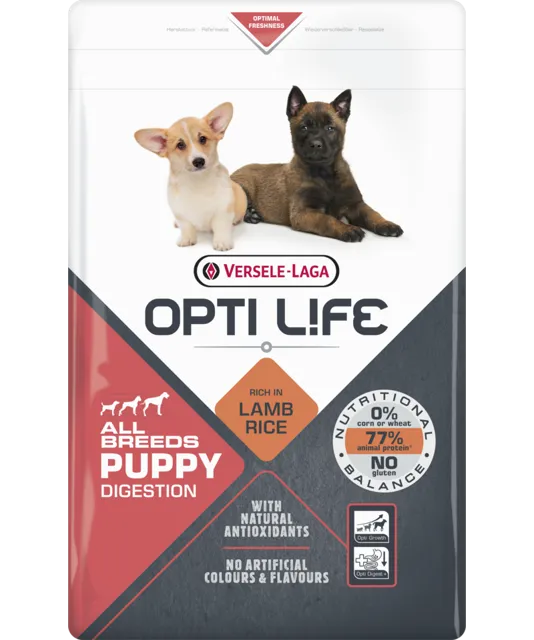
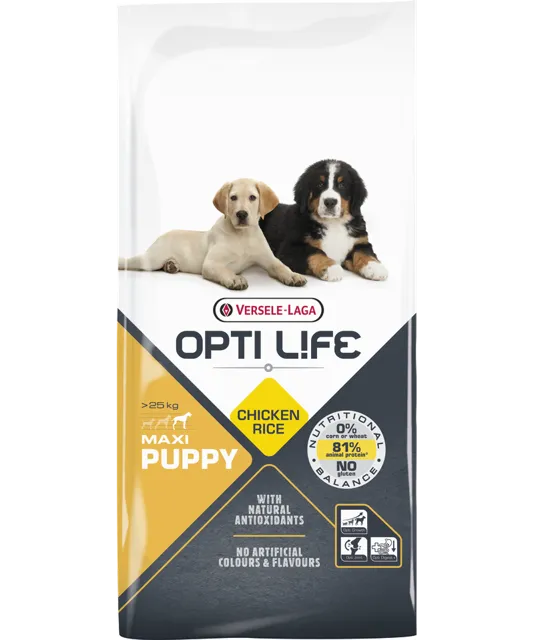
Opti Life Baby is a starter kibble for the youngest pups in the house, and its feeding guide begins at 0.2kg of bodyweight, which tells you who the maker had in mind. Chicken at 30% shares the head of the list with rice at 30%, and calcium is declared, converting to 1.3% of dry matter. The back half leans on settling ingredients such as psyllium, montmorillonite clay and a prebiotic pairing. It lands in our Average band.

Where to buy: coming soon
Live retailer pricing is coming soon. Once we have prices from UK retailers, the best price, cost per day and where to buy will appear here.

Our view

Likely to suit

If you have just taken on a very young pup and want a bag that starts where they are, this label was drawn up for that moment.

  • Owners of the smallest pups, since the label's own guide opens at 0.2kg of bodyweight and climbs in small steps from there
  • Pups whose rearing plan needs the calcium line visible, since the label declares it and it converts to 1.3% of dry matter, inside the range growing bone is reared to
  • Households feeding chicken, which heads the recipe at 30% with rice alongside it
  • Pups with unsettled digestion, with psyllium, montmorillonite clay, FOS and MOS all written into the list
  • Owners who like joint cover to start early, with glucosamine declared at 500 mg/kg

Worth watching

A few habits of this label are worth reading before it becomes the everyday bag.

  • Grain is central here, with rice leading the starch side and rice flour behind it
  • The bowl is a starchy one, with carbohydrate at 45.6% of dry matter against the 39.0% a typical puppy dry food carries
  • Species names are missing from the animal fat and from the hydrolysed animal protein, and that matters on a strict exclusion trial, though not if you simply favour chicken
  • Fish is in the recipe by way of krill and salmon oil, worth knowing for a pup that avoids it
  • Moisture goes undeclared, so the usual 8% assumption for a kibble sits behind every dry matter figure here

Written by our editorial team. Independent guidance, not veterinary advice.

How this scores

How we score
42.7/100Average
Protein and processingPoor
Nutritional balanceAverage
TransparencyGood
ValueAverage

The Details

Dog fit

If you have just taken on a very young pup and want a bag that starts where they are, this label was drawn up for that moment. A few habits of this label are worth reading before it becomes the everyday bag.

Food type

Dry

Life stage

Puppy

Main protein

Chicken

The score, in context

Most puppy dry food lands in our Good band. This one sits a shelf lower, in our Average band. Transparency reads Good and nutritional balance Average, with protein and processing the one reading to slip to Poor. The everyday basics are in order, and it is the meat and its handling that has the most ground to make up. The starch share and the unnamed animal entries are what hold it in place, and the notes below go through both.

What's in it

Ingredients, as declared: chicken (30%), rice (30%), rice flour, animal fat, linseed, vegetable fibres, minerals, hydrolysed animal protein, brewer's yeast, salmon oil, montmorillonite clay, psyllium, krill, FOS, dried whole eggs, carob pods, MOS, lecithin, sea algae (Ascophyllum nodosum), salts of fatty acids, rosemary.

Named ingredients

Chicken (30%), rice (30%), rice flour, animal fat, linseed, vegetable fibres, minerals, hydrolysed animal protein, brewer's yeast, salmon oil, montmorillonite clay, psyllium, krill, FOS, dried whole eggs, carob pods, MOS, lecithin, sea algae (Ascophyllum nodosum), salts of fatty acids, rosemary.

Nutritional additives

_Nutritional additives:_ vitamin A 26000 IU, vitamin D3 1400 IU, vitamin E 590 mg, vitamin C 235 mg, β-carotene 1.1 mg, taurine 1000 mg, glucosamine 500 mg, 3b103 (iron) 89 mg, 3b202 (iodine) 3.4 mg, 3b405 (copper) 12 mg, 3b503 (manganese) 59 mg, 3b605 (zinc) 118 mg, 3b607 (zinc) 30 mg, 3b801 (selenium) 0.24 mg, 3b812 (selenium) 0.12 mg. _Technological additives:_ antioxidants: tocopherols, clinoptilolite of sedimentary origin 10 g, sepiolite 1.5 g.

Ingredient notes

Chicken at 30% opens the recipe, written plainly rather than as a meal or a dried share, which usually points to the fresh form and to water that leaves during cooking. Rice matches it at 30% with rice flour behind, so on the label as printed the starch side stands level with the meat side.

The analysis follows from that. Protein of 26.0% converts to 28.3% of dry matter and fat of 14.0% to 15.2%, while carbohydrate lands at 45.6% of dry matter, above the 39.0% a typical puppy dry food carries. Since no moisture figure is printed, those conversions run off the standard 8% assumption for a kibble.

The mineral side is where a growth food earns its keep, and this one does put its calcium in print at 1.3% of dry matter, sitting inside the window growing bone should be reared to. That is the single reassurance an owner of a pup heading for a heavy adult frame most wants to find on a puppy bag.

Behind the main ingredients sits a small digestive kit. Psyllium husk and vegetable fibres supply bulk. FOS and MOS feed the resident gut bacteria, and montmorillonite clay is a mineral binder used to firm up loose stools. Brewer's yeast brings B vitamins and carob pods add a mild traditional settler.

Two entries stay vague. Neither the animal fat nor the hydrolysed animal protein is tied to a species. Fish comes into an otherwise chicken recipe through krill and salmon oil. None of that troubles a pup with a simple preference, but together they mean the bag cannot anchor a formal single-protein trial.

Every entry in the added panel carries its dose. Vitamin A at 26000 IU, vitamin D3 at 1400 IU and vitamin E at 590 mg lead it, with vitamin C at 235 mg, taurine at 1000 mg and glucosamine at 500 mg behind them. The trace minerals are itemised right down to selenium. Clinoptilolite and sepiolite close the technological list, both clay minerals used to keep a kibble stable.

Energy comes out at 357 kcal per 100g, a shade under the 376 typical for the class, and it is our estimate, not a declared figure. In practice a pup eating to appetite simply takes a little more of it.

Price and value

Sold in a 3kg bag.

Growth rewrites the answer week by week, so the amount in the bowl wants to track the guide on the pack rather than settle on one number. That guide runs from 20g a day for a 0.2kg pup up to 200g a day by the time they reach 6kg.

Nutritional analysis

Declared analysis

Energy
357 kcal/100g

Estimated using Modified Atwater factors*

Protein

26%

Fat

14%

Fibre

2.5%

Ash

7.5%

Dry weight

Protein

28.3%

Fat

15.2%

Fibre

2.7%

Ash

8.2%

Carbs

45.6%

As-fed composition

Estimated breakdown of the finished product by ingredient category, from the declared ingredient list and ingoing weights. These are estimates, not measurements.

Meat

32.7%

Carbs

49.8%

Veg

3.3%

Oils

6.9%

Other

7.4%

Pricing & size
Pack size
3 kg (EAN 5410340330364)
Retailer pricing
Coming soon

Live retailer pricing is not yet available for this food. Prices, cost per day and where to buy will appear here once retailer data is live.

Ingredients and nutrition are taken from manufacturer data. Retailer pricing is not yet live for this food.

Related dog food guides

Ranked shortlists that include foods like this one.

All reviews
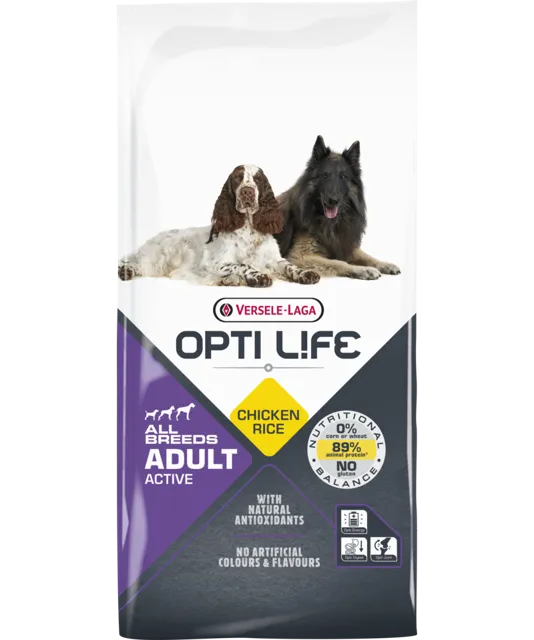
Opti Life Adult – Active All Breeds
64/100Good
4 varieties
Opti Life

Adult

DryAdult · SeniorJoint support
View review
Opti Life Puppy – Maxi
64/100Good
3 varieties

Opti Life

Puppy

DryPuppyJoint support
View review

Featured feeding accessories

All feeding accessories

Brackenwood

Slow Feeder Maze Bowl

Slows fast eaters and eases gulping at mealtimes.

From £12.99· 4 retailers
View

Tarn & Co

Raised Double Diner

Height-set stand for easier, tidier eating.

From £28.99· 3 retailers
View

Reviewed by Off the Leash Editorial

Last updated 28 August 2026