

Skip to content
Off the Leash
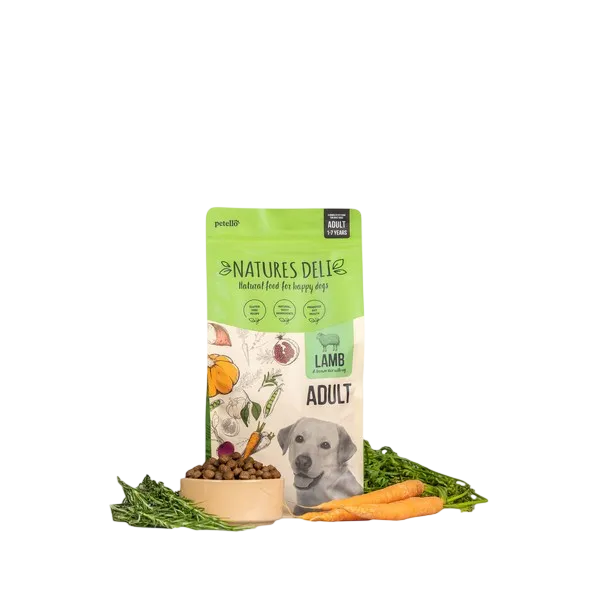
Natures Deli Adult – Lamb and Rice

Natures Deli

Natures Deli Adult: Lamb and Rice review

64.9/100Good
DryAdult

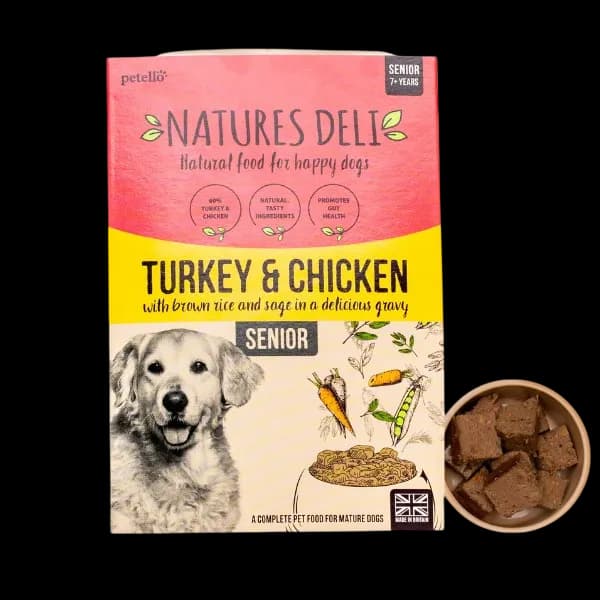
Natures Deli Adult keeps things simple. There is one named meat with brown rice under it, and behind them a long gentle tail of fruit and vegetables and gut friendly extras. Neither recipe carries any fish at all, both name their meat down to the last gram of gravy, and both add prebiotics, a live gut culture and a light touch of joint support. The lamb and rice and the turkey both sit in our Good band.

Where to buy: coming soon
Live retailer pricing is coming soon. Once we have prices from UK retailers, the best price, cost per day and where to buy will appear here.

Our view

Likely to suit

If your dog is happiest on one meat and one grain, both of these recipes hold that line the whole way down the list.

  • Dogs on a one meat plan, as the turkey recipe names no animal but turkey and the lamb none but lamb
  • Dogs kept clear of fish, as the omega 3 here comes from linseed oil and no fish oil appears on either label
  • Dogs whose digestion needs a hand, with beet pulp, prebiotic MOS and FOS at 0.14% each and a live Bacillus subtilis culture named on the label
  • Owners who like real fruit and vegetables on the label, with pumpkin, cranberry, pomegranate and carrot all named
  • Dogs that eat rice happily, since it fills close to a third of both recipes

Worth watching

Before you settle on one of them, run your eye over the label details here.

  • Close to a third of each recipe is brown rice, one to note if you are steering clear of grain
  • Glucosamine at 0.012% and chondroitin sulphate at 0.005% are a light touch, so a dog with real stiffness will want more support on top of the bowl
  • Both joint compounds are of animal origin, with glucosamine from shellfish and chondroitin usually from cattle cartilage, so a strict exclusion diet needs to allow for them
  • Vegetable stock appears on both labels without saying which vegetables, the one unspecific line in an otherwise detailed list

Written by our editorial team. Independent guidance, not veterinary advice.

How this scores

How we score
64.9/100Good
Protein and processingGood
Nutritional balanceAverage
TransparencyOutstanding
ValueGood

The Details

Dog fit

If your dog is happiest on one meat and one grain, both of these recipes hold that line the whole way down the list. Before you settle on one of them, run your eye over the label details here.

Food type

Dry

Life stage

Adult

Breed size

Toy, Small, Medium, Large, Giant

Main protein

Lamb

The score, in context

The two recipes finish together. Both sit in our Good band, the same band the median for adult dry food occupies. Read the labels side by side and the difference is mostly in how each one splits its meat and how much of the bowl the rice takes. The lamb puts 16% of the recipe into fresh lamb ahead of its meal, while the turkey puts the bulk of its 36.5% into turkey meal with 5.7% fresh behind it.

Nothing separates them on the things an owner tends to care about. Both declare protein at 26% and fat at 14%, both are single meat recipes with the same mineral panel, the same prebiotics and the same live culture, and both are free of fish. If the turkey is the one your dog gets on with, it is not a lesser bowl in any way that shows on the bag.

What's in it

Ingredients, as declared: Lamb(32%) includinglamb(16%),lambmeal(14.2%),lambgravy(1.8%)),brown rice (30.8%), pea protein, dried beet pulp, lamb fat, dried peas (3.8%), dried chick peas (2.9%), dried sweet potato (2.9%), brewers' yeast, dried pumpkin (1.9%), minerals, linseed oil, vegetable stock, dried carrot (0.5%), yeast (as a source of mannan-oligosaccharides (prebiotic MOS; 0.14%)), chicory root extract (as a source of fructo-oligosaccharides (prebiotic FOS; 0.14%)), dried rosemary, yucca schidigera (0.024%), glucosamine (0.012%), dried cranberry, dried dandelion root, dried pomegranate, chondroitin sulphate (0.005%)

Named ingredients

Lamb(32%) includinglamb(16%),lambmeal(14.2%),lambgravy(1.8%)),brown rice (30.8%), pea protein, dried beet pulp, lamb fat, dried peas (3.8%), dried chick peas (2.9%), dried sweet potato (2.9%), brewers' yeast, dried pumpkin (1.9%), minerals, linseed oil, vegetable stock, dried carrot (0.5%), yeast (as a source of mannan-oligosaccharides (prebiotic MOS; 0.14%)), chicory root extract (as a source of fructo-oligosaccharides (prebiotic FOS; 0.14%)), dried rosemary, yucca schidigera (0.024%), glucosamine (0.012%), dried cranberry, dried dandelion root, dried pomegranate, chondroitin sulphate (0.005%)

Nutritional additives

Vitamins: Vitamin A 35,000 IU, Vitamin D3 1,500 IU, Vitamin E 560 mg, Vitamin C 75 mg, Biotin 0.2 mg; Trace Elements: Zinc (as Zinc oxide), 70 mg, Zinc (as Zinc chelate of protein hydrolysates) 50 mg, Iron (as Iron (II) sulphate monohydrate) 40 mg, Copper (as Copper (II) sulphate pentahydrate) 5 mg, Manganese (as Manganese (II) oxide) 25 mg, Iodine (as Calcium iodate anhydrous) 1.5 mg, Selenium (as Sodium selenite) 0.2 mg; Antioxidants: Tocopherol extracts from vegetable oils 66 mg; Flavourings: Rosemary extract 5 mg; Gut Flora Stabilisers: Bacillus subtilis DSM 15544 1,200,000,000 CFU

Ingredient notes

Both labels break their meat block open, which is more than most brands do. Turkey is declared at 36.5%, made up of turkey meal at 28.9%, fresh turkey at 5.7% and turkey gravy at 1.9%. Lamb is declared at 32%, made up of fresh lamb at 16%, lamb meal at 14.2% and lamb gravy at 1.8%. Meal is what is left when the water comes out of the meat. Gram for gram that entry delivers far more protein than the fresh meat above it, and together the two carry the analysis to 28.6% and 28.3% protein on a dry matter basis.

Brown rice is the only grain: the turkey recipe reads 31.9% and the lamb 30.8%. The bran and germ are still on it. That brings fibre and B vitamins along with the starch, and most settled adult digestions handle brown rice easily. The lamb recipe also puts pea protein behind the rice, a plant protein propping up the total. Plant protein never matches meat for quality, and the lamb's headline protein is a shade less meaty than it looks.

The fruit and vegetable tail is a real tail. Dried peas sit at 3.8%, chick peas at 2.8% or 2.9%, dried sweet potato at the same level, pumpkin at 1.9% and carrot at 0.5%. Cranberry, pomegranate and dandelion root come further down. Individually these are small, and together they are the reason the recipe reads as food rather than formula.

Of everything on these labels, the digestive package has had the most thought put into it. Beet pulp gives the fermentable fibre and brewers' yeast brings B vitamins and flavour. Prebiotic MOS from yeast and prebiotic FOS from chicory root extract are both dosed at 0.14%, and the additives name a live Bacillus subtilis culture as a gut flora stabiliser. Yucca schidigera at 0.024% is the traditional inclusion for what the garden smells like afterwards.

Linseed oil is the only added oil, and it is where the omega 3 comes from. Plant omega 3 has to be converted by the dog before the skin can use it, and that conversion is slow, so judge a coat over a couple of months rather than a fortnight. The upside is that neither recipe contains a scrap of fish, which is exactly what some dogs and some owners need.

The mineral panel is dosed in print, and zinc appears twice over. There is 70 mg as the oxide and another 50 mg as a chelate of protein hydrolysates, the second of which a gut takes up with less trouble. Iron reads 40 mg, manganese 25 mg, copper 5 mg, iodine 1.5 mg and selenium 0.2 mg per kilo, with tocopherol extracts at 66 mg and rosemary extract at 5 mg keeping the fats fresh. Calcium comes out richer in the lamb, at 2.61% of dry matter against 1.87% in the turkey.

How this variety differs

Lamb declared at 32%, split into fresh lamb at 16%, lamb meal at 14.2% and lamb gravy at 1.8%, with lamb fat behind it and pea protein added to help the protein total along. Brown rice reads 30.8%, fibre is a little higher at 4.0%, and calcium works out at 2.61% of dry matter. Energy is estimated at 348 kcal per 100 grams.

Price and value

The lamb and rice is £4.83 a kilo. Both recipes come in 2kg and 12kg bags.

As a guide, a 15kg adult dog in moderate condition eats about 241 grams a day of the lamb, which lands at roughly £1.17 a day. The sum behind that is about 840 kcal a day (110 × bodyweight^0.75, the standard maintenance estimate). The same dog would take about 245 grams a day of the turkey. The lamb bag's own table asks 170 to 285 grams for a dog between 10kg and 20kg, so start there and let the ribs settle the argument.

Nutritional analysis

Declared analysis

Energy
348.2 kcal/100g

Estimated using Modified Atwater factors*

Protein

26%

Fat

14%

Fibre

4%

Ash

8.5%

Dry weight

Protein

28.3%

Fat

15.2%

Fibre

4.3%

Ash

9.2%

Carbs

43%

As-fed composition

Estimated breakdown of the finished product by ingredient category, from the declared ingredient list and ingoing weights. These are estimates, not measurements.

Meat

48%

Added water

0.3%

Carbs

47%

Veg

2.5%

Oils

1.1%

Other

1.1%

Pricing & size
Pack size
2kg, 12kg
Retailer pricing
Coming soon

Live retailer pricing is not yet available for this food. Prices, cost per day and where to buy will appear here once retailer data is live.

Ingredients and nutrition are taken from manufacturer data. Retailer pricing is not yet live for this food.

Related dog food guides

Ranked shortlists that include foods like this one.
All reviews

Featured feeding accessories

All feeding accessories

Brackenwood

Slow Feeder Maze Bowl

Slows fast eaters and eases gulping at mealtimes.

From £12.99· 4 retailers
View

Tarn & Co

Raised Double Diner

Height-set stand for easier, tidier eating.

From £28.99· 3 retailers
View

Reviewed by Off the Leash Editorial

Last updated 28 August 2026