



Gain
GAIN Active review
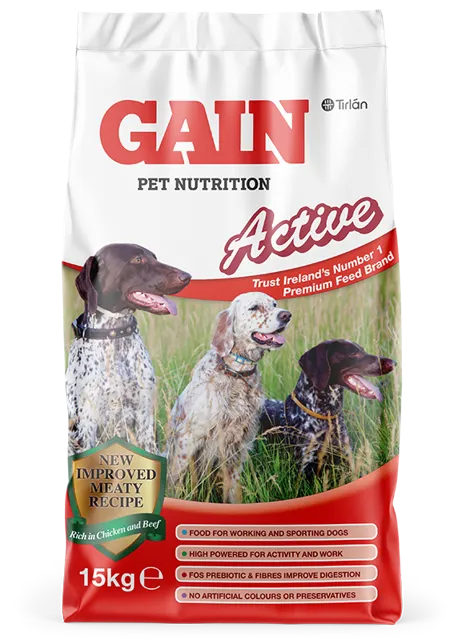
GAIN Active is an energy dense kibble aimed at dogs in hard work, built on cereals and a meat and animal derivatives term, with no named cuts on the list. Chicken and beef are both named inside that term, which is declared at a minimum of 14%, fat runs at 15% for fuel, and chicory FOS and linseed sit further down the list. It reads Average on our scale, and that reading rests on how little the label pins down, not on what the food does for the dog it is built for.
Our view
Likely to suit
For a dog who works all day and comes home ready to go again, this is fuel first and foremost.
- Hard working and sporting dogs, with protein at 27% and fat at 15% as fed
- Dogs whose weight slips on a standard adult recipe, since the energy here is concentrated
- Owners who want a prebiotic in the bag, with chicory FOS declared on the ingredients list
- Kennels, and any household with several working dogs to feed from one recipe
- Dogs with no trouble digesting grain, since cereals lead the plant side of the bowl
Worth watching
There is a good deal this label leaves open, and it is worth understanding before you buy.
- Cereals heads the list without naming a grain, so the exact grain can move between batches
- Meat and animal derivatives is a category rather than a cut, so chicken and beef are named inside it but the rest of it is not
- Fish and fish derivatives appears further down, so this is not a fish free food
- No source is given for oils and fats, so the recipe cannot anchor a strict elimination trial
- If your dog reacts to one particular meat, this list cannot rule it in or out
Written by our editorial team. Independent guidance, not veterinary advice.
How this scores
How we scoreThe Details
Dog fit
For a dog who works all day and comes home ready to go again, this is fuel first and foremost. There is a good deal this label leaves open, and it is worth understanding before you buy.
Dry
Adult
Toy, Small, Medium, Large, Giant
Chicken
The score, in context
Our reading puts this in the Average band while the middle of the adult dry category reads Good, and almost the whole of that gap is about naming. Protein and processing reads Poor and so does transparency. Nothing on the list is objectionable, but cereals, meat and animal derivatives, oils and fats and derivatives of vegetable origin cover an enormous range of quality that the bag never pins down.
Read the analysis instead and the picture is friendlier. Protein converts to 29.3% of dry matter and fat to 16.3%, a genuinely energetic bowl. The carbohydrate estimate is 43.5% of dry matter, under the 46.2% typical of adult dry food. Calcium works out at 1.74% of dry matter. Moisture is not declared, so those dry matter conversions use the 8% standard assumed for a dry food, and the energy figure is our estimate rather than a label declaration.
What's in it
Ingredients, as declared: Cereals, Meat & animal derivatives (min 14%) Chicken (min 14% beef), Oils & fats, Derivatives of vegetable origin (min 4%), Sugar beet pulp, (min 15% Chicory FOS), Minerals, Seeds (Linseed), Fish & fish derivatives, Products from the processing of plants.
Named ingredients
Ingredient notes
The list opens with cereals, a term that can mean anything from whole oats to the sweepings of a mill. That is not evidence of a poor ingredient. Decent foods use broad terms for their own reasons. The grain, though, can change between batches with the bag staying exactly the same. It matters when a dog has once reacted to a grain.
Meat and animal derivatives is declared at a minimum of 14%, and the label names chicken and beef within it, which is more than many foods using the same term will tell you. Derivatives are the parts of the animal left once the prime cuts are taken, and they run from genuinely nutritious organ meat to a good deal less interesting material. What the term cannot do is let you rule a species in or out.
The named entries further down are the better part of this label. Sugar beet pulp is a well established fibre source that supports the gut. Chicory FOS is a real prebiotic, and the large intestine's own bacteria are what it feeds. Linseed carries a plant version of omega 3, plus some useful fibre. Fish and fish derivatives adds a marine element, and it is worth knowing about before you choose this for a fish-avoiding dog.
The analysis holds up well for the dog this bag is written for. Fat at 16.3% of dry matter and protein at 29.3% make the kind of dense bowl a working dog needs. Fibre is kept modest at 2.7% of dry matter, so the volume stays sensible for a dog eating on the move. No calorie figure is printed, so the 362 kcal per 100g here is our own estimate off the analysis. Moisture is not printed either, and the dry matter conversions therefore use the 8% standard assumed for a dry food.
Price and value
Sold in a 15kg bag.
As a guide, an adult dog of 15kg in moderate condition works through about 232 grams a day. That assumes an intake of around 840 kcal a day, which is 110 × bodyweight^0.75, the standard maintenance estimate. Real working days push a dog above that figure.
Nutritional analysis
Declared analysis
Estimated using Modified Atwater factors*
27%
15%
2.5%
7.5%
Dry weight
29.3%
16.3%
2.7%
8.2%
43.5%
As-fed composition
Estimated breakdown of the finished product by ingredient category, from the declared ingredient list and ingoing weights. These are estimates, not measurements.
16.9%
58.7%
12.5%
11.9%
Pricing & size
- Pack size
- 15kg
- Retailer pricing
- Coming soon
Live retailer pricing is not yet available for this food. Prices, cost per day and where to buy will appear here once retailer data is live.
Ingredients and nutrition are taken from manufacturer data. Retailer pricing is not yet live for this food.
Related dog food guides
Ranked shortlists that include foods like this one.