

Essential Foods
Essential Foods Essential The Beginning Pate review
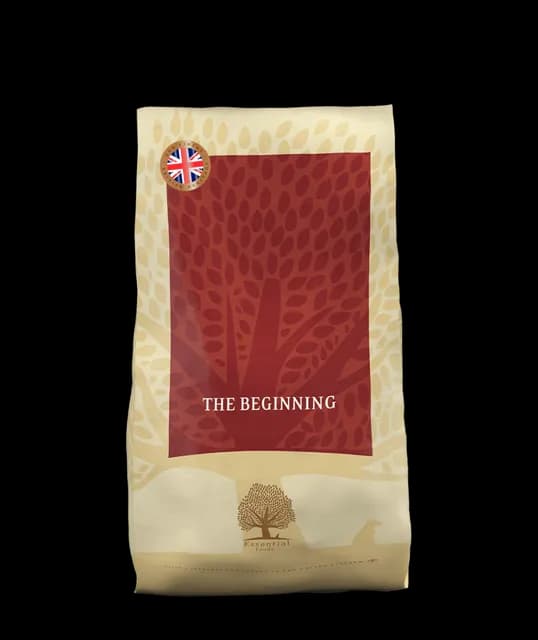
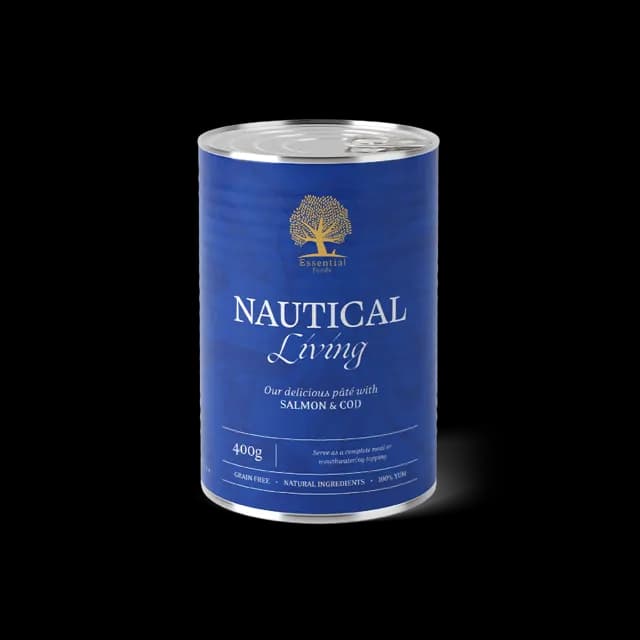
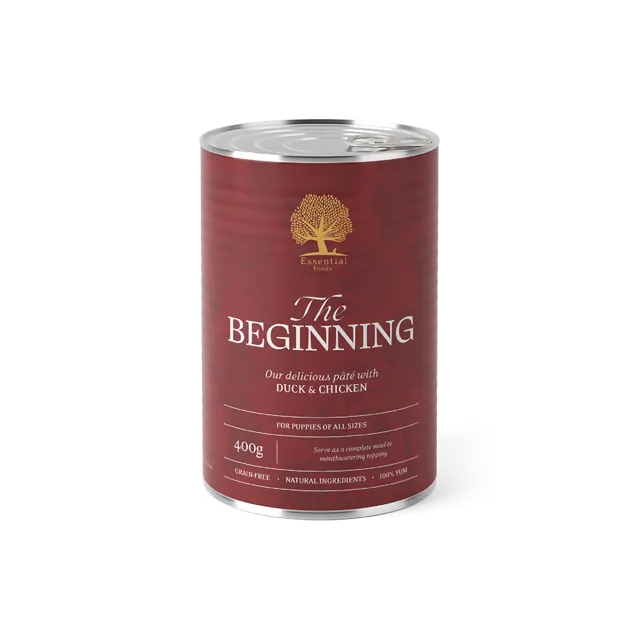
Essential The Beginning Pate is a duck led loaf for growing pups, and the meat share is the first thing you notice. Duck meat at 26% heads a run of chicken meat, hearts and gizzards that brings the animal content of the tin to 65%. Fruit, a little pea flour and a scattering of botanicals fill in behind. Protein converts to 43.2% of dry matter, the calcium line is printed and sits comfortably for growth, and our reading puts it in the Excellent band.
Our view
Likely to suit
If you are starting a pup on wet food and want most of the tin to be meat, this one makes that easy.
- Puppies being raised on duck, which leads the recipe at 26% ahead of everything else
- Owners who judge a tin by its animal content, with meat making up 65% here
- Households rearing a pup that will finish large, with calcium printed at 0.91% of dry matter and inside the growth range
- Hesitant young eaters, since a soft loaf at 78% moisture is easy to take and easy to warm through
- Families who keep grain out, since apple and a small measure of pea flour stand in for it
Worth watching
Before this becomes the everyday tin, check a few things on the label.
- Chicken appears in three forms alongside the duck, so this cannot serve a chicken avoiding pup
- On a strict exclusion diet, note the salmon oil, since it puts fish into the recipe
- Lignocellulose is a purified plant fibre, not fibre from whole fruit and vegetables, and its job here is bulk, not nutrition
- The berries and botanicals sit at 1% and below, so read them as a garnish on top of the meat
Written by our editorial team. Independent guidance, not veterinary advice.
How this scores
How we scoreThe Details
Dog fit
If you are starting a pup on wet food and want most of the tin to be meat, this one makes that easy. Before this becomes the everyday tin, check a few things on the label.
Wet
Puppy
Toy, Small, Medium, Large, Giant
Duck
The score, in context
Our reading puts this tin in the Excellent band. That is a strong place to be among wet puppy foods, since the typical example lands there too. Clearing that middle mark rather than simply matching it is the useful part, with protein and processing and value both reading Excellent and nutritional balance and transparency both Outstanding.
The shape of the recipe earns the position, not any single flourish. Meat leads by a distance, the starch estimate stays low, and the analysis on the label backs up the front of the tin.
What's in it
Ingredients, as declared: Duck meat (26%), chicken meat (18%), chicken hearts (12%), chicken gizzards (9%), apples (2%), pea flour (2%), salmon oil (1%), cranberry (1%), blueberry (1%), goji berry (1%), blackberry (1%), lignocellulose, calcium carbonate, kelp (0.2%), green tea (0.2%), marigold (0.2%), ginger (0.2%), spirulina (0.2%).
Named ingredients
Nutritional additives
Vitamin A (3a672a) 1,000IU, Vitamin D3 (3a671) 300IU, Zinc (3b606) 12.5mg, iron (3b106) 10mg, manganese (3b504) 3mg, iodine (3b201) 0.8mg
Ingredient notes
Duck meat at 26% opens the list, with chicken meat at 18% next. Chicken hearts follow at 12%, then chicken gizzards at 9%. Organ meat is genuinely useful in a growth food, being dense in the vitamins and minerals a young body builds with, and those four entries together account for the 65% animal content.
The analysis agrees with that headline. Protein converts to 43.2% of dry matter and fat to 31.8%, while the carbohydrate estimate comes in at 10.9% of dry matter against 13.6% for the typical wet puppy food. The only real starch on the label is apple at 2% and pea flour at 2%. No cereal middle sits under the meat.
Salmon oil at 1% brings the marine omegas that a growing coat and a growing brain draw on. That is also why the allergen picture shows fish, even though duck and chicken are the meats.
The fruit runs at 1% each for cranberry, blueberry, goji berry and blackberry. Below them, at 0.2% apiece, sit marigold, ginger, kelp, spirulina and green tea. Green tea in particular carries useful antioxidants. At these levels the whole group is seasoning, and the recipe stands on its meat.
Calcium is declared and converts to 0.91% of dry matter, inside the range growth needs. A large or giant pup's owner wants exactly that figure printed, and this tin is listed for every size of puppy. The calcium carbonate on the list is where the top up comes from.
Lignocellulose is the one entry we would happily see swapped. The job of this purified plant fibre is to bulk and firm a loaf. It does that harmlessly, though fibre from whole plants brings more along with it. Fibre is low here in any case at 3.6% of dry matter, which most young digestions handle without noticing.
The added panel is short and printed in full: vitamin A and vitamin D3 at 300IU, then zinc at 12.5mg, iron at 10mg, manganese at 3mg and iodine at 0.8mg. Ash converts to 10.5% of dry matter, a mineral load a growing skeleton will put straight to work.
Price and value
£9.37 a kilo, sold as a 400g tin and in a 6 x 400g pack.
Puppy amounts shift week by week as a pup grows and as their expected adult size comes into view, so follow the chart on the tin and let the waistline have the final say. On the label's own guide, the smallest pups start at 205g a day and the wider end of the range reaches 310g.
Nutritional analysis
Declared analysis
9.5%
7%
0.8%
2.3%
78%
Dry weight
43.2%
31.8%
3.6%
10.5%
10.9%
As-fed composition
Estimated breakdown of the finished product by ingredient category, from the declared ingredient list and ingoing weights. These are estimates, not measurements.
65%
15%
2%
2.4%
1%
14.6%
Pricing & size
- Pack size
- 400 g tin - £4.25 · 400 g × 6 - £22.50
- Retailer pricing
- Coming soon
Live retailer pricing is not yet available for this food. Prices, cost per day and where to buy will appear here once retailer data is live.
Ingredients and nutrition are taken from manufacturer data. Retailer pricing is not yet live for this food.
Related dog food guides
Ranked shortlists that include foods like this one.