

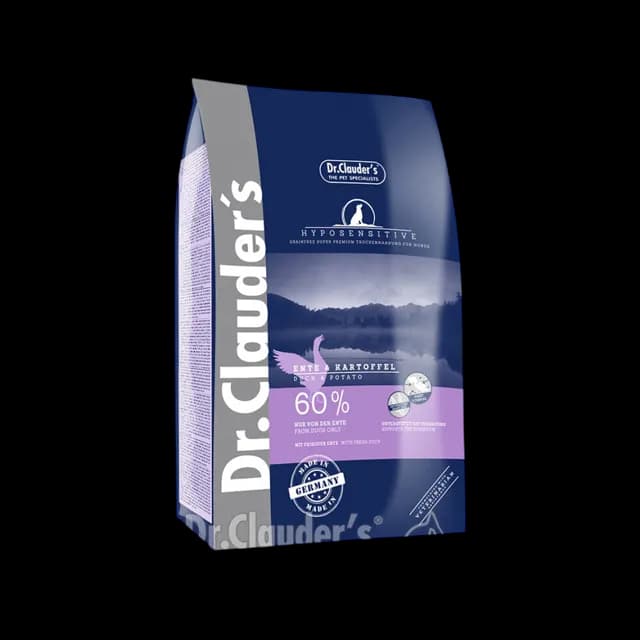

Dr Clauders
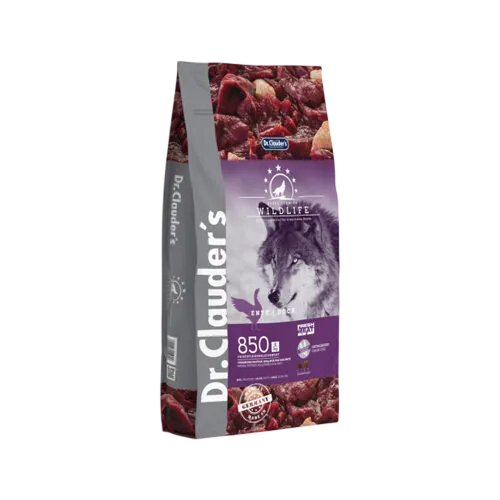
Dr Clauders Grain Free Wildlife: Duck review
Dr Clauders Grain Free Wildlife is a three-recipe range. Each bag is built around one headline animal, named twice on the label as meat and as a dried protein of the same species, adding to 45% of the recipe. Potato and peas take the place of cereal, and every list closes with the same run of European herbs from nettle and yarrow through to chamomile and gentian. All three sit in our Good band, level with the middle of the adult dry shelf.
Our view
Likely to suit
Choose whichever animal suits your dog, because everything else in these recipes stays put.
- Owners choosing by protein, because the animal is very nearly the only difference between the three recipes
- Dogs steered clear of cereal, with potato and peas doing the starch job
- Mixed households, since the labels are written for toy breeds through to giants
- Owners who enjoy a herbal tail on a label, with nettle, yarrow, fennel and chamomile closing every list
- Dogs that need a food they can settle on, since all three are complete adult recipes sharing one construction
Worth watching
Three things run across the whole range and they are easier to know now than to discover later.
- Chicken fat appears in the duck and in the lamb, so the salmon is the recipe that keeps clear of chicken altogether
- Calcium runs high for a dry food across the range, from 1.63% to 2.17% of dry matter, an adult level and not one built for growing puppies
- Neither the calorie figure nor the moisture is printed on these packs, so both are estimated here, the moisture at the usual 8% for a kibble
Written by our editorial team. Independent guidance, not veterinary advice.
How this scores
How we scoreThe Details
Dog fit
Choose whichever animal suits your dog, because everything else in these recipes stays put. Three things run across the whole range and they are easier to know now than to discover later.
Dry
Adult
Toy, Small, Medium, Large, Giant
Duck
The score, in context
Our Good band holds all three of these, the same band the typical adult dry food occupies. The construction is what earns it. A named species does 45% of the recipe in two forms, the plant side stops at potato and peas instead of sprawling, and enough percentages are declared to read the label properly. There is barely anything between the three of them, so the animal is what should decide it.
What's in it
Ingredients, as declared: Potato flour, duck meat 25%, duck protein (dried) 20%, beet pulp, apple (dried), peas (dried), linseed, vegetarian protein hydrolysate, dicalcium phosphate, chicken fat, cranberry (dried), blueberries (dried), yeast beta glucans, yucca shidigera powder, nettle (dried), blackberry leaf (dried), yarrow (dried), fennel (dried), cumin (dried), chamomile blossoms (dried), mistletoe (dried), gentian root (dried), centaury (dried).
Named ingredients
Ingredient notes
Every recipe here names its animal twice, once as meat and once as a dried protein of the same species, and the two together account for 45% of the label. The dried half carries most of the protein into the finished kibble, since fresh meat leaves the greater part of its weight behind in the oven.
Potato does the binding throughout, as flour in the duck and as starch in the lamb and the salmon, with peas behind it. Potato starch is exactly what it sounds like, a pure binder with little else to offer, so the nutrition has to come from the meat and not from the base. That is the right way round for a dog.
All three declare their protein hydrolysate as vegetarian, which is a genuinely useful piece of labelling. An animal hydrolysate that names no species is the entry that quietly undoes a single-species promise, and there is none of that here.
The herb run that closes each list, nettle, blackberry leaf, yarrow, fennel, cumin, chamomile blossoms, mistletoe, gentian root and centaury, is traditional European seasoning sitting at trace level. It gives the range its character. The heavy lifting is left to the meat.
Ash runs between 8.5% and 9.2% of dry matter across the three recipes, with calcium from 1.63% to 2.17%. That mineral load is normal for recipes leaning on dried meat, and all three labels are written for adults, which is where those figures belong.
How this variety differs
Duck meat at 25% with dried duck protein at 20%, on a base of potato flour, and the fullest fruit and vegetable side of the three: dried apple, peas, cranberry and blueberries all appear. Chicken fat supplies the added fat, so this is a duck recipe with a chicken entry in it, and a chicken-avoiding dog needs one of the other two. Protein converts to 26.1% of dry matter and fat to 13.6%, the leaner shape in the range.
Price and value
Per kilo, the duck and the salmon are £6.77 and the lamb is £7.14, each sold in 2 kg and 11.5 kg bags.
As a guide, feeding a 15kg adult dog in moderate condition comes to between £1.65 and £1.68 a day, assuming about 840 kcal a day (110 × bodyweight^0.75, the standard maintenance estimate). The calorie figures behind those numbers are estimated from each analysis, since none of the three labels prints one.
Nutritional analysis
Declared analysis
Estimated using Modified Atwater factors*
24%
12.5%
3.5%
7.8%
Dry weight
26.1%
13.6%
3.8%
8.5%
48%
As-fed composition
Estimated breakdown of the finished product by ingredient category, from the declared ingredient list and ingoing weights. These are estimates, not measurements.
45%
43.5%
5.8%
0.6%
5.1%
Pricing & size
- Pack size
- 2 kg, 11.5 kg
- Retailer pricing
- Coming soon
Live retailer pricing is not yet available for this food. Prices, cost per day and where to buy will appear here once retailer data is live.
Ingredients and nutrition are taken from manufacturer data. Retailer pricing is not yet live for this food.
Related dog food guides
Ranked shortlists that include foods like this one.