


Bonacibo
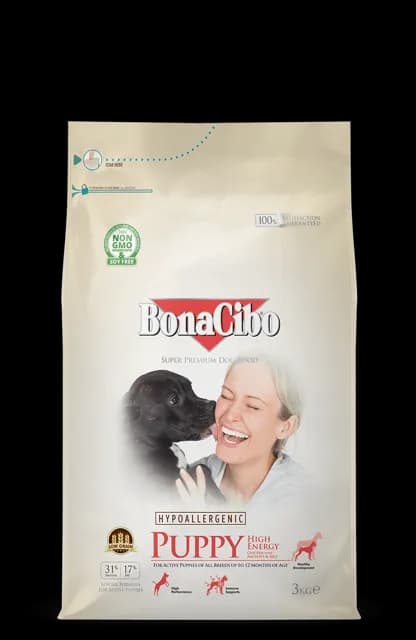
Bonacibo Puppy Can review
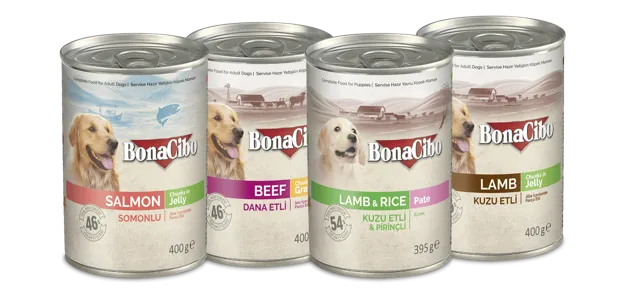
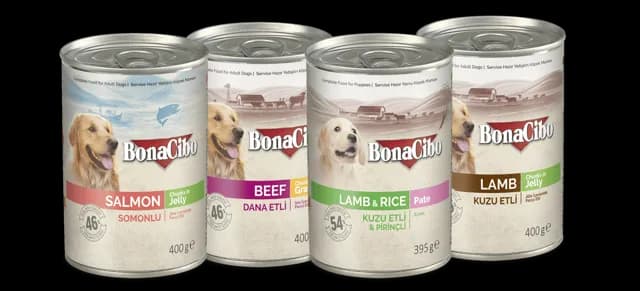
Bonacibo Puppy Can is a straightforward lamb flavoured tin for a growing dog, built around 54% meat and animal derivatives with lamb named at a minimum of 4% inside that share. Protein converts to 42.1% of dry matter and fat to 39.5%, so what goes in is rich, but very little of it is identified by name. Rice at 4% is the one grain pinned down, and the tin sits in our Good band.
Our view
Likely to suit
If you feed by the tin and want something soft and easy for a young mouth, this is a simple thing to keep in the cupboard.
- Puppies who prefer a soft, spoonable meal, with the tin running to 81.0% declared moisture
- Owners feeding by the tin, since a 400g can is a tidy single unit to portion from
- Pups taking their energy from fat rather than starch, with fat converting to 39.5% of dry matter and carbohydrate estimated at nothing at all
- Households looking for lamb in a growth food, with lamb named at a minimum of 4% within the meat share
Worth watching
There is a fair amount this label leaves unsaid, and it is worth knowing where before you choose it.
- The 54% meat share is declared as meat and animal derivatives, so the animals behind it are not named and the tin is hard to place for a pup kept off a particular species
- No calcium figure is printed, and the tin is offered across every breed size, so a big pup's growth plan needs that number from the maker
Written by our editorial team. Independent guidance, not veterinary advice.
How this scores
How we scoreThe Details
Dog fit
If you feed by the tin and want something soft and easy for a young mouth, this is a simple thing to keep in the cupboard. There is a fair amount this label leaves unsaid, and it is worth knowing where before you choose it.
Wet
Puppy
Toy, Small, Medium, Large, Giant
Lamb
The score, in context
Bonacibo Puppy Can comes out in our Good band, and wet puppy food is a strong field to be measured against: the middle of it sits in our Excellent band, a step up. Protein and processing reads Average, and the thread running through it is naming. The analysis itself is not the trouble, with protein and fat both converting to healthy shares of dry matter. It is that almost nothing in the tin is identified precisely enough for anyone outside the factory to check.
What's in it
Ingredients, as declared: Meat and animal derivatives (54%, including minimum 4% Lamb), Cereals (4% Rice), Derivatives of vegetable origin, Minerals.
Named ingredients
Nutritional additives
| Additive | Per kg | | --- | --- | | Vitamin A | 2.250 IU/kg | | Vitamin D3 | 328 IU/kg | | Vitamin E | 26 mg/kg | | Pentahydrate | 2,5 mg/kg |
Ingredient notes
The backbone of the recipe is meat and animal derivatives at 54%. The term is a legal catch all covering everything from prime muscle to parts nobody puts on a front label, and it gives away neither the animal nor the cut. Some good foods use it to protect a formula, and some imported foods use it because labelling customs differ at home, so it is not proof of anything poor. It is simply unverifiable from the outside.
A minimum of 4% lamb is named within that share, and it is the one animal the tin commits to. On a can that leads with lamb on the front, a declared minimum is at least a floor you can hold it to, even if the bulk of the meat stays anonymous behind it.
The plant side is split between cereals, of which 4% is rice, and derivatives of vegetable origin. Rice is among the gentler grains for a young digestion and 4% is a modest inclusion. Derivatives of vegetable origin is the broader of the two terms and could stand for almost any plant by product. It also leaves the maker free to change what sits behind it from batch to batch.
The analysis reads better than the ingredients list does. Protein converts to 42.1% of dry matter and fat to 39.5%, a rich mix for a growing dog, with fibre at 4.2% and ash at 14.7%. Carbohydrate is estimated at zero, so the energy here is coming from meat and fat rather than from starch.
Vitamins A, D3 and E are added on the panel, but no calcium figure is printed anywhere, and in a food fed through a first year that is the figure doing the hardest work. A large breed puppy claim cannot rest on a number the label does not carry. If this tin is to be the main meal for a big pup, ask the maker for the figure and work it into the feeding plan.
Price and value
Sold as a 400g can.
A puppy's appetite never settles for long. Read the growth chart on the pack each time you refill the bowl, and trust what you can feel over your pup's ribs.
Nutritional analysis
Declared analysis
Estimated using Modified Atwater factors*
8%
7.5%
0.8%
2.8%
81%
Dry weight
42.1%
39.5%
4.2%
14.7%
0%
As-fed composition
Estimated breakdown of the finished product by ingredient category, from the declared ingredient list and ingoing weights. These are estimates, not measurements.
54%
27.6%
16.5%
1.9%
Pricing & size
- Pack size
- 400 g
- Retailer pricing
- Coming soon
Live retailer pricing is not yet available for this food. Prices, cost per day and where to buy will appear here once retailer data is live.
Ingredients and nutrition are taken from manufacturer data. Retailer pricing is not yet live for this food.
Related dog food guides
Ranked shortlists that include foods like this one.