



Tails.com
Tails.com Grain-Free Recipes in Jelly review
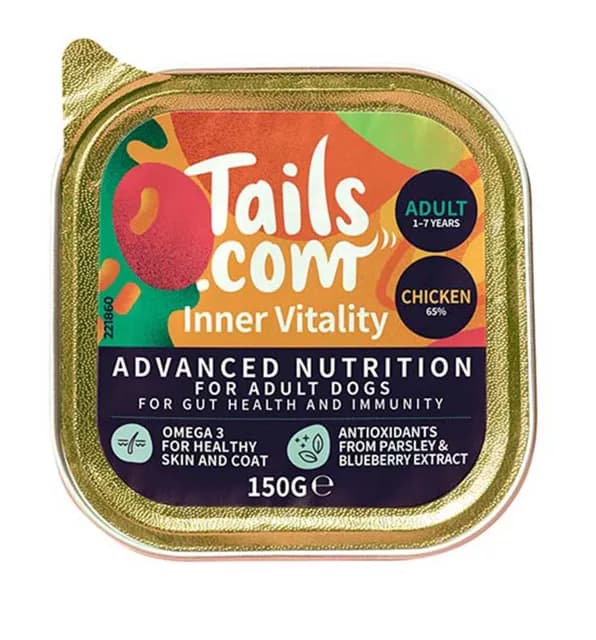
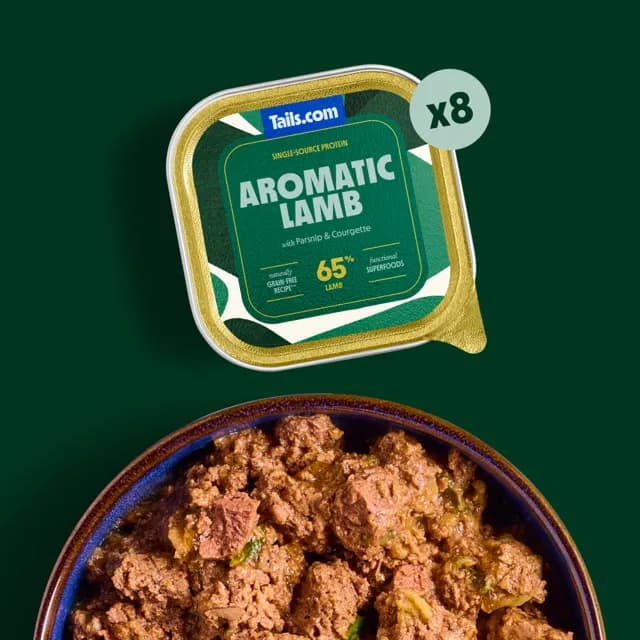
Tails.com Grain-Free Recipes in Jelly is a single jelly tray. Beef is the one animal named, at 4%, and meat and animal derivatives makes up the base. Carrots and peas come in at 3% each, and a fish entry and yeast round out a short list. No cereal appears on it anywhere. The tray lands in our Average band, and the gap between that placement and the food itself is a matter of how much of the recipe is described by category.
Our view
Likely to suit
Getting a fussy dog to finish is half the job, and you get a format chosen with exactly that in mind.
- Beef-fed dogs, since beef is the one animal printed on this label
- Dogs that hold out for jelly over pate or gravy, with the whole tray set that way
- A household that has dropped cereal, since no grain is named here at all
- Dogs on a careful feeding plan, with an estimated 72 kcal per 100g making this a light tray
- Owners who want a solid protein reading, which converts to 50.0% of dry matter
Worth watching
Nothing here is alarming, though a few entries deserve a second look before you commit.
- Beef is printed at 4% and the remaining animal content is meat and animal derivatives, so the tray cannot support an elimination diet
- A fish and fish derivatives entry sits in the list with no species attached, which matters if you are steering clear of fish
- By wet standards this is a light tray, and a bigger dog gets through a fair amount of it
Written by our editorial team. Independent guidance, not veterinary advice.
How this scores
How we scoreThe Details
Dog fit
Getting a fussy dog to finish is half the job, and you get a format chosen with exactly that in mind. Nothing here is alarming, though a few entries deserve a second look before you commit.
Wet
Adult
Toy, Small, Medium, Large, Giant
Beef
The score, in context
The tray sits in our Average band, lifted by a nutritional balance reading of Outstanding, with protein and processing and transparency both reading Good. Wet is a strong category for us, its midpoint falling in our Excellent band, which is what makes an Average placement look as far back as it does. The reason is narrower than the band suggests. Beef at 4% and the vegetables at 3% each are the only shares printed, and nothing can credit meat it cannot see. On the analysis alone this is a reasonable tray: protein converts to 50.0% of dry matter, and the estimated carbohydrate at 16.7% sits close to the 15.8% that adult wet food typically shows.
What's in it
Ingredients, as declared: Meat and animal derivatives (including 4% beef*), Vegetables* (including 3% carrots and 3% peas), Fish and fish derivatives*, Minerals, Yeast. *Natural Ingredients
Named ingredients
Nutritional additives
Copper (as Copper Sulphate Pentahydrate) 0.5mg/kg, Iodine (as Calcium Iodate Anhydrous) 0.3mg/kg, Manganese (as Manganous Oxide) 1.0mg/kg, Vitamin D3 140.0iu/kg, Zinc (as Zinc Sulphate Monohydrate) 12.0mg/kg
Ingredient notes
The recipe runs to five entries. Meat and animal derivatives comes first, the legal catch-all for fleshy parts and processing products from warm-blooded land animals, with beef declared at 4% inside it. Fish and fish derivatives follows the vegetables, again with no species given. Broad terms like these can cover excellent material or very ordinary material, and the tray never says which. Read them as an unknown, not as a red flag.
The named plants are the pleasant part of the list. Carrots at 3% bring vitamin A and soluble fibre, with a good spread of antioxidants, and they cook down to something dogs digest easily. Peas at 3% add fibre and minerals, plus a little plant protein alongside their starch. At those shares neither is carrying the recipe and neither is padding it out.
Yeast closes the list. In wet food it usually earns its place for palatability, and for the cell wall fractions that act as prebiotics and feed the gut's existing bacteria. Coming late in the list, the amount involved is small.
The analysis is honest and unremarkable. Protein converts to 50.0% of dry matter and fat to 19.4%, a lean but perfectly sound wet reading. The estimated carbohydrate of 16.7% of dry matter is right about where adult wet food usually lands. Energy is not declared, so we have worked the 72 kcal per 100g out of the analysis.
Five additions are dosed on the label: copper at 0.5mg/kg, iodine at 0.3mg/kg, manganese at 1.0mg/kg, zinc at 12.0mg/kg and vitamin D3 at 140.0iu/kg. Each one carries a printed figure. Plenty of wet labels manage less.
Price and value
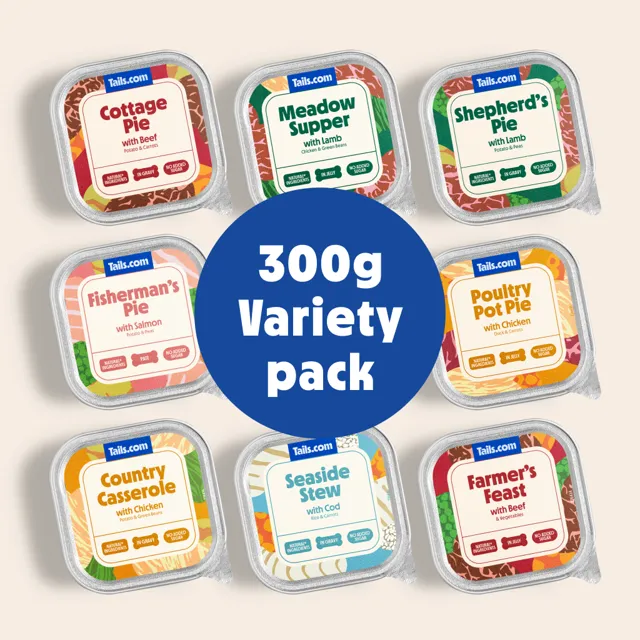
Trays come in 300 g and 150 g, with the 150 g size sold in packs of 8.
As a guide, a 15kg adult dog in moderate condition eats about 1170 grams a day here, working from roughly 840 kcal a day (110 × bodyweight^0.75, the standard maintenance estimate). That is close to four of the 300 g trays.
Nutritional analysis
Declared analysis
Estimated using Modified Atwater factors*
9%
3.5%
0.5%
2%
82%
Dry weight
50%
19.4%
2.8%
11.1%
16.7%
As-fed composition
Estimated breakdown of the finished product by ingredient category, from the declared ingredient list and ingoing weights. These are estimates, not measurements.
59.6%
17%
15.8%
7.6%
Pricing & size
- Pack size
- 300 g trays; 150 g trays (sold in 8-tray packs)
- Retailer pricing
- Coming soon
Live retailer pricing is not yet available for this food. Prices, cost per day and where to buy will appear here once retailer data is live.
Ingredients and nutrition are taken from manufacturer data. Retailer pricing is not yet live for this food.
Related dog food guides
Ranked shortlists that include foods like this one.