

Tails.com
Tails.com Grain-Free Pate review
Tails.com Grain-Free Pate is a smooth, spoonable tray built without any cereal at all. The bulk of it is declared as meat and animal derivatives, with potato and peas at 4% each and salmon named at 4% behind them. The printed analysis is unusually meat-forward for a wet food, protein converting to 55.6% of dry matter. It lands in our Good band, held there by what the label leaves unsaid rather than by anything the analysis shows.
Our view
Likely to suit
If your dog prefers a smooth spoonful to anything chunky, this tray is built for exactly that mouth.
- Cereal-free households, since not one entry on this label is a grain
- Dogs that struggle with chunks or jelly, since the whole tray is one even pate
- Older dogs and dogs with tender mouths, who find a soft texture easier to manage
- An owner reading the analysis for meat, since protein converts to 55.6% of dry matter and carbohydrate to an estimated 2.7%
- A dog that is shy of the water bowl, since moisture is declared at 82.0%
Worth watching
Read the list before you settle on it, because the detail is not spread evenly.
- Meat and animal derivatives leads the list, so the animals making up most of the tray go unnamed
- Salmon is printed at 4% inside a wider fish and fish derivatives entry, and an elimination diet needs firmer ground than that
- The label prints no calorie figure, so portion planning starts from an estimate rather than a declared number
Written by our editorial team. Independent guidance, not veterinary advice.
How this scores
How we scoreThe Details
Dog fit
If your dog prefers a smooth spoonful to anything chunky, this tray is built for exactly that mouth. Read the list before you settle on it, because the detail is not spread evenly.
Wet
Adult
Toy, Small, Medium, Large, Giant
Salmon
The score, in context
Where this one settles in our Good band is almost entirely a transparency story. Transparency reads Good, protein and processing does too and nutritional balance reaches Outstanding, and the analysis itself is genuinely good for a wet food. Our scoring cannot reward a recipe whose largest component is named as a category and not as an animal. Wet food does well as a class, so the middle of the shelf sits in our Excellent band. A food that keeps its meat anonymous comes in a band behind that middle, even when the numbers on the back are strong. None of that says anything worrying about what goes into the tray. It is a statement about how much the tray is prepared to tell you.
What's in it
Ingredients, as declared: Meat and animal derivatives, Vegetables* (4% Potato, 4% Peas), Fish and Fish derivatives* (4% salmon), Minerals. *Natural Ingredients
Named ingredients
Nutritional additives
Vitamin D3 140.0iu/kg, Iodine (as Calcium Iodate Anhydrous) 0.3mg/kg, Zinc (as Zinc Sulphate Monohydrate) 12.0mg/kg, Manganese (as Manganous Oxide) 1.0mg/kg, Copper (as Copper Sulphate Pentahydrate) 0.5mg/kg
Ingredient notes
The list runs to four entries and the first of them does the most work. The legal definition of meat and animal derivatives covers the fleshy parts and processing products of warm-blooded land animals. It stretches from prime material to the least glamorous offcuts, and what goes into it can shift between deliveries with no word changing on the tray. Plenty of well-made foods use the term, some of them to protect a recipe they would rather not publish. It still means the animal in your dog's dinner is not written down.
The declared detail sits further down. Potato and peas each appear at 4%, and salmon at 4% inside a fish and fish derivatives entry. Useful fibre and a spread of minerals come with the peas, alongside their starch. Potato is there mainly for body, and the salmon is a small real flourish, nothing more.
The analysis is where this tray does well. Protein converts to 55.6% of dry matter and fat to 27.8%, a properly meat-heavy reading. Estimated carbohydrate lands at 2.7% of dry matter, against 15.8% for the typical adult wet food. Very little of this tray is starch.
Every entry on the short added panel carries a dose: vitamin D3 at 140.0iu/kg, zinc at 12.0mg/kg, manganese at 1.0mg/kg, copper at 0.5mg/kg and iodine at 0.3mg/kg. A recipe carrying this much animal material draws most of its micronutrition from the ingredients themselves, so a compact panel is not a thin one.
Energy is not declared on the label, so the figure shown here is estimated from the analysis and comes out low even by wet standards. Hold that in mind when you portion it: a light tray means a bigger serving.
Price and value
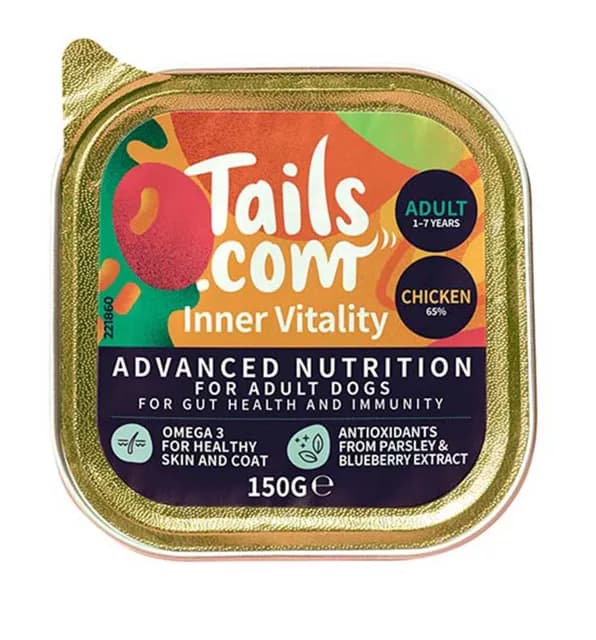
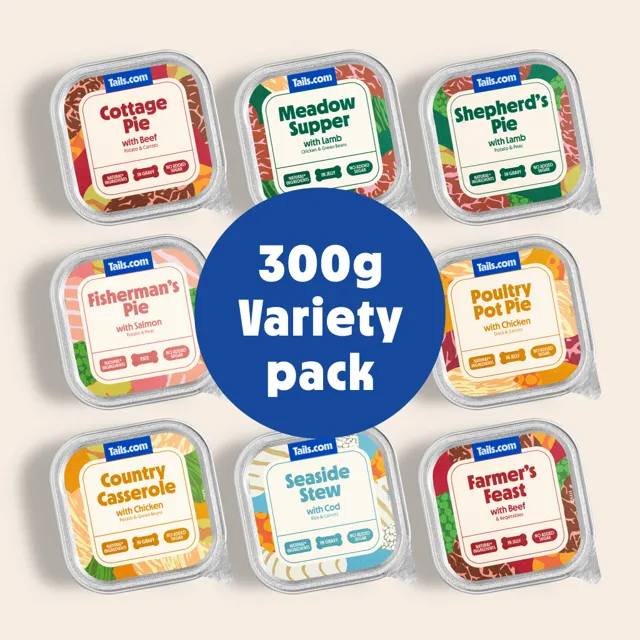
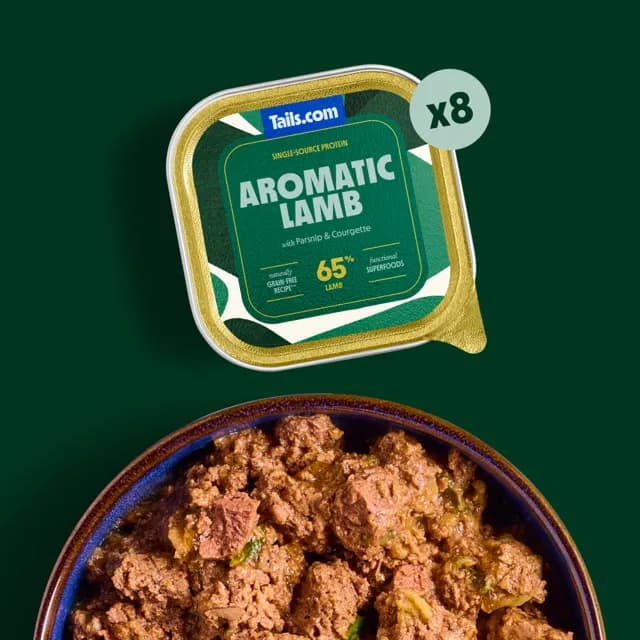
It comes in 300 g and 150 g trays, with the smaller tray sold in packs of 8.
As a guide, a 15kg adult dog in moderate condition would get through roughly 1061 grams a day, assuming about 840 kcal a day (110 × bodyweight^0.75, the standard maintenance estimate). Because wet food is mostly moisture, that daily weight looks large written down, which is normal for the format.
Nutritional analysis
Declared analysis
Estimated using Modified Atwater factors*
10%
5%
0.5%
2%
82%
Dry weight
55.6%
27.8%
2.8%
11.1%
2.7%
As-fed composition
Estimated breakdown of the finished product by ingredient category, from the declared ingredient list and ingoing weights. These are estimates, not measurements.
61.8%
17%
16.3%
4.9%
Pricing & size
- Pack size
- 300 g trays; 150 g trays (sold in 8-tray packs)
- Retailer pricing
- Coming soon
Live retailer pricing is not yet available for this food. Prices, cost per day and where to buy will appear here once retailer data is live.
Ingredients and nutrition are taken from manufacturer data. Retailer pricing is not yet live for this food.
Related dog food guides
Ranked shortlists that include foods like this one.