



Pro Plan
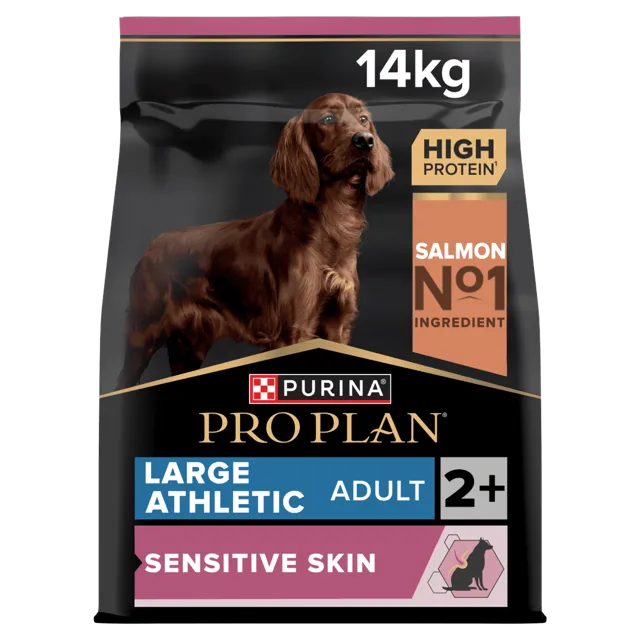
Pro Plan Large Athletic Adult OptiBalance review
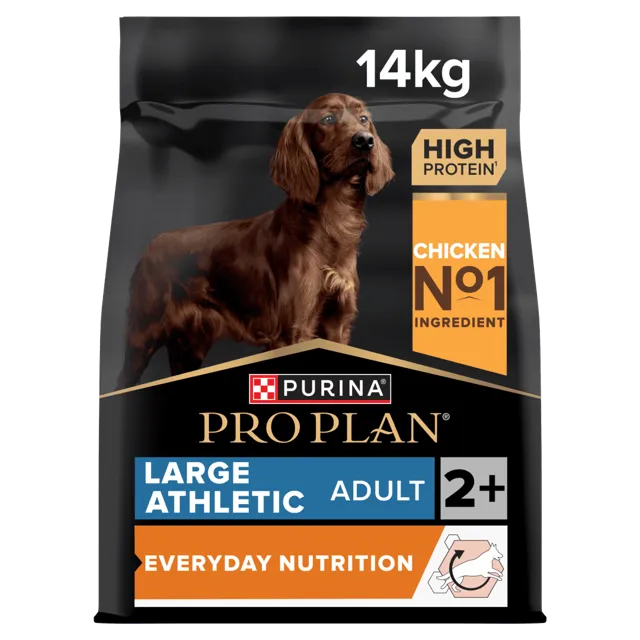
Pro Plan Large Athletic Adult OptiBalance is written for the leaner, longer-limbed big breeds, not the heavyweights, and the numbers follow that brief. Chicken is declared at 19%, fat comes in at 18.0% and energy at 400 kcal per 100g, which gives a large dog in regular work something to run on. Dried salmon protein and fish oil sit further down for the omega side. It comes out in our Average band, a reflection of how much of the protein arrives from cereal and unnamed animal entries. There is no doubt about feeding it to a large adult.
Our view
Likely to suit
For a big dog built for speed rather than bulk, the everyday large-breed bag can come up short by teatime.
- Large breeds with an athletic frame, the shape this kibble and its feeding table are drawn around
- Owners of dogs in daily training or work, with fat at 18.0% and energy at 400 kcal per 100g
- Dogs that do better on less bulk, since carbohydrate converts to 39.6% of dry matter, under what most dry foods run
- Owners who want an omega source they can point to, with dried salmon protein and fish oil both declared
Worth watching
A few honest notes before you make the switch.
- A cereal-sensitive dog wants a slow and watchful introduction here, with wheat, corn and corn grits all on the list
- The animal fats and the dried poultry protein name no species, which limits how far this label can support an exclusion diet
- Calcium works out at 1.63% of dry matter, which is an adult figure, so a large-breed puppy still needs a growth recipe
- Fish and dried egg both feature, worth knowing in a household avoiding either
Written by our editorial team. Independent guidance, not veterinary advice.
How this scores
How we scoreThe Details
Dog fit
For a big dog built for speed rather than bulk, the everyday large-breed bag can come up short by teatime. A few honest notes before you make the switch.
Dry
Adult
Large
Chicken
The score, in context
This recipe reads Average with us, and the typical adult dry food sits a step above it in the Good band. The distance between them is made of ordinary things. Wheat sits second and corn fourth, while wheat gluten and corn protein meal lift the protein figure without contributing any meat. A great deal of this recipe rides on dried poultry protein and animal fats, and neither ever says which animal it came from.
There is another side to it. Carbohydrate converts to 39.6% of dry matter against the 46.2% typical of the shelf, protein reaches 30.4%, and the mineral panel is dosed line by line. For a big athletic dog in regular work, this remains a straightforward and energy-dense bowl.
What's in it
Ingredients, as declared: High quality chicken (including back and chest) (19%), Wheat, Dried poultry protein, Corn, Rice (8%), Animal fats, Soya meal, Dried beet pulp, Digest, Corn protein meal, Corn grits, Wheat gluten, Dried salmon protein, Minerals, Dried egg, Fish oil
Named ingredients
Nutritional additives
_Nutritional Additives_ IU/kg: Vit A: 29,000 Vit D3: 950 Vit E: 550 mg/kg: Vit C: 140 Iron (II) sulphate monohydrate: (Fe: 150) Calcium iodate anhydrous: (I: 2.4) Copper (II) sulphate pentahydrate: (Cu: 16) Manganous sulphate monohydrate: (Mn: 56) Zinc sulphate monohydrate: (Zn: 140) Sodium selenite: (Se:0.16). _Technological Additives_ mg/kg : Tocopherol extracts from vegetable oils : 51.
Ingredient notes
High quality chicken at 19% opens the list, with the label naming back and chest so you know it means frame meat. Fresh chicken goes into the oven carrying water and comes out much lighter. That is why wheat in second place and dried poultry protein in third shape the finished kibble as much as the headline does.
Fat at 18.0% as fed and 19.6% of dry matter comes mostly from animal fats sitting sixth on the list, and that entry is the label's plainest gap because no animal is named. Fish oil and dried salmon protein bring the marine omega 3s, which is a thoughtful touch on a food for hard-working joints and weathered coats.
Behind the chicken, corn, rice at 8%, corn grits and beet pulp share the starch and fibre work. Carbohydrate converts to 39.6% of dry matter, comfortably below the 46.2% typical of adult dry food. Fibre is on the light side at 2.0%. A dog that would rather not stop halfway round will be glad of that.
Wheat gluten and corn protein meal are worth understanding. Both are concentrated plant proteins that raise the protein figure on the panel without adding meat to the bowl, and a dog uses them less efficiently than the animal proteins above them on the list. They are not harmful, they simply mean the 30.4% of dry matter that protein reaches is not all doing equal work.
The micronutrients are printed rather than implied, with zinc at 140 mg, iron at 150 mg, manganese at 56 mg and copper at 16 mg per kilo, and vitamin E at 550 IU. Tocopherol extracts at 51 mg per kilo keep the fats from turning, a natural preservative doing the job a chemical one would otherwise be asked to do.
Price and value
Sold in a single 14kg bag.
As a guide, a 15kg adult dog in moderate condition would eat about 210 grams a day, assuming around 840 kcal a day (110 × bodyweight^0.75, the standard maintenance estimate). That is a smaller dog than this bag is written for. The label asks 300 grams a day for a 25kg dog and 600 grams for a 70kg dog at under an hour of activity, with more again for a working day.
Nutritional analysis
Declared analysis
28%
18%
2%
7.5%
8%
Dry weight
30.4%
19.6%
2.2%
8.2%
39.6%
As-fed composition
Estimated breakdown of the finished product by ingredient category, from the declared ingredient list and ingoing weights. These are estimates, not measurements.
39.8%
53.7%
3.9%
2.6%
Pricing & size
- Pack size
- 14kg
- Retailer pricing
- Coming soon
Live retailer pricing is not yet available for this food. Prices, cost per day and where to buy will appear here once retailer data is live.
Ingredients and nutrition are taken from manufacturer data. Retailer pricing is not yet live for this food.
Related dog food guides
Ranked shortlists that include foods like this one.