



Hill's Science Plan
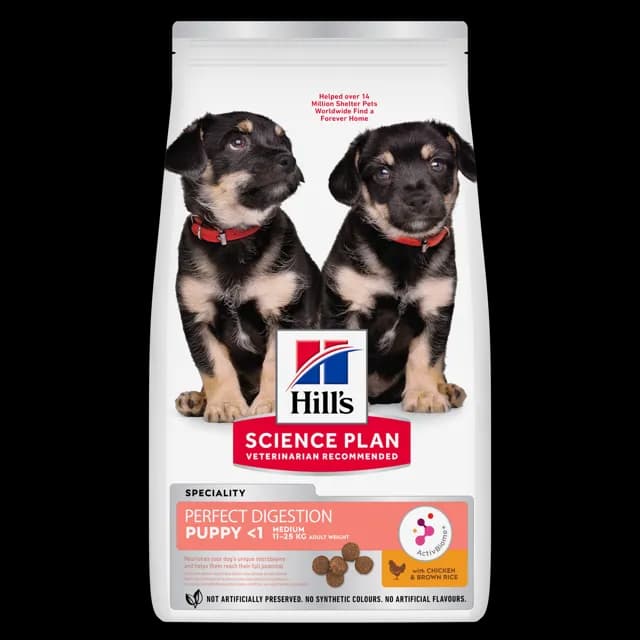
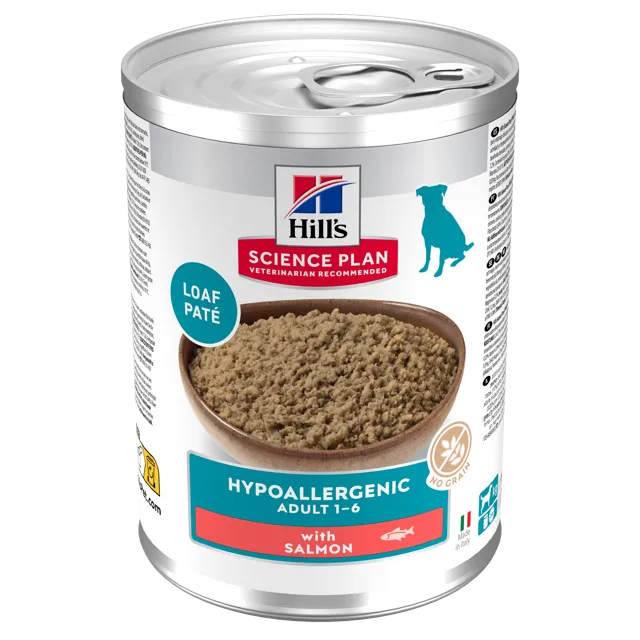
Hill's Science Plan Hypoallergenic Adult Dog Food with Salmon review
This is the Hill's wet recipe that spells itself out. Salmon leads at 10% and the list behind it names dried peas, dried potatoes, pea protein, potato starch, carrots, beet pulp, tomato pomace, citrus pulp and spinach powder, with no cereal anywhere. That openness shows in our reading, where transparency reads Excellent rather than sitting at the bottom. The tin still lands in our Average band overall, because so much of what is in it is plant starch and plant protein rather than fish.
Our view
Likely to suit
When your dog's skin or stomach has sent you hunting for a shorter list of recognisable things, this one you can actually read.
- Medium adults on a limited ingredient plan, which is the job this tin is written for
- Grain avoiding households, with no cereal on the label and peas and potato carrying the starch
- Owners who want to know what is in the bowl, with every plant ingredient named and salmon declared at 10%
- Dogs that need real energy from a smaller serve, at 119 kcal per 100g
- Dogs whose stools need firming up, with beet pulp and cellulose both on the list as fibre
Worth watching
Hypoallergenic is a marketing word with no legal meaning, so it is worth checking what this tin actually holds.
- Digest, halfway down the list, is an animal ingredient with no species on it, so salmon is not the only animal in the tin and a strict fish only trial needs something tighter
- Pea protein and potato starch are both on the list, so plants supply a share of the protein and most of the energy
- Estimated carbohydrate reaches 51.7% of dry matter against 15.8% for the typical adult wet food
- Cellulose is the fibre source here, worth knowing if you prefer fibre to arrive in its original packaging
- The added fat is listed only as vegetable oil, so it is not tied to a plant you can check
Written by our editorial team. Independent guidance, not veterinary advice.
How this scores
How we scoreThe Details
Dog fit
When your dog's skin or stomach has sent you hunting for a shorter list of recognisable things, this one you can actually read. Hypoallergenic is a marketing word with no legal meaning, so it is worth checking what this tin actually holds.
Wet
Adult
Medium
Salmon
The score, in context
Our pillars separate here in a way they rarely do on a big brand wet tin. Transparency comes back Excellent and nutritional balance Average, because this label names its ingredients and that counts for something real.
What holds the overall reading in our Average band is the balance of the recipe. Salmon at 10% is set against a long run of peas, potatoes and their refined starches and proteins, and the arithmetic follows: protein converts to 24.8% of dry matter while estimated carbohydrate reaches 51.7%. The typical adult wet food is an Excellent band food built the other way round, with more animal and less starch. The distance between them comes down to what the tin is made of, not what it tells you. Protein and processing reads Poor.
For a dog whose skin or digestion has finally settled on this food, none of that is a reason to change course. Our reading measures the recipe as declared; it cannot measure how well your particular dog is doing on it, and that is the test that matters most in a sensitivity case.
What's in it
Ingredients, as declared: Salmon (10%), dried peas, dried potatoes, pea protein, potato starch, vegetable oil, digest, dried carrots, minerals, cellulose, dried beet pulp, dried tomato pomace, dried citrus pulp, spinach powder.
Named ingredients
Nutritional additives
ADDITIVES PER KG: Nutritional additives: 3b103 (Iron) 8.7mg, 3b202 (Iodine) 0.3mg, 3b405 (Copper) 3.2mg, 3b502 (Manganese) 3.3mg, 3b603 (Zinc) 12.3mg, 3b801 (Selenium) 0.03mg.
Ingredient notes
Only one animal is named in the recipe, salmon at 10%. For a wet food, that is a modest but genuine share, and the figure is printed on the label. Oily fish brings protein your dog digests easily and the long chain omega-3 fats that skin and coat work with, which is a sensible choice for the dogs this tin is aimed at.
Behind it comes the plant half of the recipe, and it is a substantial half: dried peas, dried potatoes, pea protein and potato starch, one after the other. Whole peas and potatoes are reasonable ingredients that carry fibre and micronutrients alongside their starch. Pea protein and potato starch are refined fractions and do a narrower job, the first lifting the protein figure without adding meat and the second binding and bulking. Between them they explain the estimated carbohydrate at 51.7% of dry matter. They also explain why a protein reading of 24.8% does slightly less work here than it would on a fish led recipe.
Digest is the entry to know about. It is an animal material treated to make food more appealing, used in small amounts. Which animal it came from is not stated. So the tin is not a single animal recipe, whatever the front of the pack suggests. An elimination trial for a dog avoiding one particular species needs something else. For the far more common case of a dog with sensitive skin and no confirmed diagnosis, digest at this level rarely causes anyone a problem.
Fibre arrives from several directions: dried beet pulp and cellulose, then dried tomato pomace and dried citrus pulp, with carrots and spinach powder alongside. Beet pulp is a well established, gently fermentable fibre that most dogs form good stools on. Cellulose is purified plant fibre, effective at what it does but stripped of everything that came with it in the plant, so it does a job without feeding the dog.
The analysis is unusual for wet food. Moisture is declared at 71.0%, the driest end of the wet shelf. Energy is 119 kcal per 100g against the 97 kcal typical for the category, so a dog gets more from a smaller serve. Fat converts to 16.9% of dry matter and calcium to 0.72%, both comfortable for an adult dog.
The added minerals each carry a printed dose. Iron is at 8.7 mg, iodine at 0.3 mg, copper at 3.2 mg, manganese at 3.3 mg, zinc at 12.3 mg and selenium at 0.03 mg per kilo. Selenium is the one worth noticing on a recipe pointed at skin and coat, since it is among the antioxidant minerals a dog draws on to keep one in good order.
Price and value
£6.08 a kilo, sold in a 363 g pack.
These tins carry more energy per gram than most wet food, so a 15kg adult dog in moderate condition needs only about 705 grams a day. That is roughly £4.28, assuming around 840 kcal a day (110 × bodyweight^0.75, the standard maintenance estimate).
Nutritional analysis
Declared analysis
7.2%
4.9%
0.6%
1.3%
71%
Dry weight
24.8%
16.9%
2.1%
4.5%
51.7%
As-fed composition
Estimated breakdown of the finished product by ingredient category, from the declared ingredient list and ingoing weights. These are estimates, not measurements.
12.7%
6%
77%
1.2%
2.3%
0.9%
Pricing & size
- Pack size
- 363 g
- Retailer pricing
- Coming soon
Live retailer pricing is not yet available for this food. Prices, cost per day and where to buy will appear here once retailer data is live.
Ingredients and nutrition are taken from manufacturer data. Retailer pricing is not yet live for this food.
Related dog food guides
Ranked shortlists that include foods like this one.